What Trafficked Girls Think of Jeffrey Epstein and His Pals
Nicholas Kristof The New York Times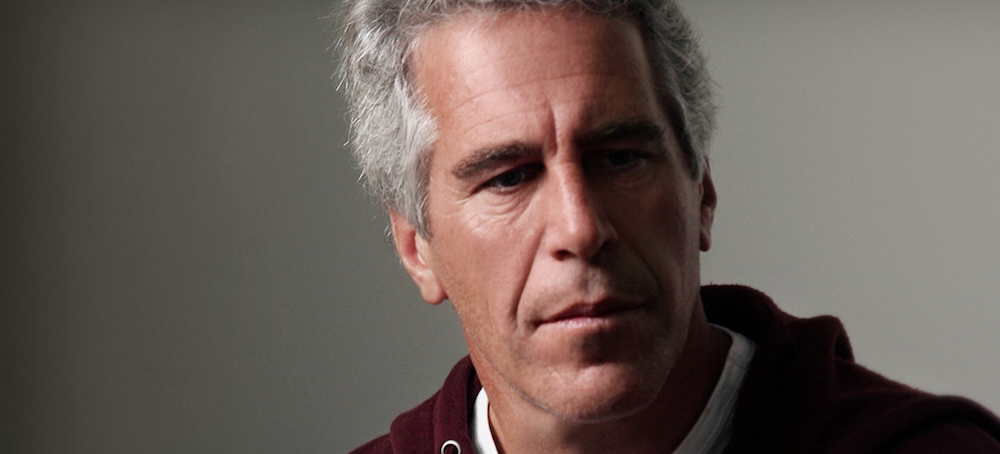 Jeffrey Epstein. (photo: Netflix)
Yiota Souras, the center’s chief legal officer, says that while no one knows the actual number of children trafficked annually in the United States alone, “the real number is absolutely higher” than that. Most of the victims reported to her organization are 15, 16 or 17, she said, but some are as young as 11 or 12.
“This is happening in every community, in every city and state,” she added.
I’ve been speaking in the past few days with survivors of sex trafficking and those who work with them, and they’re thrilled that the Epstein files are bringing more attention to trafficking. But they’re also frustrated that the focus has been tightly on Epstein and his circle — and not on the victims or on the way we as a society enable the abuse.
We rightly condemn powerful associates of Epstein’s for their indifference to young girls being sexually assaulted. But collectively we show the same indifference, in a way that I fear leaves us complicit.
“If you told me 20 years ago that the word ’trafficking’ and the concept of it would be on the nightly news every single night and be the national obsession, I wouldn’t have believed you,” Rachel Lloyd, who was trafficked as a teenager and once was nearly strangled to death by her pimp, told me. “But it’s bizarre to me that we’re having a national conversation about trafficking and yet it hasn’t made any difference.”
Lloyd, who now runs GEMS, an outstanding program for trafficked young women and girls, said of the increased attention: “It’s not elevating the lives of my young women. It’s not shining a light on their vulnerabilities and the things that they go through or the gaps in the systems. It’s not doing any of that.”
It’s terrific to see the scrutiny of Epstein’s world, and I hope that there’ll be investigations of allegations made against President Trump and many others, even as we acknowledge that, for now, they are lacking in evidence. If Britain can arrest the former Prince Andrew and Norway can charge a former prime minister, how is it that the United States has barely taken action?
Lloyd says she is not surprised that Epstein’s friends appear to have gotten away with raping children: In her experience and that of the girls she has worked with, she said, predators almost always get away with their abuse.
Why is there so little accountability? In part, it’s that when we see girls who have been trafficked, they’re not chained in dungeons or being held at gunpoint. Rather, they’re often wearing provocative clothes and seeking customers, so we assume that this is their choice and move on.
Yet remember that the average age of minors who are trafficked, one study found, is 15. Most are runaways, and often these kids have good reasons to flee their homes.
“You can’t just look at someone and say, ’Oh, she must be promiscuous,’” Tiffany Simpson told me, and she should know, for she has felt those stares and endured the stigma.
Simpson grew up in a chaotic household: She said that her dad was in prison for murder, her mom wrestled with alcoholism and a relative sexually assaulted her. So she ran away from home at 16 — and into the arms of a pimp who exploited her. That’s often what happens, and usually the only people looking for hungry, scared runaways at bus stations are not social workers but pimps.
The police and prosecutors often have other priorities. I once visited, in Boston, the frightened parents of a 15-year-old ninth grader who had run away from home three months earlier; they were frantic, but the police had been unhelpful. I pulled out my laptop in their dining room, and in two minutes I found an ad online for a “mixed Latina catering to your needs,” with photos of a seminude girl.
The mother screamed. It was her daughter.
I passed on the ad and the pimp’s phone number to the Boston police, and they raided the hotel in New Hampshire where the pimp was keeping the girl. She testified against him, and he went to prison, but this should have happened much earlier.
If we actually want to help prevent the next Jeffrey Epstein, there are several things we could do.
For starters, we could try to improve the broken foster care system. Although there are plenty of outstanding foster parents, foster care as a whole is a national scandal. Only about 4 percent of foster youth end up earning a B.A., and four-fifths of the trafficked girls helped by GEMS have been in foster care. There are no reliable numbers, but after decades of reporting on trafficking, I find it plausible that a girl in foster care is more likely to be trafficked than she is to graduate from college.
We should also create accountability, by aggressively prosecuting traffickers. Instead, I fear that we’re retreating: There has been little outcry as Trump has diverted federal law enforcement officers from catching child predators so the officers could take part in his immigration crackdown. As a result, this may be a good time to be a trafficker.
Accountability means prosecuting not only traffickers but also anyone who buys sex from a child, with no excuse along the lines of “I thought she was older.” Right now there is virtually zero prospect that someone who pays for sex with a minor will be arrested. But if customers feared paying for sex with kids, the business model would collapse and pimps wouldn’t bother to traffic children.
Why doesn’t that happen? The police and prosecutors sometimes don’t have much empathy for the girls — who, in fairness, may curse their would-be rescuers — while the johns may include respected businessmen, teachers and officials. Most communities don’t have the stomach to arrest people like that.
And that’s not on Epstein or his associates. That’s on us.
“The main monster is that our social system fails our most vulnerable girls,” said Andrea Powell, who has worked with survivors of sex trafficking for more than 20 years and now leads a group called the June Coalition.
“We are losing the plot with the Epstein files,” Powell added. “We can’t just look at the abusers. We have to look at the society that enables them.”