Vladimir Putin Is More Vulnerable Than Ever
Con Coughlin The Telegraph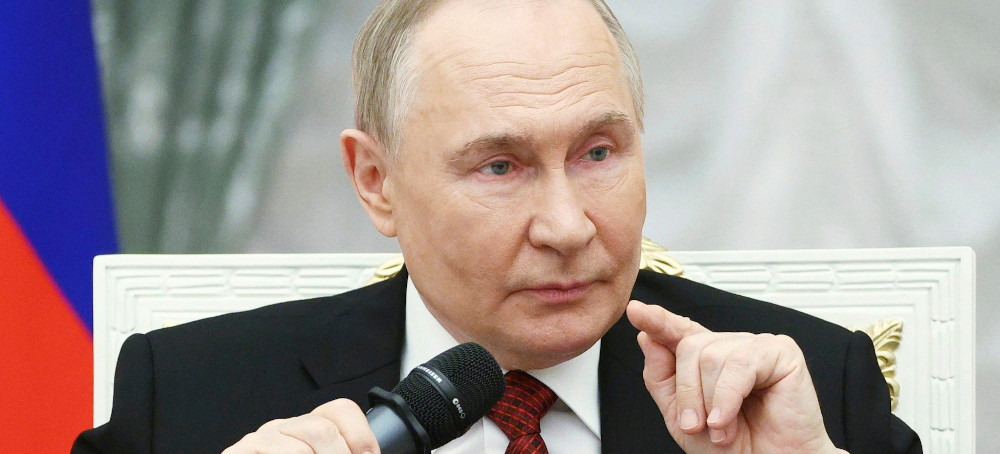 Less than a year after the fall of the Assad regime, Russia might lose another key ally in the Middle East. (photo: Sergei Bulkin)
ALSO SEE: The Telegraph: Israel Is Bombing Iran—and Putin’s Ukraine War Might Be the Biggest Casualty
Less than a year after the fall of the Assad regime, Russia might lose another key ally in the Middle East
Ever since it finally dawned on Russian president Vladimir Putin that his so-called “special military operation” in February 2022 was not, as he boasted, going to be completed within a number of days, Moscow has invested a great deal of effort in forging closer ties with Tehran.
Russia and Iran are not natural allies. The Iranian people retain bitter memories of the Soviet invasion during the Second World War. Despite this, a mutually beneficial alliance has developed between Moscow and Tehran: the Russians were heavily involved in construction of Iran’s Bushehr nuclear power plant.
The Ukraine conflict, though, has resulted in a serious upgrade in ties between the two countries. This started in the summer of 2022 when Putin visited Tehran and negotiated a deal for Iran to supply his beleaguered Russian forces with drones and missiles. These weapons have subsequently been used in attacks on the Ukrainian military and critical infrastructure.
Russia’s deepening reliance on Iran for military support, moreover, resulted in Putin signing a 20-year “comprehensive strategic partnership” with Iranian president Masoud Pezeshkian in Moscow in January this year – just three days before Donald Trump’s inauguration to serve a second term as president.
In return for Iran maintaining supplies of drones, missiles and other military equipment for Russia’s military campaign in Ukraine, Moscow indicated its willingness to boost Iran’s air defences and air forces. This has clearly failed to deter Israel from launching its military offensive.
The partnership also includes a vague commitment for both sides to provide military assistance in the event of either side being invaded or attacked. Putin is unlikely to fulfil this because of his close ties with Israeli prime minister Benjamin Netanyahu.
Putin’s primary concern, though, will be the impact that Israel’s continuing assault on Iran’s nuclear and military infrastructure will have on Tehran’s ability to continue its support for Russia’s war effort in Ukraine.
From the start of Israel’s attack last week, the Israel Defence Forces have deliberately targeted Iran’s drone and missile production facilities, as well as their launch systems, to limit Iran’s ability to target Israel. The strategy appears to have paid dividends. The number of Iranian drones and missiles being reportedly fired at Israel has fallen significantly. If the Iranians are unable to provide sufficient weaponry for their own military campaign against Israel, they will be in no position to support Russia’s offensive in Ukraine.
Another consideration that will be weighing heavily on Putin’s mind is the prospect of losing another important ally in the Middle East, so soon after the collapse of the Assad regime in Syria at the end of last year.
A key factor in Putin’s effort to rebuild Russia’s global stature has been to increase its influence in this region, with the Kremlin making a concerted effort to demonstrate that it is a more reliable ally, especially for the Arab world, than the US.
In this respect Russia’s military intervention in Syria in 2015 to prevent Syrian dictator Bashar al-Assad from being overthrown by Islamist rebels played an important role in burnishing Moscow’s credentials; it also enabled Moscow to develop two important military bases in the eastern Mediterranean.
With Assad now languishing in exile in Moscow, and the ayatollahs locked in an existential fight for survival against Israel, Putin’s standing in the region is in danger of precipitous collapse.
Iran’s plight also places Putin in a quandary because of his close relationship with Netanyahu. The Russian leader has previously had no qualms about turning a blind eye to Israeli attacks against Iran when it suited his interests. During the Syria conflict, when Russian and Iranian forces were both fighting for the common cause of keeping Assad in power, the Russians frequently turned off their air defence systems to allow Israel to attack Iranian positions in Syria.
Nor is Russia the only member of the recently formed axis of despotic states – the other members being North Korea, China and Iran – that will be casting anxious looks at the unfolding drama in Tehran.
Pyongyang has a long-established cooperation pact with Tehran: the two countries have worked closely on the development of their respective nuclear and ballistic missile programmes. Beijing, meanwhile, has its own strategic partnership with Tehran dating back to 2021. China, the world’s largest energy consumer, is keen to take full advantage of Iran’s vast resources. But this arrangement is now in question; Israel is directly targeting Iran’s oil and gas infrastructure.
Israel’s military campaign against Iran is not just threatening the ayatollahs’ survival. It will have serious repercussions for all those other despotic regimes who mistakenly thought their interests would be best served by aligning themselves with Tehran.