Trump Names More Priority Minerals for US Mining Revival
Dylan Baddour Inside Climate News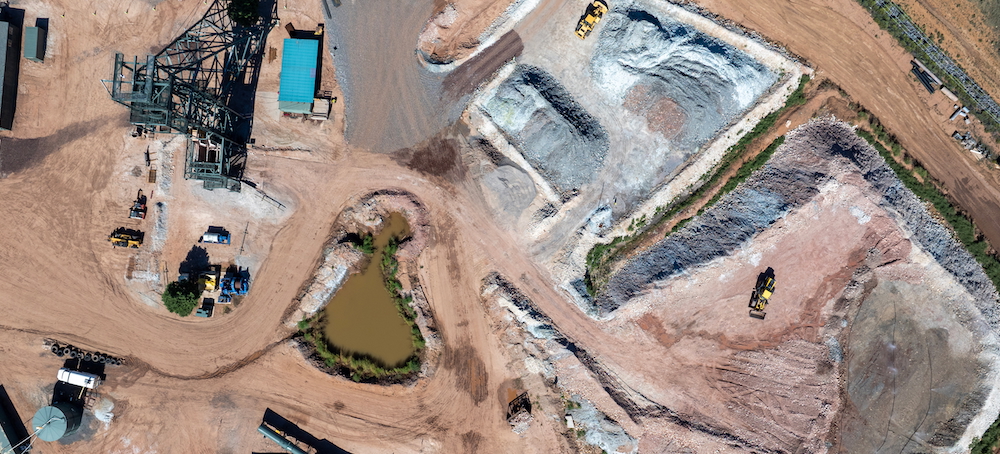 An aerial view of the Pinyon Plain Mine operating within the Ancestral Footprints of the Grand Canyon National Monument on Aug. 27, 2024, in Arizona. (photo: David McNew/Getty Images)
Federal authorities want to rebuild domestic production of the metals and metalloids required for modern technologies. Their list of critical minerals keeps growing.
The list of critical minerals now includes 60 elements and compounds, up from 35 in 2018, when it was first released. The minerals are designated as essential for advanced manufacturing but primarily sourced from foreign markets. Inclusion on the list brings U.S. government funding priorities and expands companies’ eligibility for incentive programs or expedited environmental reviews to encourage production.
In a press release Friday, Interior Secretary Doug Burgum said the updated list provides a “roadmap to reduce our dependence on foreign adversaries, expand domestic production and unleash American innovation.”
“We are ensuring that the minerals powering our energy, defense, and technology supply chains are mined and processed in the United States, which is becoming a mineral powerhouse once again,” he said.
Presently, the U.S. produces almost none of the metals and metalloids required for modern technologies from microchips and circuit boards to solar panels and electric vehicles. Federal authorities now want to change that as quickly as possible.
This year, Trump ordered streamlined permitting, designated certain mining projects for fast-tracked review, opened million of acres of public land to coal mining and rescinded a ban on mining in undeveloped areas of national forests, drawing protests from environmental groups.
“The Trump administration is gutting the policies that give the U.S. stronger environmental, community engagement, and labor standards compared to other countries,” said Jordan Brinn, a clean energy policy advocate at the Natural Resources Defense Council, who has published research on U.S. mineral mining. “We can have domestic mining in this nation, but it needs to be done the right way.”
Many new technologies can reduce the environmental and health impacts of mines, she said, but only if their use is required and enforced by a regulator.
Industry advocates, who have hailed Trump’s executive actions, say tedious permitting processes, rigorous pollution standards, a dysfunctional bureaucracy and lengthy public comment periods make it difficult to start a mine in the U.S., pushing projects overseas and fueling the country’s reliance on foreign producers.
Texas-based Uranium Energy Corp., in a statement on Friday, said the designation of uranium as a critical mineral “marks a major step toward revitalizing U.S. uranium mining and rebuilding America’s nuclear fuel supply chain.”
Multiple presidential administrations have pushed to re-establish domestic mining of uranium, which is enriched to make fuel for nuclear reactors, and reduce reliance on foreign suppliers. The Trump Administration has designated several uranium projects for fast-tracked approval this year.
Uranium mines are already beginning to flicker to life across the country, along with a few other mineral operations. But any significant growth in overall U.S. mining production is still years, or even a decade, away, said Marek Locmelis, an associate professor at the University of Texas’ Bureau of Economic Geology who organizes an annual conference on critical minerals. And, he said, plenty of uncertainty remains about specific government policies intended to cut red tape and speed up development.
While executive orders and mineral lists provide guidelines for policy, legislation is required to actually establish an updated process for mine permitting in the U.S., or a comprehensive framework for financial backing from the government, Locmelis said.
He said the additions to the list send a signal of U.S. intention to bring back domestic mining, but that signs of success will come when the list stops growing. Once supply of a mineral is developed, the mineral leaves the list.
“Half the periodic table is in one way or another covered by the critical minerals list,” he said. “Are we actually starting to reduce the number of elements we have on there? That, of course, is the goal.”
Other newly designated critical minerals announced Friday included boron, a component of fiberglass; phosphate and potash, used for farm fertilizer; lead, used in batteries and metallurgy; rhenium, used to make jet turbine blades; silicon, a semiconductor in microchips; and silver, used for photovoltaic cells in solar panels.