Trump Is Pressuring Minnesota to Make a Deal With the Devil. They Should Stand Firm
Claire Finkelstein Guardian UK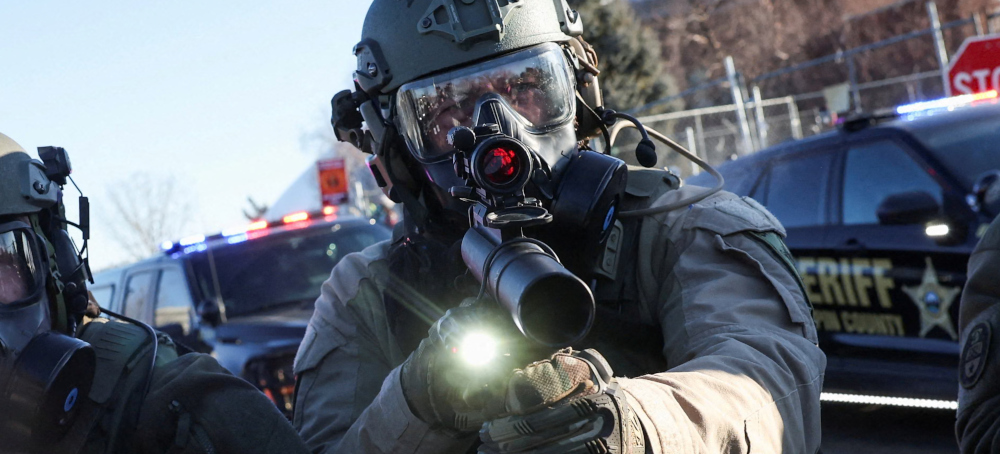 'For Donald Trump, the alternative to getting handed what he wants voluntarily is taking it by force.’ (photo: Shannon Stapleton/Reuters)
Minnesota should not cave to Trump’s demands. The rights of 49 other states and their citizens are hanging in the balance
That would not be surprising. If Walz were to agree to such terms – concessions literally extracted at gunpoint under threat of continued use of unlawful force by federal immigration agents – he would be abandoning critical domains of state autonomy for the fruitless attempt to appease a president that will accept no limits except those forced upon it by necessity or recommended to it by self-interest. As law firms, universities, foreign leaders, and even former partners in crime have discovered, it is perilous to negotiate with a rank opportunist who lives by no other rule than that of self-interest. For Trump, the alternative to getting handed what he wants voluntarily is taking it by force. The FBI raid on the Fulton county elections office in Georgia to seize about 700 boxes of ballots from the 2020 election sent a well-timed message to Minnesota as well as to any other swing state from which the Trump administration may demand such data: if you don’t give us what we asked for, we’ll take it anyway.
A deal with Minnesota may also target another critical area of state autonomy, namely the state’s authority over its own prosecutorial process, including access to crime scene investigations. Two Americans have been shot dead by the federal government, and the state of Minnesota will need to investigate and, if warranted, prosecute the agents who carried out these crimes. That will prove inconvenient for the Department of Homeland Security (DHS), as any such investigation could reveal embarrassing information about the origins of the systematic violations of lawful rules for the use of force. Perhaps this is why DHS is barring state investigators from accessing the crime scene, despite their possession of an appropriate warrant from a federal judge.
The right to investigate and eventually prosecute government officials can be a powerful tool for enhancing transparency and exposing government corruption. Under prosecutorial pressure, government officials tend to defend themselves by saying they were acting according to their orders and consistent with any training they received. Indeed, Kristi Noem, the homeland security secretary, even took this tack in a 24 January press conference when she insisted that the agents who shot Alex Pretti were responding “according to their training”. That was a significant admission against interest: rather than throwing those agents (who remain unidentified) and Jonathan Ross (who shot and killed Renee Nicole Good) under the bus, the Trump administration has signaled in every possible way that they intend to protect them. A state investigation, however, could expose not only the federal agents in question to potential murder charges under state law, but higher-ups like Noem herself to criminal investigation and possible prosecution.
Presumably in part to forestall this possibility, the federal government has consistently argued that the state lacks the authority to prosecute federal agents. JD Vance tipped his hand when he declared that federal agents had “absolute immunity”, a statement he later appeared to walk back when he said that ICE officers who violated the law could be investigated. But we can predict from other Trump-era litigation that the president will argue that state courts lack the authority to exercise judgment over federal officers – a version of the claim Trump made in his own prosecution by Fani Willis in the Georgia election interference case.
Protecting the state’s ability to prosecute anyone who commits crimes within its jurisdiction is more important than the short-term goal of getting ICE out of Minnesota and is not worth trading away. It may even be more important than protecting the autonomy of state elections. This is because in the long run, ensuring that states can enforce the law in their own jurisdictions is the only true protection states and their residents have from a federal government that would threaten their first amendment rights, detain their citizens without due process, invade their homes without a warrant, steal their elections, and yes, kill their citizens in cold blood the streets. The ability to investigate and to prosecute crime ultimately protects all the other rights of states and their citizens under the US constitution.
Minnesota is the thin edge of the wedge for states’ rights and the ability of states to protect their citizens. The rights of 49 other states and their citizens are hanging in the balance.