Trump Administration Mulls Rollback of Lifesaving Protections For Critically Endangered Whale
Martina Igini Earth.org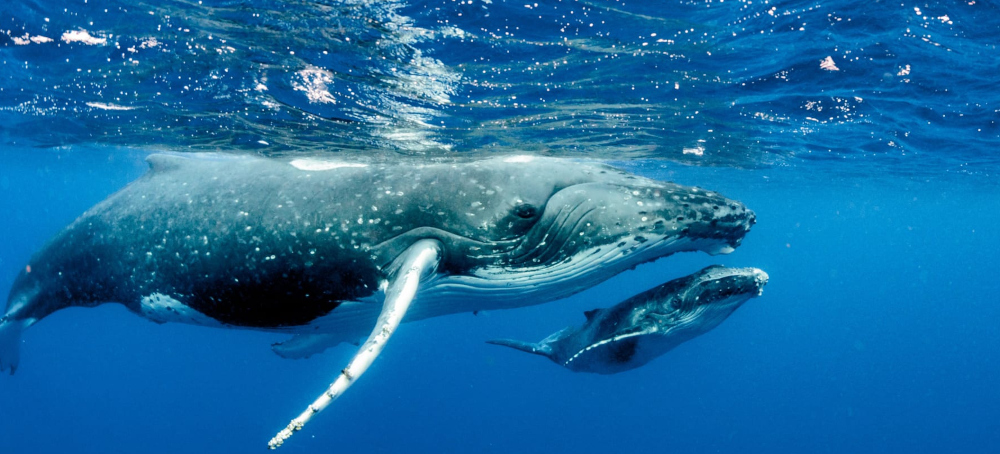 North Atlantic Right Whales. (photo: Getty)
The National Marine Fisheries Service is planning to loosen a speed-limit rule meant to protect the critically endangered North Atlantic right whale from vessel strikes. The National Oceanic and Atmospheric Administration tried to expand the regulation in 2022 but withdrew the proposal in January 2025.
In 2020, the International Union for Conservation of Nature (IUCN) uplisted North Atlantic right whales from endangered to critically endangered amid a rapid population decline. Between 200 and 250 mature individuals are believed to remain, down from 409 at the end of 2018.
Entanglements in fishing gear and ship strikes off the east coast of North America are the primary causes for populations’ decline. Since 2017, NOAA recorded 43 whale deaths, at least 15 of which were attributable to vessel strike and 11 to entanglement. However, research shows that only about one third of right whale deaths are documented, meaning the toll is likely much higher.
On Tuesday, the National Marine Fisheries Service (NMFS), the fish management arm of the National Oceanic and Atmospheric Administration (NOAA), said it is “considering possible deregulatory action to modify and modernize the North Atlantic Right Whale Vessel Speed Rule.” Established in 2008, the rule mandates that most vessels at least 65 feet long (the size of a typical school bus) must travel at 10 knots or less in certain locations along the US East Coast at certain times of the year.
Environmental groups have warned that the deregulation would put whales and boaters at risk of deadly collisions. “This reckless decision threatens the future of North Atlantic right whales,” said Erica Fuller, Senior Counsel at Conservation Law Foundation, calling the move “short-sighted.”
“The species can’t afford to lose a single whale. Eliminating one of their strongest protections would imperil right whale’s already challenging recovery,” Fuller added.
Jane Davenport, Senior Attorney at Defenders of Wildlife, said that while the announcement did not come as a surprise, it was still “a major gut punch.”
“This administration is hellbent on weakening a regulation with a proven track record of saving right whales and other large whales under the guise of economic security, when the agency’s own expert analysis has already demonstrated that this rule has minimal economic impacts,” Davenport said.
The NMFS said modifications to the speed rule would “reduce unnecessary regulatory and economic burdens on the regulated community.” Instead, the agency is planning to replace it with “alternative management areas and advanced, technology-based, strike-avoidance measures that maintain or enhance conservation efficacy for the endangered North Atlantic right whale.”
But experts say no such measures have been proven to reduce strike risk as effectively as speed limits. NOAA itself proposed to expand the speed rule to vehicles longer than 35 feet in 2022 after admitting that limiting vessel speed remained “one of the most effective, feasible options available to reduce the likelihood of lethal outcomes from vessel collisions with right whales.” It withdrew the proposal in January 2025, a week ahead of Donald Trump’s presidential inauguration, “in light of numerous and ongoing requests from the public for further opportunity to review and engage with the Agency on the proposal.”
Susan Millward, Executive Director and CEO of the Animal Welfare Institute, said that while speed limit rules have a “demonstrated record” of reducing deadly collisions, real-time tracking technologies are currently “not a feasible option.”
“Although developing technologies may one day augment mandatory speed limits, we cannot run a high-tech science experiment on the right whale’s survival,” said Davenport. “We would be signing this species’ extinction warrant if we undermine the vessel speed rule now.”
Members of the public can submit comments to the proposed changes until June 2.