Three Signals to Watch After Iran’s Leadership Transition
Prof Robert Pape Substack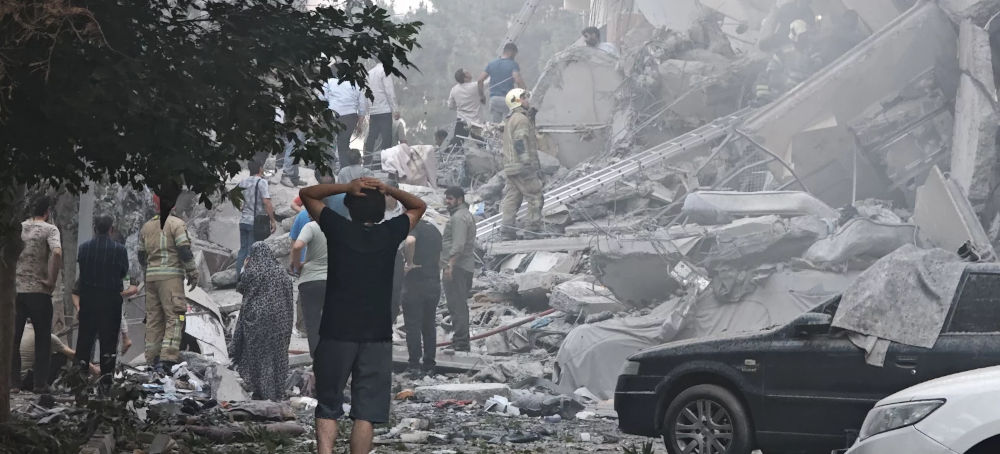 People look over damage to buildings in Nobonyad Square following Israeli airstrikes on June 13, 2025 in Tehran, Iran. (photo: Majid Saeed/Getty)
The key question now is whether Iran’s new leadership chooses continuity or escalation. Three early signals will reveal the direction.
1. Nuclear Doctrine
Ali Khamenei repeatedly declared nuclear weapons forbidden under Islamic law. If Iran’s new leadership stops citing that doctrine—or quietly abandons it—the strategic ceiling of the conflict will rise dramatically.
2. Command Over the Revolutionary Guard
Watch who appears beside the new leader in early meetings and public events. If the Islamic Revolutionary Guard Corps visibly dominates the leadership circle, Iran’s strategy will likely tilt toward confrontation rather than restraint.
3. Expansion of the Battlefield
The most important signal will be where retaliation occurs. Limited responses inside the Middle East would suggest continuity with past strategy. Attacks against Western targets beyond the region would indicate a deliberate widening of the war.
Leadership transitions created by violence rarely produce caution. More often they produce leaders who believe escalation is the fastest path to authority.
We may soon see which path Iran chooses.
I explain the strategic logic behind these signals—and what they could mean for the war—in today’s full Escalation Trap briefing.