This Could Be the Biggest Blow to Abortion Rights Since Roe Fell
Jill Filipovic The New York Times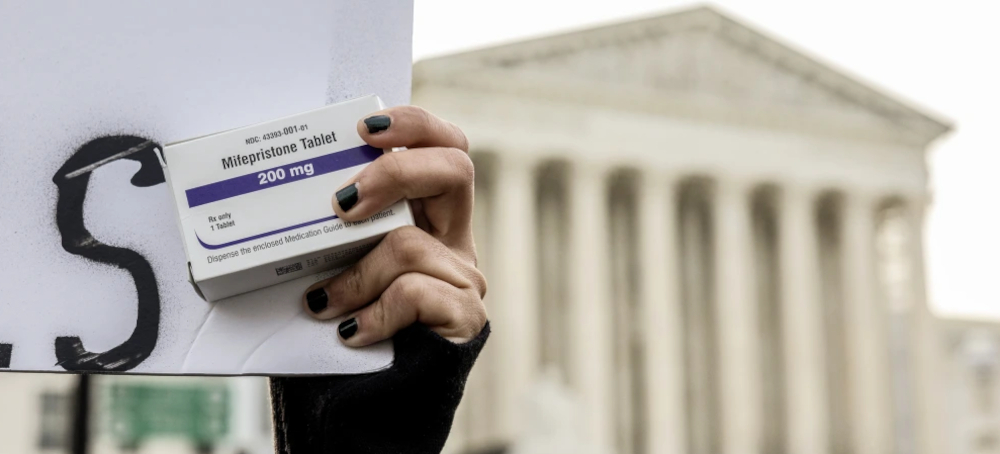 Abortion access supporters rally outside the the Supreme Court. (photo: Amanda Andrade-Rhoades/AP)
ALSO SEE: Drugmaker Asks Supreme Court to Restore Abortion Pill Access by Mail
For women in red states, where abortion clinics have been forced to close, this ruling is an attempt to sever one of their final tethers to safe abortion procedures. For blue-state women who may have believed they were protected by dint of their ZIP code, it could come as a shock: A judicial panel of three men, two appointed by President Trump (one of whom was the lead counsel for a conservative group in the Supreme Court case that kneecapped the Affordable Care Act’s contraception mandate), can curtail your right to abortion, too.
Since the Supreme Court overturned Roe v. Wade in June 2022, the number of in-person abortions has declined. Instead of visiting a clinic for a surgical abortion or to collect pills that prompt an abortion, an increasing number of women are turning to telemedicine, where a doctor can prescribe the same pills, which can be sent in the mail.
In states where abortion is banned, in-person procedures are near zero, while the number of telehealth abortion prescriptions was about 9,000 a month by June 2025, according to data gathered by the Society of Family Planning. Most of these prescriptions come from doctors in blue states, which have passed shield laws to ensure that clinicians cannot be criminally charged for prescribing abortion pills to women in need, wherever in the United States those women live.
But it’s not just women in states with abortion bans who will be affected. Telehealth abortions have increased threefold in states that permit abortion, from about 4,500 in June 2022 to 14,000 in June 2025.
Many women opt for telehealth prescriptions over going to a clinic because it is simpler and more private. Others do so because, even in states that permit abortion, it can be difficult to get access to one. The impact of the Fifth’s Circuit judges’ decision will be especially acute in rural areas. Instead of phoning a trained physician and getting pills by mail as she could do as of Thursday, a woman in rural Montana may now have to drive close to 250 miles for a safe in-person abortion at an overburdened clinic, despite the procedure being legal in her state.
More than 40 percent of women who have abortions in the United States live below the poverty line. Most are already mothers. For many women, driving hundreds of miles to end a pregnancy means calling out of work and losing several days’ pay, spending money they don’t have on gas, food and hotels, scrambling to find child care and then driving for hours back home often while bleeding, cramping and exhausted.