The Trump Administration Is Prepping to Sell off Alaska’s Arctic to Oil and Gas Companies
Earthjustice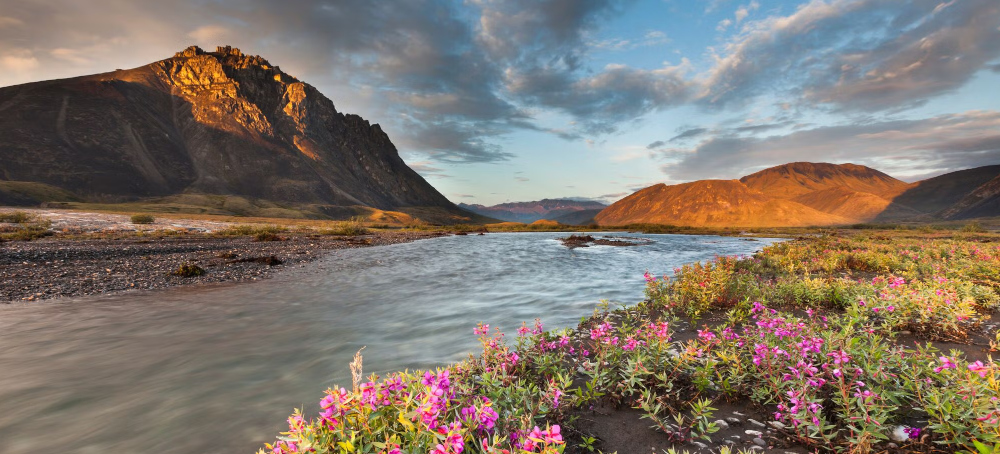 The Arctic National Wildlife Refuge in the Brooks Range mountains, Alaska. (photo: Patrick J. Endres/Getty)
In a series of recent moves, the administration is opening most of the vast and precious Arctic ecosystem to drilling.
The Interior Department in October opened the entire 1.56 million acres of the Coastal Plain of the Arctic National Wildlife Refuge to oil and gas leasing. These lands are sacred to the Gwich’in people and are home to irreplaceable wildlife. The administration’s agenda for the Arctic doesn’t end here. It also wants to strip protections in the Western Arctic and open 82% of the nation’s largest tract of largely undeveloped public lands to oil and gas leasing. New oil and gas lease sales will soon follow in both the Arctic Refuge and the Western Arctic.
What’s more, these plans are unfolding as extreme weather events around the world are becoming more common as climate change advances. We can’t afford to hasten even more climate disasters by greenlighting more drilling.
Earthjustice has spent decades fighting in court to keep oil and gas interests from tearing up the Arctic. We are ready to fight again.
Only the beginning
The administration and its allies in Congress are maximizing oil-and-gas development across the Arctic.
The budget reconciliation bill passed earlier this year mandated at least five lease sales in the Western Arctic over the next 10 years, with each sale offering at least four million acres, and at least four lease sales in the coastal plain of the Arctic Refuge over the same timeframe, with each sale no less than 400,000 acres.
In addition to adding those new lease sales into the budget bill, the administration’s allies in Congress have doubled down on the Arctic assault by pushing Congressional Review Act resolutions to undo previous protections in both the Western Arctic and the Arctic National Wildlife Refuge that had restricted oil and gas leasing within certain designated areas.
Taken together, these actions aim to open most of Alaska’s Arctic to drilling. That includes some of the most sensitive areas like Teshekpuk Lake, endangering the Western Arctic’s wildlife and our climate.
What’s special about Alaska’s Arctic regions?
The Western Arctic is the nation’s largest intact tract of public land and remains largely undeveloped. It covers 23 million acres of diverse habitats, ranging from tundra and wetlands to mountain foothills, grassy uplands, riparian areas, and river deltas.
The region is home to iconic and imperiled wildlife species like polar bears and seals that depend on sea ice and includes habitat for caribou and other species that are central to the cultural practices and food security of nearby Indigenous communities. The Western Arctic also attracts migratory birds from every continent on earth, and hosts some of the highest densities of breeding shorebirds in the world.
The Arctic National Wildlife Refuge covers about 19.3 million acres in northeast Alaska and is the largest national refuge in the United States. It supports a broad range of species including caribou, brown, black, and polar bears, Dall sheep, moose, foxes, muskoxen, marine mammals including whales and seals, and numerous birds. Within the coastal plain are the calving grounds of the Porcupine Caribou herd, which have sustained Gwich’in people for generations.
What are the harms of Arctic drilling?
Climate consequences
Alaska’s Arctic is already warming three to five times faster than the rest of the planet. Communities and infrastructure in Alaska are at risk from thawing permafrost, the loss of sea ice, and rapid coastal erosion.
Communities in Alaska and elsewhere are already suffering devastation due to intensified storms linked to climate change. Coastal storms like those that just swept through the region have become more frequent, intense, and destructive due to the loss of sea ice, warmer ocean temperatures, coastal erosion, and rising sea levels attributed to climate change.
Economically short-sighted
The Trump administration isn’t accounting for the real economic costs of these corporate public lands giveaways, costs that fall on taxpayers nationwide as well as Alaska residents. The costs of climate change impacts aren’t being adequately factored in. According to a report from the National Academy of the Sciences, Alaska could experience climate-related damage costs ranging from a low of $2.3 billion if adaptation measures are implemented to a high of $5.5 billion.
Furthermore, locking in further dependence on expensive fossil fuel infrastructure could jeopardize future clean energy investments nationwide, setting back the urgent need to de-carbonize our energy systems while also driving up utility bills.
What is Earthjustice doing?
Earthjustice has worked for decades in the courts and in the halls of Congress to protect America’s Arctic, and our victories have helped secure vital safeguards for these precious lands and waters.
In 2013, we helped win federal protections for some of the most ecologically important wetlands in the Arctic, including Teshekpuk Lake, protecting them from drilling for over a decade. Under the first Trump administration, we won a case that protected the vast majority of the Arctic Ocean from offshore drilling.
In 2022, an Earthjustice lawsuit helped halt the Peregrine oil exploration project, which could potentially have led to the release of emissions equal to 170 coal-fired power plants operating for a year.
We will not stand idly by while the Trump administration sells the Arctic off to the oil and gas industry.