The Murder of The Washington Post
Ashley Parker The Atlantic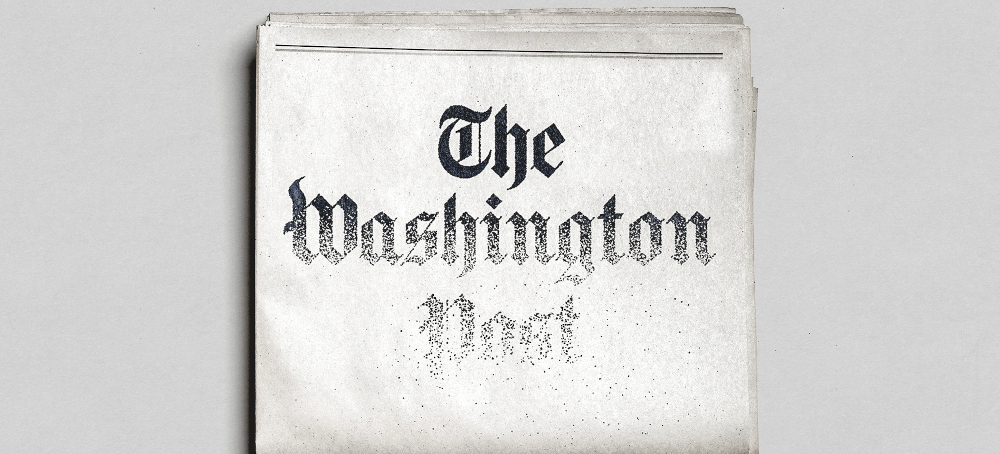 Today’s layoffs are the latest attempt to kill what makes the paper special. (photo: The Atlantic)
Today’s layoffs are the latest attempt to kill what makes the paper special.
Jeff Bezos, the billionaire owner of The Washington Post, and Will Lewis, the publisher he appointed at the end of 2023, are embarking on the latest step of their plan to kill everything that makes the paper special. The Post has survived for nearly 150 years, evolving from a hometown family newspaper into an indispensable national institution, and a pillar of the democratic system. But if Bezos and Lewis continue down their present path, it may not survive much longer.
Over recent years, they’ve repeatedly cut the newsroom—killing its Sunday magazine, reducing the staff by several hundred, nearly halving the Metro desk—without acknowledging the poor business decisions that led to this moment or providing a clear vision for the future. This morning, executive editor Matt Murray and HR chief Wayne Connell told the newsroom staff in an early-morning virtual meeting that it was closing the Sports department and Books section, ending its signature podcast, and dramatically gutting the International and Metro departments, in addition to staggering cuts across all teams. Post leadership—which did not even have the courage to address their staff in person—then left everyone to wait for an email letting them know whether or not they had a job. (Lewis, who has already earned a reputation for showing up late to work when he showed up at all, did not join the Zoom.)
The Post may yet rise, but this will be their enduring legacy.
What’s happening to the Post is a public tragedy, but for me, it is also very personal. When my parents’ basement recently flooded, amid the waterlogged boxes of old photos and vinyl records, we found my younger sister’s baby book. There, on a page reserved for memories from the month she was born—news about visits from doting grandparents, perhaps, or descriptions of her mewling gurgles—my dad had filled the lines with news from our hometown paper, The Washington Post.
“Acquired Immune Deficiency Syndrome (AIDS).” “Irangate.” “The Bork nomination to the U.S. Supreme Court.” “The NFL went on strike.” “Wall Street had the worst day since 1929!!!” “The U.S. was having a garbage crisis, i.e.; running out of disposal sites, esp. in the northeast.” (To be fair, he worked in waste management. But also … welcome to the world, Baby Girl!)
Which is to say: The Washington Post feels like a part of my family’s DNA, imprinted on our earliest memories, memorialized among clippings of our hair and other, more traditional, recollections (first diaper blowout, first word).
As a kid growing up in Bethesda, Maryland, I can’t remember a time when the Post was not, somehow, woven through the fabric of my life. I cut out Sports-section photos of the Redskins coach Joe Gibbs and the quarterback Mark Rypien to plaster on the walls of my childhood bedroom the year my dad taught me how to watch football.
Just before I turned 12, a junior at Walt Whitman High School—where I was soon to start—slammed her white BMW into a tree after a night of drinking with three friends, splitting the car in half and instantly killing herself and a friend, and gravely injuring the other two girls. The Post was where I looked to understand what had happened, to grapple with the potent mix of youth and privilege and tragedy. Later, I picked up the Post to comb for box scores and recaps of my varsity basketball games; to admire the far more gifted athletes from across the region who had made their various All-Met teams; and to follow each new development of the Washington, D.C., snipers, who terrorized the area and transfixed the country.
The Post was also how I fell in love with journalism. Every newspaper lover has the section they read first—Sports, Comics, Metro—and mine was Style. The section, which debuted in 1969, was like nothing that had come before it, or what has come since: a newspaper that gave its writers the time and space and freedom and voice to produce narrative long-form journalism that was must-read, holding its own against the New Journalism magazine greats of the era. And for me, it was a chance to commune with giants—to read people such as Libby Copeland, Robin Givhan, Paul Hendrickson, Sally Quinn, David Von Drehle, Gene Weingarten, Marjorie Williams—and puzzle over how they’d done it.
Then, in 2017, I arrived at the Post as a reporter to cover the Trump White House, and I stayed for eight magical years. I had planned to stay forever. So what is happening at the Post right now—what has been happening there for a while—is personal. But it is also so much larger than me or any single person.
The least cynical explanation is that Bezos simply isn’t paying attention. Maybe—like so many of us initially—he was charmed by Lewis’s British accent and studied loucheness that mask an emperor whose bespoke threads are no clothes at all. Or maybe, as many of us who deeply love the Post fear, the decimation is the plan.
The Post journalists I know have shown a genuine willingness—even an eagerness—to evolve, a spirit of creativity and innovation at a time of transformation in the media. But its executives seem not to know where to lead it. Among the many failures here—of leadership, management, business, imagination, courage—the actual journalism stands strong.
Journalism is—has always been—a tough industry. But I watched firsthand as Bezos, Lewis, and company spoke in turgid corporate-ese (“Fix it, build it, scale it”) and failed to launch—or even attempt to launch—initiatives that might achieve their grandiose visions. They began 2025 by unveiling the “Big Hairy Audacious Goal” of jumping from about 2.5 million subscribers to 200 million paying users, despite having ended the previous year hemorrhaging tens of thousands of their existing subscribers, all while blaming the journalists for the paper’s travails.
I don’t pretend to have the answers to the Post’s financial woes, or a successful business model for a local paper that is also the nation’s hometown paper. But I can tell you what will be lost if these two men—who don’t seem to understand what the Post was, what it still is, and what it could be—continue to treat it like a distressed asset or a bargaining chip with a president who, ultimately, does not respect bargaining supplicants.
Watergate started as a local story.
Marty Weil—who is now in his 61st year at the Post—was subbing as a night editor on the Metro desk when he heard five words crackle across the police scanner: “Doors open at the Watergate.” Al Lewis, the dayside police-beat reporter, wrote the first story that appeared on the June 18, 1972, front page—“5 Held in Plot to Bug Democrats’ Office Here.” And then Gene Bachinski, who handled the beat at night, got a key tip: An arresting officer allowed him to glimpse the address book of one of the Watergate burglars, containing a scribbled entry, “H Hunt. WH,” and a number that went straight to the White House.
Bob Woodward and Carl Bernstein reported for duty that Sunday, and they soon took over. The story went national, toppling a presidency and inspiring generations of journalists. But it was also quintessential Post reporting—relentlessly and fearlessly pursuing the truth and holding power to account in a collaborative effort across the newsroom. (That initial story lists eight—eight!—Post journalists who contributed reporting, an early preview of the triple- and even quadruple-bylined stories that have come to mark the paper’s most ambitious efforts.)
Watergate was hardly the last time that the paper turned coverage of local events into national news. The Post also reported on the September 11 attacks, which killed 125 people at the Pentagon and all 64 people aboard American Airlines Flight 77 when it crashed; the 2007 Virginia Tech shooting, which left 32 professors and students dead and dozens more injured; and the January 6 riot at the Capitol and its aftermath. This past year, the Post, with expert reporters at nearly every major federal agency, delivered unsurpassed accounts of the DOGE-ing of the federal government. (Amid the paper’s steady stream of scoops, last month federal agents raided the Virginia home of Hannah Natanson, the Post’s “federal government whisper.”) Whatever bar you set for success—exposing corruption, changing lives, moving readers to tears and to action, bringing joy and understanding to the community it serves, winning prizes—the Post has always cleared it.
Today’s layoffs provide a whiff of the latest alleged strategy: an almost-exclusive focus on politics and national-security coverage, though even that explanation defies credulity, as the growing list of those laid off includes some of the nation’s finest political and international reporters and editors. As one longtime Post reporter observed to me, “We’re changing and trimming and cutting our way toward a much more mundane product, and one that doesn’t seem to attract more readers.” To the extent that a plan exists, it seems to be to transform the Post into a facsimile of Politico. (In another cruel irony, Politico was born out of the Post nearly two decades ago, when two reporters decamped to launch their own fast-paced, scoop-driven, win-the-morning publication.)
But general-interest publications can be profitable. The New York Times has shown there is money to be made by diversifying, expanding, experimenting, offering something for everyone. (News! Audio! Games! Cooking! Video! Long-form!) The publication you’re reading now is profitable, and has nearly 1.5 million subscribers. Other specialty publications, such as Axios and Punchbowl News, have succeeded by tripling down on the needs and interests of their core audience. The Post, instead, is abandoning its current audience in search of one that may not exist.
What Bezos, Lewis, and their jargon-loving underlings also fail to understand is that the paper’s coverage of Washington will be neither as vivid nor as authoritative without the contributions of journalists in bureaus around the world. Those correspondents risk their life to help readers understand how, say, the United States deposing a leader in Venezuela may have consequences for citizens living in Ohio. Coverage of the White House and Congress is enhanced by a well-sourced Metro team and gimlet-eyed narrators in Style. And you can’t be this capital city’s definitive chronicler if you don’t cover our beloved Nats and Caps and Commanders, what’s going on in our kids’ schools, or what restaurant has the best pupusas.
Nearly all media outlets are struggling to reinvent themselves. But the Post should have been better equipped than most to meet the moment. It has a great reputation, great talent, and great positioning to cover local stories for a large and highly educated audience willing to pay for news, and to serve a broader national audience eager for deep political and accountability reporting.
“This is the nation’s capital, and the people who live here are diplomats and federal-government employees and public servants and national security advisers and people who work in the White House who also send their kids to school here,” a local Post reporter told me. “And you can live in Northwest or you can live in Southeast, and everyone is pissed that the snow isn’t plowed.”
Last week, the paper’s foreign correspondents released a video aimed at Bezos, explaining how, as the Ukraine bureau chief, Siobhán O'Grady, puts it, they have been risking their life to cover wars, pandemics, civil uprisings, and so much more. In the two-minute video, often against the backdrop of explosions and other dangers, the journalists offer vignettes of their daily life: “I was there when a Russian missile hit a Ukrainian playground and killed nine kids.” “I was there when the Taliban tightened their grip on Afghanistan.” “I was there in January 2020, outside of Wuhan, when China shut it down to contain a mysterious virus.”
The power of the Post has always been its pulsing humanity, the zippy teamwork that has allowed each individual to produce something so much greater than they could have achieved on their own.
I was there. I was there. I was there. We were there.
Not being the new york times, being forced to do more with less, was freeing. It created—required—a culture of collegiality and collaboration, a willingness to experiment and take risks, a certain puckishness. “There’s sort of an Avis mentality at the Post: ‘We try harder,’” Mike Semel, a longtime Post editor who now works at The Athletic, told me. He was referring to the rent-a-car company’s now-famous 1962 ad campaign, which embraced its No. 2 status to Hertz, promising better customer service and, in the process, juicing its revenue. As Avis understood, being the underdog is liberating.
During President Trump’s first term, the then–executive editor, Marty Baron, green-lighted a graphic-nonfiction version of the Mueller Report and later turned it into a book. And when Congress declined to create a September 11–style commission to investigate the January 6 attacks, the Post decided that it would do what Congress would not: Without subpoena power, more than 100 journalists from across the newsroom produced a 38,000-word investigative series, “The Attack,” offering the definitive story of the deadly insurrection at the U.S. Capitol. (It was part of the package that won the 2022 Pulitzer Prize for Public Service.)
The Post has always been a writers’ paper, a newsroom so thoroughly scrappy that simultaneously anything seems possible—big ideas, big ambition—and it still feels like a small miracle each day when such consistently good journalism emerges from such glorious mayhem. (For my entire time there, I tracked my vacation days and comp time on yellow Post-it notes, which my editors unfailingly honored.)
There was a sense that great journalism could come from anyone, in any corner of the K Street newsroom. Exciting projects and challenging investigations were not walled off for certain elite teams. The Post was a place where everyone could be, and was, part of the same shared mission; we wore democracy dies in darkness hoodies to work, blue-and-white wp beanies in the winter.
It helped that even the paper’s biggest stars learned how to be reporters on the same unglamorous beats—Southern Maryland; Virginia’s Loudoun County; the loud, sweaty gyms of high-school sports; night cops. “It’s hard to explain to somebody from the outside,” Semel said. While everyone else got to celebrate Independence Day, generations of Post reporters had to spend their holiday afternoon on the sunbaked grass by the Lincoln Memorial, putting together stories for the next day’s paper. “David Fahrenthold stood on the Mall on the Fourth of July, before he won his Pulitzer.”
At its core, compelling narrative writing is an exercise in building empathy and helping Americans in a fractured country understand one another. But that empathy and compassion and teamwork extended within the newsroom, as well.
We shared phone numbers and scenes from our notebooks, invited our colleagues to join us at source lunches and drinks, and spent time on Slack trying to make one another laugh. Often, one of my cubicle-mates would overhear me on the phone and, before I’d even hung up, had emailed a suggestion for my story or sent me the contact info of a person I should call.
Others simply texted “wellness check,” again and again, to their friends and colleagues who they knew were working on a physically dangerous or emotionally draining story. It was common to send a paper-wide email remembering a parent or loved one who had died, and to have our kids pop in and out of Zooms. Semel recalled how, when the stress felt overwhelming, he would go down to the basement of the paper’s old building, on 15th Street, with Steven Ginsberg (who started at the paper as a copy boy and eventually became a managing editor before decamping to edit The Athletic) and Nick Miroff (a longtime ace immigration reporter who is now my Atlantic colleague) for an impromptu game of Wiffle ball.
Perhaps that’s why the paper’s White House reporting team, which knew it was unlikely to be affected, wrote a letter to Bezos ahead of the cuts, beseeching him to intervene. Some of their most-read stories “relied on collaboration with all corners of the newsroom,” they said, because “our colleagues’ work helps lift up our own.”
Although many talented and hardworking people have left the paper in recent years, many talented and hardworking people have chosen to remain, and others have joined. The Post is still one of the best places to do important work. Journalists there turned down lucrative buyouts or other compelling offers to stay and fight for a place they love because they believe in the paper and the mission. (I would be remiss here if I did not mention that, bittersweetly, The Atlantic and the Times have been among the biggest beneficiaries of the current exodus.)
But each departure—whether by choice or buyout or, now, deliberate gutting—represents not just an individual loss but the erasure of years of institutional memory. How do you retain the culture of a place whose journalism absolutely sang because of—not in spite of—what my beloved editor Dan Eggen once joked was my corner of the building’s biggest problem: “Too much giggling.”
I arrived at the post at the beginning of 2017, at a personal and professional nadir. My boyfriend and I had just broken up after nearly a decade together, and I was leaving my first job, at The New York Times. I had started right out of college, as Maureen Dowd’s researcher, and it was an amazing experience. She was a great boss and mentor, and she’s often still my first call for advice, on any topic. Yet I had long felt like a perpetual junior-varsity player, unable to shed the sheen of early assistanthood.
But the Post wanted me. Its team understood me—with all of my quirks and flaws and complications—and the newsroom welcomed me. Almost immediately, my editors pushed me toward opportunities I wouldn’t have dreamed of trying to seize—co-moderating a Washington Post–MSNBC Democratic debate in 2019, working on three projects that would each go on to win Pulitzer Prizes. Finally, I started believing in myself too.
The newsroom was a merry band of misfits, and I was one of their cheerful warriors. I was home.
My White House teammates regularly covered my shifts or swapped days with me so that I could meet the various demands of my complicated blended family. (I vividly remember racing out the door one afternoon to get to my then–second-grade stepdaughter’s performance in the ensemble of Alice in Wonderland as my desk-mates cheered me on.) When I miscarried between my two successful pregnancies, my colleagues called and texted daily to check in, and sent me cookies and soup. And when Trump finally agreed to an interview the month that I gave birth to my first daughter, in 2018, Phil Rucker and Josh Dawsey called me on maternity leave to invite me to join them because, they said, it was my interview too. (I ultimately declined—a combination of a challenging C-section recovery, postpartum depression, and abject horror at how the president might react if I began leaking milk in the Oval Office. In my absence, Trump told Rucker and Dawsey that he wished me well, but that I had always been very nasty to him.)
I am hardly unique. Andrew Golden, who covers the Washington Nationals for the paper, met and fell in love with his now-wife at the Post. (His hiring was also a full-circle moment for his family, and his granddad—a native Washingtonian and avid sports fan—saves every story he writes in cardboard boxes.) In 2007, Carlos Lozada, the paper’s longtime book critic, took the hardest job he’d ever had, as national-security editor, and then found out that same month that his oldest sister was dying of cancer—and his bosses told him: Go—take whatever time you need. Don’t worry about vacation days. Don’t worry about the job. We can sort that all out. “They all just covered for me, and that was everything,” Lozada, who now works for the Times, told me. “I got to spend a lot of time with my sister in the final days, and I’ll never, ever stop being grateful to The Washington Post for that.”
Erin Cox, who covers Maryland politics for the paper and whose husband, Rick Maese, covers sports, had a near-fatal heart attack just 10 weeks after giving birth to her third baby. The newsroom rallied around their family, sending money and food and support. Colleagues paid for—among other things—three weeks of summer camp for their 6-year-old daughter, whose scary August was suddenly overshadowed by memories of going to the pool, making kites, and laughing with new friends. One business reporter with whom Cox had never spoken showed up at her door bearing a multipart vegetarian feast. Cox’s editor brought her college-aged daughter by to offer babysitting services. The Post filled up a meal train for three months, leaving her book club with no remaining slots. (They settled for a gift card.)
“I mean,” she told me now, over the phone, “I had a tube in my throat dripping chemicals onto my heart to coax back enough function so that maybe I could one day walk up a flight of stairs, and you know what I felt? Overwhelmed by love.”
When the atlantic’s editor in chief, Jeffrey Goldberg—who interned during two summers at the Post before taking on the night-cops beat—approached me in the summer of 2024 about joining this magazine, I was intrigued. I had always wanted to be a magazine writer, and I had subscribed to The Atlantic a few years before, sick of hitting the paywall when there were just so many stories I wanted to read.
The job he was offering was the one I had imagined for myself since I was a kid reading those Style-section greats. But I also subconsciously thought the process was going to end with me telling him, truthfully, You’re offering me my dream job, but I already have my dream job, and the tie goes to the home team.
I realized, though, that the Post wasn’t the same paper that had recruited me eight years before, and that I didn’t want to work for an owner and publisher who couldn’t articulate a vision and confused contempt for the newsroom with a business plan.
I love The Atlantic. I’m writing stories that feel both challenging and fulfilling. But even so, I also miss the Post. And as I watch the deliberate dismantling of the paper of the Graham family, of Woodward and Bernstein, of Marty Baron, of so many of my best friends, my grief is still visceral, my anger still raw.
Lozada told me he loves his new job at the Times, but the Post will always be special to him, too: “I worked there for 17 years, and I still think of the Post in terms of ‘we.’ Even when I’m talking about it now, I say, ‘I can’t believe we did this.’”
“The Post is still my ‘we,’” he continued. “It will always be my ‘we.’”
But, really, the Post is all of our “we”—the journalists fighting for it, the ones competing against it, those of us in the diaspora, and especially the community that counts on it and the nation that turns to it. We deserve so much better.