The Islamic Republic Was Built for This Day
Bobby Ghosh Substack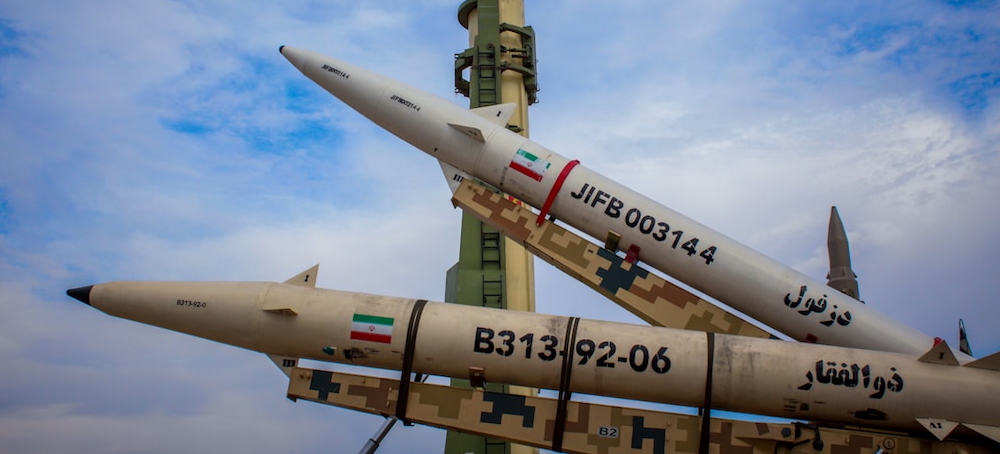 "Destroying Iranian weapons systems and destroying the Iranian state are two entirely different undertakings, and the history of American military intervention in this region is largely a history of confusing one for the other." (photo: Moslem Daneshzadeh/Unsplash)
Bombing Iran is the easy part. What comes next is where American confidence goes to die.
This is the foundational insight missing from the triumphant rhetoric now emanating from Washington and Jerusalem. President Trump has called on the IRGC to lay down its arms or face “certain death.” Prime Minister Netanyahu says the joint operation will create conditions for Iranians to “take their destiny into their own hands.” The assumption embedded in both statements is that sufficient military force will cause the regime to buckle — that the Islamic Republic is a building whose load-bearing walls can be identified and demolished from the air.
It is a seductive assumption. It is also, on the available evidence, wrong.
I covered the Iraq war for years, and the pattern is sickeningly familiar. The opening blow lands with devastating precision. Smoke over Tehran, missile sites reduced to rubble, command centers struck. Officials brief reporters on the percentage of targets destroyed. Optimism fills the air like cordite. And then the fog rolls in.
Destroying Iranian weapons systems and destroying the Iranian state are two entirely different undertakings, and the history of American military intervention in this region is largely a history of confusing one for the other. Air campaigns can shatter hardware. They have never, on their own, shattered a regime. What they cannot do, absent a credible internal force capable of seizing power, is produce political transformation.
Consider what the regime has built over forty-six years. The IRGC is not merely a military organization; it is a parallel state — an economic empire, an intelligence apparatus, and a political machine rolled into one. Its officers are stakeholders in the system’s survival, with personal fortunes, patronage networks, and family legacies tied to the regime’s continuity. The question of who follows Khamenei is not one the regime has left to chance. The New York Times reported last week that Khamenei has named four potential successors for every senior post he appoints, and has delegated authority to a trusted inner circle to act if he cannot be reached. Khamenei was reportedly moved to a secure location before the first missiles landed. Even if he is dead — and Iran’s foreign minister insists he is not — the apparatus around him was built for exactly this contingency. Killing the Supreme Leader is not the same as killing the system.
This does not mean the regime is invulnerable. It faces what is arguably its most severe strategic crisis since the revolution. The June 2025 strikes degraded its nuclear infrastructure. The protests that erupted in December show how angry the populace is. The economy is in ruins, the currency in free fall, and the social contract between rulers and ruled has been shattered beyond repair, as I wrote last week. The cumulative pressure is immense.
But a regime under enormous strain is not the same thing as a regime on the verge of disintegration, and the distance between those two conditions is precisely where overconfidence turns lethal. The fact that Iran launched retaliatory missile salvos within hours of Saturday’s strikes — hitting targets across the Gulf, from Bahrain to Qatar to the UAE — tells us something important about the regime’s operational capacity. These were not the spasms of a dying animal. They were the execution of a war plan that has been sitting in IRGC operational drawers for years — measured to inflict enough pain on the American coalition to alter its political calculus, but not so much as to invite the ground invasion Tehran knows it cannot survive.
Watch the pattern carefully. The individual salvos are lighter than June’s massive barrage, but they keep coming — a rhythm that suggests Iran is pacing itself for a long campaign rather than exhausting its arsenal in a single dramatic gesture. And by targeting U.S. facilities hosted by Arab states, Tehran is pursuing a classic strategy of horizontal escalation — dragging reluctant Gulf capitals into the conflict, raising the political cost for Washington’s regional partners, and fracturing the coalition from within. Saudi Arabia has already warned of “grave consequences” for Iran, but Riyadh’s fury is directed at Tehran for striking its territory, not at Washington for provoking the retaliation. That distinction may not survive a prolonged campaign.
The critical variable in the days ahead is whether Iran fully activates its remaining proxy network. The Houthis have already announced they will resume Red Sea attacks. Iraq is a tinderbox: militia-linked forces have reported casualties from strikes near Baghdad. Lebanon remains volatile. If Tehran decides to open multiple fronts simultaneously, the nature of the conflict changes entirely — what is currently an air campaign between defined belligerents becomes a regionwide conflagration with no obvious exit.
History offers uncomfortable lessons here. Authoritarian elites do not typically abandon the palace when bombs are falling on it — they hunker down and consolidate. External threat is the oldest binding agent in politics, and regimes under fire almost invariably grow more unified in the short term, not less. Saddam Hussein survived weeks of devastating bombardment in 2003 — it took a ground invasion and occupation to remove him, and even then, the aftermath consumed American blood and treasure for a decade. Bashar al-Assad endured years of civil war before his regime finally crumbled. The Soviet Union collapsed under the weight of its own contradictions, not under American bombardment.
Trump has told Iranians to “take over your government” once the strikes conclude. But since the attacks are coming from the air rather than the ground, it remains unclear what mechanism he envisions for this transfer of power. The Iranian protesters, for all their courage, have no command structure, no territorial base, and no means of converting popular anger into institutional control. The opposition in exile is forever bickering, and lacks credibility with Iranians. And within the regime itself, there is no sign of the kind of elite fracture — a military defection, a provincial breakaway, a palace coup — that might give external force something to work with.
The distance between what has been accomplished militarily and what would be required to actually unravel the Islamic Republic remains vast. The regime is wounded this morning — its air defenses in tatters, its command structure under siege, its people terrified. But wounded is not the same as finished, and mistaking the former for the latter is the kind of error that turns a military campaign into a quagmire — and we have made that error before, in this very region, with consequences we are still living with.