The Hidden History of Native American Enslavement
Geraldo Cadava The New Yorker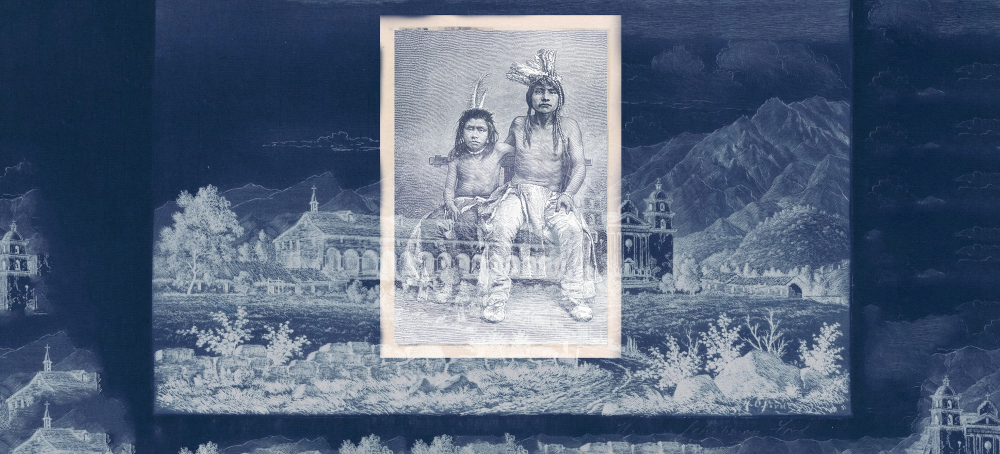 Indigenous slavery, which lasted for centuries, has gone by many names. (photo: Jack Dura/AP)
Indigenous slavery, which lasted for centuries, has gone by many names. A new public history project wants us to see it for what it was.
More than a century later, Dora Ortiz Vásquez, a great-granddaughter of Martínez, published a booklet about Rosario, based on the stories that her mother and Rosario herself had told her when she was a girl. Titled “Enchanted Temples of Taos,” it gives a fawning account of her famous great-grandfather and his unwavering benevolence, including in his treatment of Rosario. When Vásquez first mentions Rosario, she calls her Martínez’s “young Navajo slave” and his “most outstanding” maidservant. We don’t learn anything about Rosario’s life before her captivity, but, after she arrived in Taos, Vásquez wrote, Rosario was stubborn in her desire for freedom: “She went about her duties wishing and watching for a good chance to free herself and go back to her own people.”
One day, Vásquez wrote, Martínez pondered how he might make Rosario feel more comfortable. It dawned on him, as though he had never considered the possibility before, that she “was perhaps lonesome for her little girl.” He brought Rosario to the home of the family that owned Soledad. According to Vásquez, Rosario’s knees shook as she stood at their doorstep. Martínez and Soledad’s owners talked about the weather, the year’s crops, and sheep, before he told them that the purpose of his visit was to “reunite Rosario with her little girl.” In Vásquez’s account, Soledad’s owners suggested that they let Soledad choose where she would live; believing the girl was happy, they thought she would stay with them. But, after Soledad entered the room, she “flew to her mother’s arms and clung fast,” Vásquez wrote. Martínez arranged to purchase Soledad for another hundred and fifty pesos.
Estevan Rael-Gálvez, the president and C.E.O. of Native Bound Unbound, a digital archive that aspires to recover every documented case of Indigenous slavery in the Americas, has described “Enchanted Temples of Taos” as “one of the first modern accounts that uses the term ‘slave,’ and not the euphemisms” often deployed to obscure the reality of Indigenous slavery. But he has also characterized the narrative as “more romanticized than real.” According to Vásquez, a few years after Father Martínez purchased Rosario, he informed her that “she was a free woman.” He showed her a picture of President Abraham Lincoln and told her about the Emancipation Proclamation. “It will not be necessary for you to run away now, Rosario,” he said in Vásquez’s account. “If you wish to go back to your own people, you may do so.” Rael-Gálvez, however, found evidence that Father Martínez petitioned the Taos County probate court, in January, 1867, to not recognize her absolute freedom. Almost two years after the end of the Civil War, he persuaded the court to deem her a maidservant, and to name him as her guardian. For Vásquez, the end of the Civil War marked a bright line between Rosario’s enslavement and freedom. For her and for many other enslaved Indigenous people, though, it was more like a transition from one form of captivity to another.
When Father Martínez died, in July, 1867, Rosario went to live with his son George Romero and Romero’s wife. The following year, the United States sent a federal agent named William W. Griffin to New Mexico to investigate claims that slavery was still rampant in the territory. Griffin submitted four hundred and thirty-five indictments to a federal grand jury, including one, Rael-Gálvez discovered, of Romero. (None made it to trial, owing to insufficient evidence.) In the 1870 and 1880 censuses, Rosario was still listed as a servant in Romero’s household. In the 1885 territorial census, Soledad and her five-year-old daughter, Cleotilde, were listed as servants in the household of Romero’s brother. There is no evidence that Rosario was ever paid for her labor. By the time Dora Ortiz Vásquez was born, in 1907, Rosario had her own home, in Ocate, on the other side of the Sangre de Cristo Mountains from Taos. Though elderly, she still walked great distances to visit Dora and her mother. Dora loved Rosario “as a grandma,” she wrote, and affectionately called her “Ma-Ya-Yo.” Rosario died in 1930. Soledad had died in 1927. Dora wrote that it pained Rosario to have outlived her daughter.
Rosario’s story is one small piece of the history of Indigenous slavery. After the conquest, Spaniards brought thousands of Native Americans back to Spain, their faces branded with marks of the Spanish crown, their owner’s name, or terms signifying their status. The Spanish owners of mines in the Americas chained Indigenous slaves together and sent them deep into shafts where they performed the most dangerous aspects of the work. In 1542, the Spanish missionary Bartólome de las Casas completed “A Short Account of the Destruction of the Indies,” which chronicled the devastation of Indigenous communities at the hands of Spanish conquistadors. Portions of his text circulated at the Spanish court and influenced King Charles V to issue the Spanish New Laws, which made the enslavement of Indians illegal, except for those who were said to be cannibals or who were captured in a “just war.” In documents produced before 1542, it was common to find references to “esclavos indios” or “esclavas indias.” Afterward, those who held Indian captives developed a new language for describing the nature of their property. They were encomendados or repartidos (indentured laborers), sirvientes or criados (servants), or genízaros or panis (ethnic labels indicating mixed-race or Indigenous identities). Andrés Reséndez, a historian at the University of California, Davis, has written, “Although these forms of labor are impossible to fit into a simple definition, they generally shared four traits that made them akin to enslavement: forcible removal of the victims from one place to another, inability to leave the workplace, violence or threat of violence to compel them to work, and nominal or no pay.”
The sheer variety of terms for enslaved Indians, each of which could imply different circumstances of labor and captivity, has led to debates about whether their various conditions should be called slavery at all. Some scholars of both Indigenous and African American history are more comfortable with different words, such as “captives.” But, as Rael-Gálvez explained to me, even the twenty to thirty enslaved Africans who landed in Virginia in 1619 aboard a vessel named the White Lion weren’t called slaves. “Because Virginia had no law at the time that defined chattel slavery, contemporary records defined them as unfree laborers whose status was akin to indentured servants,” Rael-Gálvez said. Yet that has not prevented us from seeing their arrival in the Americas as a pivotal moment in the history of African slavery. To Rael-Gálvez, the fact that enslaved Africans called laborers or servants are nevertheless regarded today as central to the history of slavery suggests that we can’t dismiss Indians described by the same terms.
In many cases, Indigenous enslavement adds new dimensions to familiar histories of the Americas—and to some of their most famous actors. Christopher Columbus sold hundreds of Indians into slavery in Europe. Hernán Cortés owned hundreds of enslaved Indigenous people, more than anyone else in Mexico. The Pueblo Revolt, in 1680, during which Indians destroyed missions and churches and renounced their baptisms and Christian marriages, was a rebellion against the widespread enslavement of Pueblo Indians as much as it was a rejection of the Catholic Church. Tituba, one of the first women accused of being a witch in Salem, Massachusetts, was described by nineteenth-century chroniclers as a Black woman. Historians today, based on their readings of seventeenth-century documents, believe that she was an enslaved Indigenous woman from the Caribbean or South America. For Rael-Gálvez and other scholars, Indigenous slavery expands our understanding of the history of human bondage—who its victims were, where it took place, what it looked like, and when it ended.
Native Bound Unbound grew out of more than three decades of research by Rael-Gálvez into the history of Indigenous slavery. As a Ph.D. student at the University of Michigan, he created a database of thousands of Indigenous slaves held in Colorado and New Mexico. By the time he graduated, in 2002, he had begun a job as the state historian of New Mexico. Then, in 2009, he became the executive director of the National Hispanic Cultural Center, in Albuquerque. In 2022, he began the Native Bound Unbound project, with a grant from the Mellon Foundation that allowed him to hire a team of students, professors, genealogists, and archivists to search for records of enslavement across the Americas. Researchers have since collected an abundance of materials which have revealed traces of the lives of enslaved Indians. They’ve dug deeply in some places, but not at all in others. “We have only just begun work that will extend across generations,” Rael-Gálvez told me.
The establishment of Native Bound Unbound coincided with a boom in scholarship on Indigenous slavery, much of which has focussed on specific regions in Latin America and the United States. An exception was Reséndez’s 2016 book, “The Other Slavery,” which took a more panoramic view of Indigenous slavery, from before the Spanish conquest up to the early twentieth century. “The Other Slavery” aimed to increase awareness of Native American slavery in the same way that Native Bound Unbound aspires to do. And yet, as Philip Deloria, a historian at Harvard, recently said on the podcast “Native America Calling,” “It’s been very hard to think about the ways that we can expand the narrative of Indigenous enslavement. . . . I can list off four or five or six really good books—academic books—on Indigenous enslavement that don’t seem to have made any difference in terms of the way that we think about the narrative.”
Deloria explained, “When we talk about slavery, we think about white columns, plantations in the Southeast, and African American slavery.” In fact, when African and Indigenous slavery are viewed together, it is easy to see how intertwined they are. The researchers at Native Bound Unbound have uncovered instances of African and Indigenous slaves in the sixteenth and seventeenth centuries working side by side in Latin American mines. Micaela Wiehe, a Native Bound Unbound researcher and Ph.D. student at Penn State, found marriage records from the sixteenth century, in and around Mexico City, which show unions between enslaved Indians and enslaved Africans. Boston newspapers in the early nineteenth century announced the escape of Indigenous slaves alongside African slaves. The Native Bound Unbound research team learned of a Black-presenting Choctaw man named Spence Johnson, who was captured in Oklahoma and taken to Shreveport, Louisiana, where he was sold into slavery. He was freed after the Civil War, and spent the rest of his life in Waco, Texas. Julio Rojas Rodríguez, a doctoral candidate at El Colegio de México, who works for Native Bound Unbound and teaches history at the Cambridge School in Dallas, told me about a Cuban slave trader named Francisco Martí y Torrens who led expeditions to Africa and Mexico, where he purchased slaves and abducted previously free people to work on Cuba’s sugar plantations. To Rojas Rodríguez, figures such as Martí demonstrate how African and Indigenous enslavement “are part of the same big story—the story of slavery, the slave trade, and the replacement of slavery by new forms of coercive labor.”
Tiya Miles, a historian at Harvard University, has written several books that are a testament to the entanglements between African and Indigenous enslavement. “Ties That Bind,” published in 2005, was about a Cherokee man named Shoeboots who owned an African woman named Doll. “The Dawn of Detroit,” published in 2017, showed how colonial Detroit relied on various systems of unfree labor performed by both enslaved Africans and Indigenous captives. “Many of us are used to thinking in certain lanes,” Miles said. “We get into these ruts with our thinking, and one of these ruts is Black slavery. And when I say ‘Black slavery,’ it’s, like, click, check. We get it. We see the cotton fields in our minds immediately. And if I said something like ‘Cherokee removal,’ or ‘Trail of Tears,’ or even ‘Indian Wars,’ it would probably function the same way. For Native people, it’s about removal, land theft, land loss. And for Black people, it’s about being in chains. That’s not even an accurate picture of all the different multifaceted ways that slavery played out, but it’s what people see.” Miles also told me that, for African American historians, “the subject of slavery is very tender. We are descendants of enslaved people, so when we write about the history of slavery we are its caretakers as well as the examiners and scholars of that history.”
In 2021, Miles participated in a four-day virtual conference convened by the Smithsonian’s National Museum of the American Indian, called “The Other Slavery: Histories of Indian Bondage from New Spain to the Southwestern United States.” On a panel with Reséndez, she confessed that when she first read his book, she felt “a little bit resistant. I had a question about, Are all these things really slavery? And, if we’re going to call all of these things slavery, what does that do to African American slavery?” She went on to say, “I’m of the mind that it is O.K. for us to use the term slavery flexibly. Slavery does not have to denote one particular place or group of people or experience. Maybe what we need is better language.”
Some scholars have highlighted differences between African and Indigenous slavery, noting that African enslavement was based on systems of chattel, racial hierarchies, inherited status, and forced agricultural and domestic-labor regimes, whereas Indian enslavement could be based on kinship and diplomacy. (Many Indigenous slaves were captured as prisoners of war by both Europeans and other Indigenous groups.) There may be some broad truth to these distinctions, but Rael-Gálvez has argued that enslaved Africans and Indians in different times and places endured all of these experiences, and that one system of slavery shouldn’t be seen as “more or less” like slavery than another. Doug Kiel, my colleague at Northwestern and a historian of Native America, told me that some Indigenous peoples have also been reluctant to address past slavery within their own communities. “The story of tribal sovereignty almost always prevails over a frank analysis of violence,” he said.
Scholars who’ve conceived of slavery as an experience that cuts across groups have shaped Rael-Gálvez’s thinking about Native Bound Unbound. In 1982, the Harvard sociologist Orlando Patterson published his seminal work, “Slavery and Social Death,” which argued that all forms of slavery shared certain characteristics, including that enslaved people had been stolen from their family or community, were unable to determine the conditions of their labor, and had, at best, uncertain prospects for freedom. Rael-Gálvez told me that the Native Bound Unbound team applies the same criteria when determining whether to label cases as instances of slavery. Beyond Patterson’s definition, Rael-Gálvez specifies that individuals must be classified in documents by one of several “terms of enslavement”—esclavo, criado, encomendado, or genízaro. Sometimes, individuals’ Indigenous identity might be more ambiguous, such as when they’re described by reference to different caste categories, or as hijos de la iglesia (children of the church), or “padres no conocidos” (of unknown parentage). “In those gray areas, we move carefully,” he said. The researchers may flag the document, set it aside, and hope that they will someday discover more evidence about the same person. In those cases, Rael-Gálvez said, “It’s not about denying exploitation, but about refusing to overclaim where the evidence is incomplete.”
One inevitable question about Native Bound Unbound’s research is how many Indigenous slaves there were. Brett Rushforth, a historian at the Huntington Library who has written about Indigenous slavery, told me that, in the case of African American slavery, before the publication of Philip D. Curtin’s seminal work, “The Atlantic Slave Trade: A Census,” in 1969, “apologists for slavery argued that Northern abolitionists had exaggerated its scale because they were anti-Southern.” But their argument became harder to sustain after Curtin estimated that some ten million Africans were brought to the Americas. (The number has since been revised, to about twelve million individuals forcibly transported across the Atlantic, some ten and a half million of whom survived, plus another fifteen to twenty million born into slavery in the Americas.) Rushforth argued that a count of the number of enslaved Indians is important for the same reason: “It lets people know that they need to take it seriously,” he said.
In Rushforth’s book “Bonds of Alliance: Indigenous and Atlantic Slaveries in New France,” published in 2012, he estimated that there were between two million and four million Indigenous slaves in the Americas from the late-fifteenth to the mid-nineteenth century. In “The Other Slavery,” published two years later, Reséndez estimated between two and a half and five million over roughly the same period, having identified additional Spanish-language sources. Both have consulted with Rael-Gálvez, who has said that it could take decades for Native Bound Unbound researchers to come up with a rough tally. Rushforth doubts a definitive number can ever be determined, because records have been destroyed and because the language and methods of Indigenous slavery were designed to keep it hidden. “For now,” Rael-Gálvez told me, “the most accurate way to convey the scale is to emphasize that Indigenous enslavement was vast, hemispheric, and profoundly underdocumented.”
In thinking about the significance of counting enslaved Indians, Rael-Gálvez has drawn inspiration from the New York Times columnist Jamelle Bouie’s 2022 essay “We Still Can’t See American Slavery for What It Was.” In it, Bouie thinks through the meanings and ethical dilemmas of SlaveVoyages, a digital repository of data about the vessels that brought enslaved Africans to the New World and then transported them within the Americas. Its African Origins database contains information about almost a hundred thousand individuals. Bouie acknowledges that SlaveVoyages was an important resource for historians and descendants. But he also argues that it raises ethical questions: “How exactly do we relate to data that allows someone—anyone—to identify a specific enslaved person? How do we wield these powerful tools for quantitative analysis without abstracting the human reality away from the story?”
“Seeing Bouie’s questions felt affirming,” Rael-Gálvez told me. “It reinforced why we were committed from the outset to resisting abstraction, to moving slowly, and to treating each recovered name and experience as belonging to a person with a life worth remembering.” Details of the experiences of enslaved individuals appear in official documents only rarely, and usually only briefly and incompletely. Native Bound Unbound, the project’s website reads, tries to “respectfully trace the arc of their lives, from captivity, through enslavement, to freedom”—to reconstruct the context of enslavement, connect individuals within broader kin networks, and help descendants learn about their ancestors.
For Rael-Gálvez, Native Bound Unbound is deeply personal. When I talked with him, he described Colorado’s and New Mexico’s San Luis Valley, where he was born and raised, as defined by the “persistence of Indigenous presence, memory, and belonging.” When he was growing up, he recalled, his dad’s grandmother often told the story of a relative, “a woman who had been captured by an enemy tribe. She referred to her as la india panana.” Rael-Gálvez later learned that panana means Pawnee. While doing research for his dissertation, he discovered several other Indigenous ancestors who had been enslaved: a woman called Doña Inez, who was captured in 1590 and became one of the first enslaved Pueblo Indians; a woman referred to as “la apacha Margarita” and listed as a member of the household of Cristobal Arellano, who came to New Mexico in 1695; Josefa Arellano, whom Rael-Gálvez believes to be Margarita’s daughter, referred to in historical records as “india” and “coyota,” classifications reserved during the Spanish colonial period for the child of an enslaved Indigenous woman; and Antonia, an ancestor on his mother’s side, referred to in the 1750 census of Santa Fe as an “India” living, Rael-Gálvez told me, “in the household of a man who a few years earlier had bought a house for fifty pesos and ‘an Indian woman.’ ” In a 2025 essay about his ancestor, Rael-Gálvez wrote, “I recall losing my breath when I laid eyes upon the document with Antonia’s name, a record created almost three centuries ago in the same place where I am writing from today.”
Several of the researchers working with him also descended from enslaved Indians. Before meeting Rael-Gálvez, Daria Celeste Landress had learned while researching her family history that three Indigenous ancestors had been listed in historical documents as chattel, alongside furniture, houses, and trees. Aaron Taylor signed on to work for Native Bound Unbound knowing nothing about the enslaved Indians in his family tree. He had grown up with family stories about his French ancestors. One of them had moved to New Mexico in the late seventeenth century and married a prominent Hispanic woman named Elena Gallegos. Taylor learned that, when Gallegos died, she left an Indigenous servant named Rosa to her son, who had children with Rosa and granted her freedom when he died. Taylor is a direct descendant of Rosa. “It was a perspective-altering change in the family history,” Taylor told me.
Novella Nied, now in her eighties, is Rosario’s great-great-granddaughter and Soledad’s great-granddaughter. She returned to her childhood home town of Taos in 2001, after decades working in the Foreign Service, because Taos, she once explained, “is where my roots are.” When Nied was young, her father told her that her great-great-grandmother was Indian. In 1972, when she was in her thirties, he took the family camping in Chaco Canyon, because Rosario had told her descendants that that was where she came from. Nied received “Enchanted Temples of Taos” as a Christmas gift in 1975, the year it was published. Dora had visited the family to give them copies of her book.
Nied recalled in an e-mail that she was “surprised to learn that Rosario (and Soledad) lived and worked as slaves in the Martínez household.” Dora Ortiz Vásquez also wrote that her great-grandfather considered Rosario to be a member of his household and had left her a small piece of land in his will; Nied began to wonder if he had “a more familial relationship with Rosario.” (Native American and African American historians have demonstrated that enslaved people could be part of a household, even part of a family, and still be enslaved.)
Visiting the Martínez home, which is now a museum, has raised other questions. During one visit decades ago, Nied told me, she saw a picture of Rosario pinned to a wall. Vásquez had included it in “Enchanted Temples of Taos,” and it had Rosario’s Navajo name, Ated-bah-Hohzoni, scribbled on it. In the picture, Rosario is sitting in front of a cracked adobe wall, in an ornate wooden chair, wearing a dark dress, with her hands clasped over a dark shawl. Her white hair and wrinkled skin suggest she’s in her later years. When Nied visited a second time, a few years later, the photograph of Rosario was no longer there. She asked museum workers if they knew anything about the image, or about Rosario and Soledad. They did not. On a third visit, a few years ago, she said, she spoke with the museum’s new director, Daniel Barela, who also told her that he didn’t have any information about the photo. (Barela said to me that he didn’t remember meeting Nied, and confirmed that he didn’t know anything about Rosario or the photo.)
According to “Enchanted Temples of Taos,” Rosario had forgotten the Navajo language, except for a lullaby, by the end of her life. She had also come to think of herself as Spanish as much as Navajo. Vásquez recalled that, as a child, she would meet Rosario in the middle of a field, where they would sit and talk, and Rosario would relate stories from earlier years. “The Americanos,” Rosario said, “of course they gave me my freedom, but not when I wanted it.”