The Greatest Nuclear Threat We Face Is a Russian Victory
Eric Schlosser The Atlantic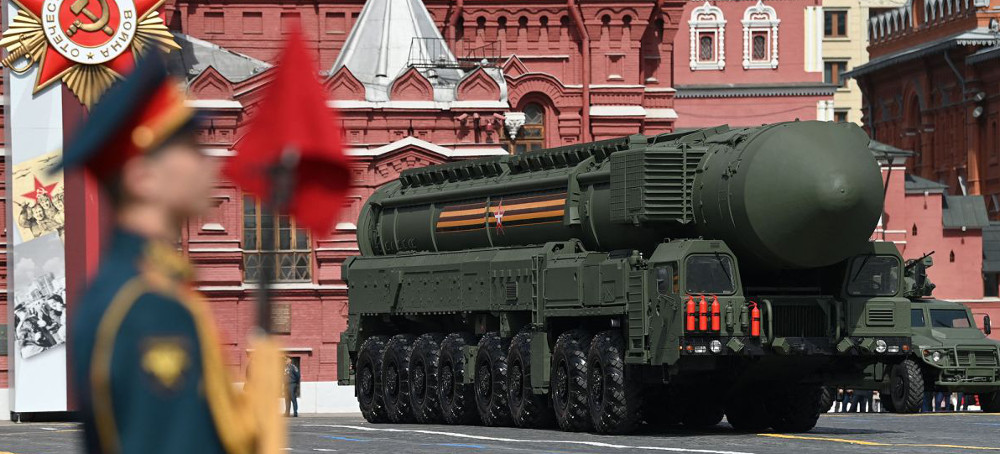 A Russian Yars intercontinental ballistic missile launcher parades through Red Square during the general rehearsal of the Victory Day military parade in central Moscow on May 7, 2022. (photo: AP)
Putin’s blackmail is dangerous; its success would be even worse.
About four miles from the runway at Engels where the explosion occurred, a pair of underground bunkers is likely to contain nuclear warheads, with a capacity to store hundreds of them. Blackjacks and Bears were designed during the Cold War for nuclear strikes on NATO countries, and they still play that role in Russian war plans. The drone attack on Engels was a milestone in military history: the world’s first aerial assault on a nuclear base. There was little chance of a nuclear detonation, even from a direct hit on the heavily fortified bunkers. Nevertheless, the presence of nuclear warheads at a base routinely used by Russian bombers for attacks on Ukraine is a reminder of how dangerous this war remains. On December 26, Engels was struck by another Ukrainian drone, which killed three servicemen.