The Escalation Trap Enters Its Most Dangerous Phase
Robert Pape Escalation Trap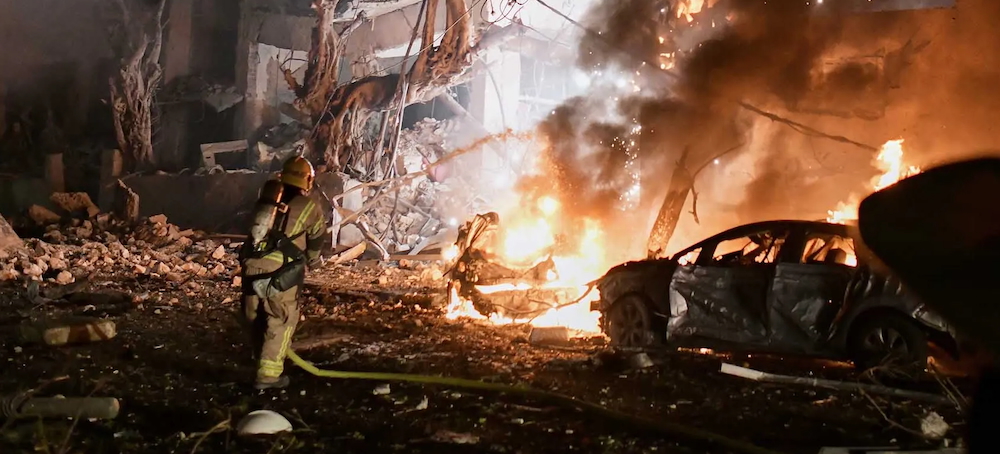 A building in Tel Aviv, Israel, that was hit by an Iranian missile. (photo: Tomer Neuberg/AP)
ALSO SEE: Escalation Trap, Prof Robert Pape on Substack
Iran's Latest Surprise
This is not just another exchange.
It is a signal that the conflict is moving along a predictable—but dangerous—path I call the Escalation Trap.
The Escalation Trap unfolds in three stages.
Stage 1: Limited force to control the conflict.
A state launches precise strikes to degrade capabilities, signal resolve, or compel change—believing escalation can be contained.
Stage 2: Horizontal escalation.
The opponent does not collapse. It adapts—expanding the battlefield, targeting partners, and raising costs in new domains. What begins as a localized conflict spreads geographically and economically.
Stage 3: Forced expansion of the war.
The initiating side faces a choice: accept failure or escalate further—often through ground operations or direct control of territory and critical assets. This is the point where wars become far more costly and far harder to end.
We are now approaching this third stage.
Iran’s ability to extend the range of its missile strikes—now reaching deeper into the Indian Ocean and signaling potential coverage that touches major European capitals—fits squarely within Stage 2 dynamics. It is horizontal escalation at increasing scale.
The logic is clear.
When faced with superior conventional power, Iran is not trying to win by direct confrontation. It is trying to widen the conflict—geographically and economically—so that the costs to its opponents grow faster than the benefits.
That strategy creates pressure on the United States and its partners.
· Pressure to regain control
· Pressure to secure critical assets
· Pressure to act more decisively
This is how the trap tightens.
Each move to stabilize the situation generates new incentives for further escalation. And as those pressures build, the risk of crossing into Stage 3 increases.
That is the most dangerous moment.
Because once ground forces are introduced or critical infrastructure becomes the focus of sustained operations, the nature of the war changes. The conflict shifts from temporary disruption to lasting damage—economic, military, and political.
And it becomes much harder to reverse.
This is the decision point now coming into view.
In Sunday’s live Strategic Escalation Briefing – tomorrow at 4pm CT, 5pm ET -- I will map this transition in detail:
• The indicators that Stage 3 is approaching
• The specific decisions that trigger it
• What it means for the weeks ahead
I will also take your questions live. Link sent to all paid subscribers
If you want to understand where this war is heading before the next phase begins, join us.
—
Robert Pape