Plastic Pollution and Global Heating Caught in ‘Vicious Circle,’ Study Finds
Cristen Hemingway Jaynes EcoWatch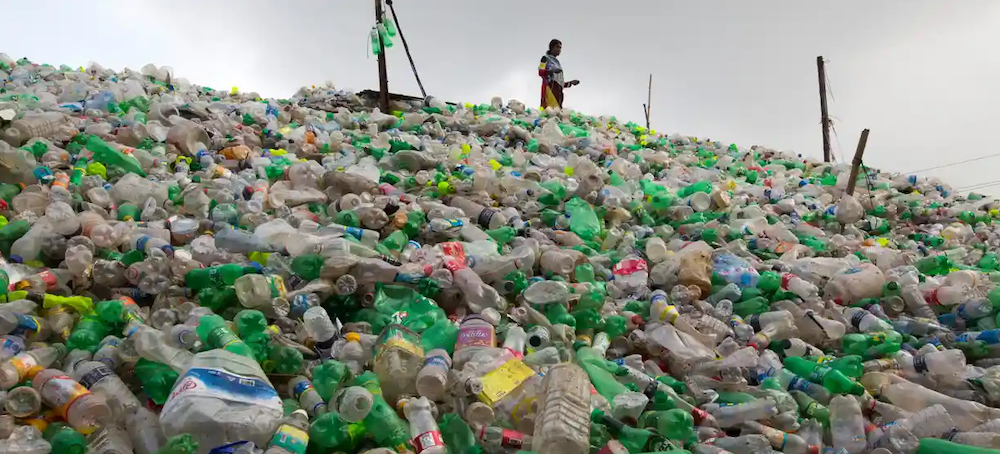 A worker sorts through polyethylene terephthalate bottles in a recycling factory. (photo: Zakir Chowdhury/Barcroft)
The mutually reinforcing relationship increases global heating, plastic waste, the degradation of materials and the leaching of chemicals into the biosphere, a press release from KTH said.
“Polymer materials, mainly plastics and rubbers, are notably sensitive to temperature and moisture fluctuations. As temperatures rise, polymers undergo thermal expansion, leading to inferior properties,” the researchers wrote in the study.
Rising global temperatures will cause everyday plastics to deteriorate more quickly, resulting in increased demand. Producing additional plastic products will lead to more greenhouse gas emissions, driving up temperatures, explained Xinfeng Wei, a polymeric materials researcher at KTH.
“A self-reinforcing cycle is formed, creating a vicious circle between climate change and plastic pollution,” Wei said in the press release.
Plastics were responsible for 3.4 percent of the world’s greenhouse gas emissions in 2019 — roughly 1.8 billion tons — primarily due to their conversion from fossil fuels and their production, the Organisation for Economic Co-operation and Development (OECD) said. That amount is predicted to double by 2060.
The study, “Plastic pollution amplified by a warming climate,” was published in the journal Nature Communications.
The feedback loop described by the researchers links the greenhouse gas emissions with moisture, heat and the weakened structural bonds of polymers like rubber and plastic that are formed from chains of large molecules.
“The higher the increase in temperature, the more the materials’ properties are compromised,” Wei said.
When temperatures reach between 73.4 and 104 degrees Fahrenheit, Wei said common plastics like polyvinyl chloride and polyethylene become more than 20 percent less stiff. The deterioration means polymer products — from clothing and appliances to auto parts — need to be replaced more frequently, resulting in increased manufacturing rates and volumes. The effects range from unreliable food packaging to waterways contaminated by microplastics, Wei said.
Volatile organic compounds (VOCs) and other hazardous compounds such as flame retardants, antioxidants, lubricants, plasticizers, UV/heat stabilizers and colorants can also be released. The leaching, evaporation and diffusion of VOCs into soil, air and water is accelerated by heat.
“A warmer atmosphere increases the evaporation of moisture and can also hold more water vapor,” Wei said in the press release. “The combined effects of rising temperature and moisture create very challenging conditions for these polymers.”
In order to address the dual challenges of climate change and plastic pollution, the researchers encouraged a mobilization of efforts in all sectors of the lifecycle of plastics.