Luigi Mangione Has to Mean Something
Charlie Warzel The Atlantic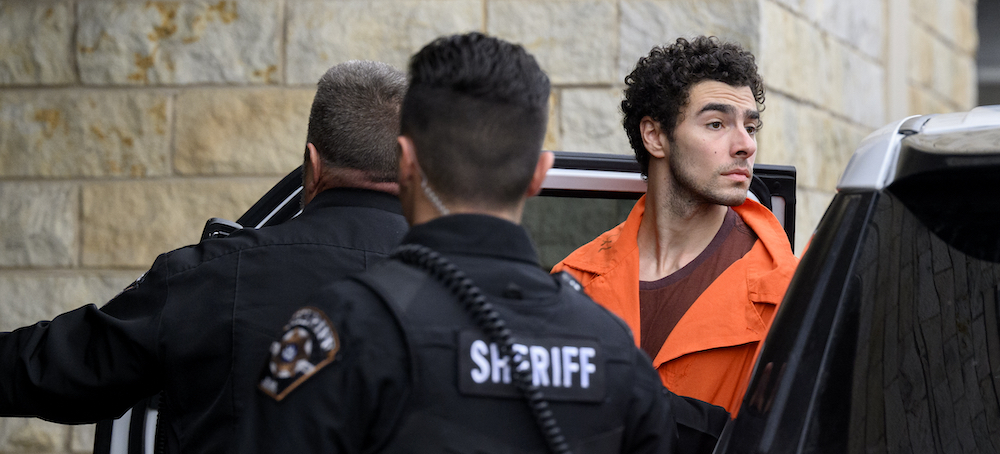 Suspected shooter Luigi Mangione is led into the Blair County Courthouse for an extradition hearing on Tuesday in Hollidaysburg, Pa. (photo: Jeff Swensen/Getty Images)
The internet is better at telling stories than it is at making sense.
And why wouldn’t it? There’s the shock of the killing, caught on film, memed, and shared ad infinitum. There’s the peculiarity of it all: his stop at Starbucks, his smile caught on camera, the fact that he was able to vanish from one of the most densely populated and surveilled areas in the world with hardly a trace. And then, of course, there’s the implications of the apparent assassination—the political, moral, and class dynamics—followed by the palpable joy or rage over Thompson’s death, depending on who you talked to or what you read (all of which, of course, fueled its own outrage cycle). For some, the assassination was held up as evidence of a divided country obsessed with bloodshed. For others, Mangione is an expression of the depth of righteous anger present in American life right now, a symbol of justified violence.
Mangione became a folk hero even before he was caught. He was glorified, vilified, the subject of erotic fan fiction, memorialized in tattoo form, memed and plastered onto merch, and endlessly scrutinized. Every piece of Mangione, every new trace of his web history has been dissected by perhaps millions of people online.