Klamath River Dam Removal: Before and After Images Show Dramatic Change
Cecilia Nowell Guardian UK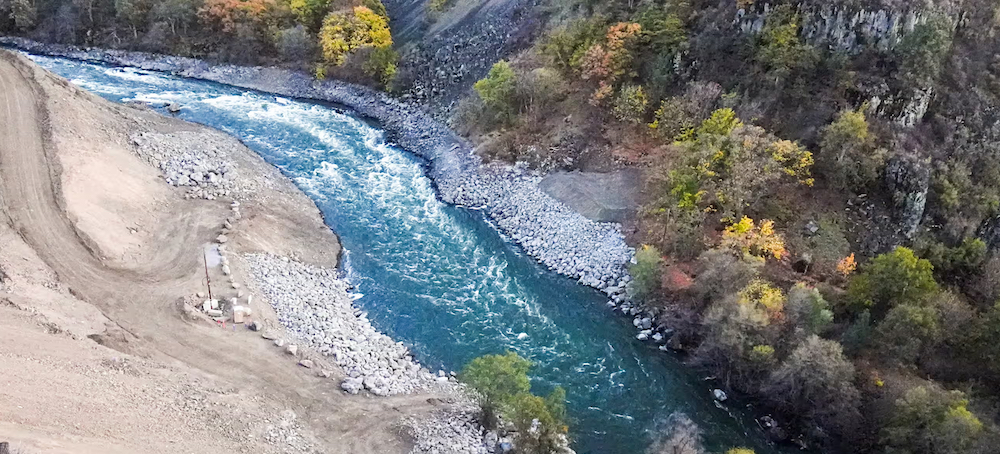 Water flowing down the Klamath River where the Copco 2 dam once stood in Siskiyou county, California. (photo: Swiftwater Films/AP)
Dam removal concluded a decades long fight on 2 October, which also saw Chinook salmon return to the waters
“The tribally led effort to dismantle the dams is an expression of our sacred duty to maintain balance in the world,” the Yurok tribal chairman, Joseph L James, said in a statement. “That is why we fought so hard for so long to tear down the dams and bring the salmon home.”
Between 1903 and 1962, the electric power company PacifiCorp built a series of dams along the Klamath River to generate electricity. The dams disrupted the river’s natural flow, and the migratory routes of its fish – including, most famously, the Chinook salmon.
By 2002, low water levels and high temperatures caused a bacterial outbreak in the river, killing more than 34,000 fish. The incident spurred tribes, like the Yurok and Karuk, and environmentalists to begin advocating for the removal of the river’s dams. In 2022, the Federal Energy Regulatory Commission approved a plan to remove four dams, which would allow the river to flow freely between Lake Ewauna in Oregon to the Pacific Ocean.
The Klamath Dam removal project, which the National Oceanic and Atmospheric Administration (Noaa) called “the world’s largest dam removal effort”, began in July 2023 and concluded more than a year later.
“This is a monumental achievement – not just for the Klamath River but for our entire state, nation and planet,” Gavin Newsom, the California governor, said in a statement. “By taking down these outdated dams, we are giving salmon and other species a chance to thrive once again, while also restoring an essential lifeline for tribal communities who have long depended on the health of the river.”
With the removal project completed on 2 October, scientists with the non-profit California Trout captured images of a 2.5-ft-long Chinook salmon migrating upstream for the first time in more than 100 years the very next day. Yet, scientists stress that it will take many more years to fully restore the ecosystems affected by the dams.