Iran Can be Moved. Can Trump?
Marc Ash Reader Supported News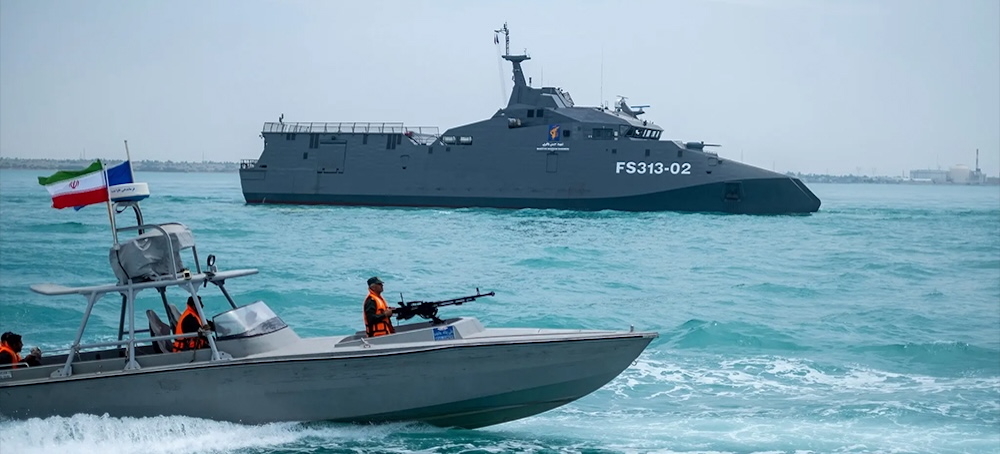 April 2025 | IRGC naval forces patrolling the Strait of Hormuz. (photo: Morteza Nikoubazl/NurPhoto/NYT)
Why attack Iran now? The most obvious answer is that Trump believed it would give him greater political currency and more power. All of the questions about U.S. national security and the American economy were afterthoughts. The thing that mattered was that Trump saw the a potential for political gain and that justified all of the risks he took and that we now take with him.
Are there solutions to the situation in the Strait of Hormuz? Probably, but the problem isn’t in the Strait of Hormuz the problem it’s in the Oval Office. Had Trump seriously been considering what was in the strategic best interests of the American people, as he is sworn to do he would taken a far different approach to confronting Iran.
If the current Iranian regime has an Achilles heel it is their culpability in the wonton slaughter of an estimated fifteen thousand mostly unarmed, young protesters. A number of whom who were hanged after arrest. This leaves no moral high-ground on which the Iranian rulers can stand. Normally this would be currency for external forces trying to topple the regime. But that opportunity was squandered when Trump encouraged an uprising and then lent no material support, leaving unarmed opposition protesters at the mercy of heavily armed IRGC elements. They showed none.
Yes the IRGC’s grip on the throat of Iranian civil society can be weakened. But not if the opposition groups and their communities have no where to turn during the struggle and after. The Trump camp has shown none of the resolve and purpose needed to demonstrate a long-term commitment to a new and more democratic Iran. To the contrary Trump’s orientation to democratic process has been one of open hostility. Preferring rather to embrace corrupt, tyrannical autocrats.
Can anything be done to improve the global security situation, now destabilized by the conflict in the Gulf region in a meaningful way? The short answer is yes, but it will require a patient and steady hand by the U.S. White House.
Here are a few negotiating points that have the potential to be difference makers.
1) No nukes. Iran has long sought nuclear weapons. But its open hostility and aggressive posture on the world stage make the prospect of Iranian nuclear armament an unacceptable risk. The Obama administration already successfully negotiated an effective nuclear weapons limitation treaty, so it should be attainable.
2) No military cooperation with Russia. This is essential to global security and it is also anathema to Donald Trump. Trump adamantly refuses to do anything that Vladimir Putin opposes. With Russian military cooperation the Iranian threat on the world stage is magnified tenfold. Negotiating an end to Iran’s military cooperation with Moscow benefits everyone, even Iran.
3) Free and fair elections. This is the peaceful and intelligent solution to the problem. Iran the nation is ready for it, the IRGC certainly is not. Free and fair elections are a powerful thing, the IRGC might not be able to forestall them longterm. But there is a problem, how can the Trump promote democracy abroad and oppose it at home?