Inflation and the Power of Narrative
Paul Krugman The New York Times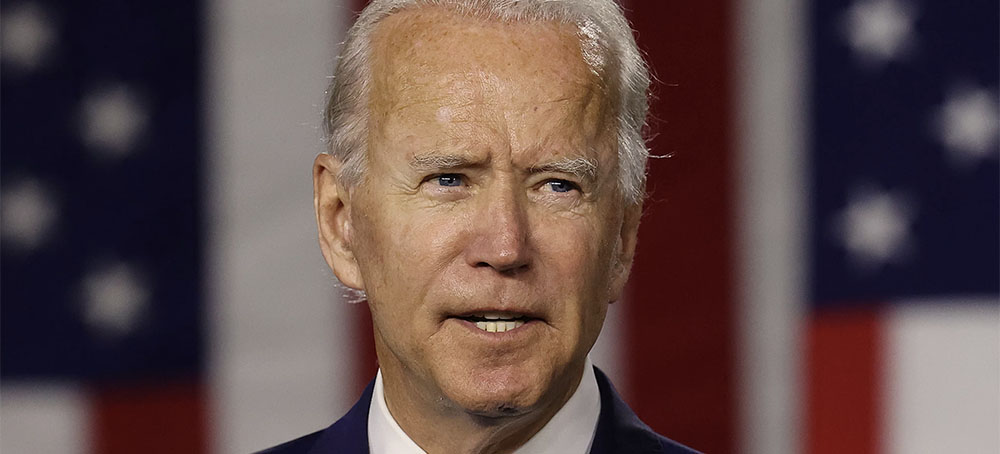 Joe Biden. (photo: Chip Somodevilla/Getty Images)
31 January 22
Joe Biden. (photo: Chip Somodevilla/Getty Images)
31 January 22
But why is inflation proving to be so much of a political liability? The idea that Americans are down on the economy because price increases have outstripped wage growth has hardened into conventional wisdom. And there’s obviously something to that.
But the political reaction is disproportionate to the actual decline in real wages, and I’d argue that journalists are missing a large part of the story if they fail to realize that.
Let’s talk about the long view of wages and prices.
Consider the annual rate of change in real wages — the rate of wage increase minus the rate of inflation — for blue-collar workers since the late 1970s.
There was a huge decline after the 1979 oil shock. Perhaps less familiar is the fact that real wages fell for much of the Reagan era. In particular, in October 1984 — on the eve of the presidential election — real wages were 1.4% lower than they were a year earlier. In October 1988, they were down 0.6%. Yet Republicans won both elections by large margins by running on the economy.
What about our current situation? The most commonly used wage numbers have been screwy during the pandemic, because of compositional effects. For example, average wages shot up in 2020, not because workers were getting big raises but because low-wage workers were laid off in disproportionate numbers. So we need to look at estimates that are supposed to correct for these compositional effects, like the Atlanta Fed’s wage tracker.
The tracker reveals a sharp acceleration in wages; so does the official Employment Cost Index, although it hasn’t yet been updated to reflect the past few months.
Still, there’s no question that inflation has outstripped wages over the past year.
On the other hand, inflation was low in 2020, measured both by the Consumer Price Index and by the Fed’s preferred measure, the personal consumption expenditure deflator.
So real wages rose last year. On a two-year basis, they’re probably down, but not by a lot. At the same time, we’ve had stellar job growth — and as I said, the combination of modestly declining real wages with a strong job market has actually been a winner for past presidents.
This time, however, consumer sentiment is extremely negative — almost as negative as it was in the late 1970s, when real wages were really plunging and unemployment was rapidly rising.
What’s going on? Surely it’s the power of narrative. As many of us have noted, Americans are very down on the national economy, but relatively upbeat about their own personal financial situation.
That is, their personal experience is pretty good, but they’ve heard that things are terrible for other people.
A lot of this is partisanship. Democrats and Republicans used to have similar assessments of the economy, whoever was president. Now Republicans assess the economy as worse than it was in June 1980, when inflation was 14% and real wages were falling 6% a year.
Some of it also has to involve the way the news media cover the economy. I know journalists hate hearing this, but if the way we report on events doesn’t affect public perceptions, what is the point of what we’re doing? And somehow Mr. Biden’s inflation, not Mr. Biden’s jobs boom, has come to dominate news coverage.
I’m not arguing that inflation isn’t a problem, nor am I doing a Phil Gramm and calling America a “nation of whiners.” I am saying that the remarkably negative public reaction to what by historical standards would at worst be considered mixed news is an important story in itself and deserves both some coverage and, perhaps, self-reflection on the part of those reporting on the subject.