Himalayan Glaciers Melting at an 'Exceptional' Rate Because of Global Warming, Study Finds
Doyle Rice USA TODAY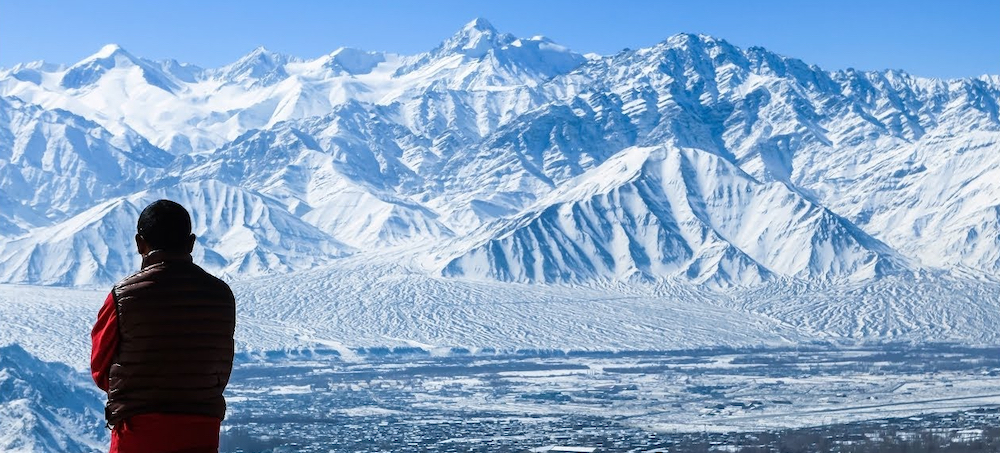 Melting of the Himalayan glaciers, caused by climate change and black carbon from pollution, poses major risks to the people, environment and economies in South Asia and beyond. (photo: World Bank)
21 December 21
Melting of the Himalayan glaciers, caused by climate change and black carbon from pollution, poses major risks to the people, environment and economies in South Asia and beyond. (photo: World Bank)
21 December 21
The study revealed that Himalayan glaciers are shrinking far more rapidly than glaciers in other parts of the world.
“Our findings clearly show that ice is now being lost from Himalayan glaciers at a rate that is at least 10 times higher than the average rate over past centuries," the study's lead author, Jonathan Carrivick of the University of Leeds, said in a statement. "This acceleration in the rate of loss has only emerged within the last few decades and coincides with human-induced climate change.”
Researchers calculated that Himalayan glaciers have lost roughly 40% of their area in the past several hundred years.
The glaciers are a critical source of water for about 250 million people in the mountains and an additional 1.65 billion who live in the river valleys below, according to a report in 2019. These rivers include the Ganges, Indus and Brahmaputra.
The Himalayan mountain range is home to the world’s third-largest amount of glacier ice, after Antarctica and the Arctic. The region is often referred to as the world’s “Third Pole” for its huge store of ice, and it is home to Mount Everest, K2 and other iconic peaks.
Though the mountains are tens of millions of years old, their glaciers are extremely sensitive to the changing climate. Since the 1970s, when global warming first set in, these huge masses of ice have steadily thinned and retreated.
Man-made climate change is caused by the burning of fossil fuels such as gas, coal and oil, which release greenhouse gases such as carbon dioxide (CO2) and methane into the atmosphere. This extra CO2 causes temperatures of the atmosphere and oceans to rise to levels that scientists say can't be explained by natural causes.
"We must act urgently to reduce and mitigate the impact of human-made climate change on the glaciers," Carrivick said.
Study co-author Simon Cook of the University of Dundee said “people in the region are already seeing changes that are beyond anything witnessed for centuries.
"This research is just the latest confirmation that those changes are accelerating and that they will have a significant impact on entire nations and regions,” Cook said.
Monday's study appeared in the journal Scientific Reports, a peer-reviewed publication.