From Alito’s Past, a Window on Conservatives at Princeton
David D. Kirkpatrick The New Yorker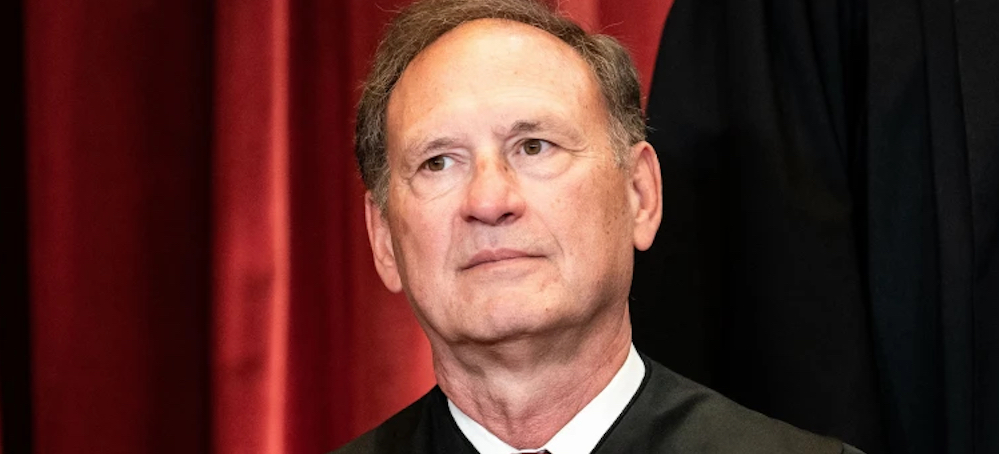 Associate Justice Samuel Alito. (photo: Erin Schaff/Pool/AFP)
The group's members at the time included Samuel A. Alito Jr., now President Bush's nominee to the Supreme Court, although there is no evidence that he played an active or prominent role.
The group had been founded in 1972, the year that Judge Alito graduated, by alumni upset that Princeton had recently begun admitting women. It published a magazine, Prospect, which persistently accused the administration of taking a permissive approach to student life, of promoting birth control and paying for abortions, and of diluting the explicitly Christian character of the school.
As Princeton admitted a growing number of minority students, Concerned Alumni charged repeatedly that the administration was lowering admission standards, undermining the university's distinctive traditions and admitting too few children of alumni. "Currently alumni children comprise 14 percent of each entering class, compared with an 11 percent quota for blacks and Hispanics," the group wrote in a 1985 fund-raising letter sent to all Princeton graduates.
By the mid-1980's, however, Princeton students and recent alumni were increasingly finding such statements anachronistic or worse.
"Is the issue the percentage of alumni children admitted or the percentage of minorities?" Jonathan Morgan, a conservative undergraduate working with the group, asked its board members that fall in an internal memorandum. "I don't see the relevance in comparing the two, except in a racist context (i.e. why do we let in so many minorities and not alumni children?)," he continued.
By 1987, the group had sputtered out.
Mr. Morgan's memorandum and other records of Concerned Alumni are contained at the Library of Congress in the papers of William A. Rusher, a leader of the group and a former publisher of National Review.