Elon Musk’s Near-Daily Online Posts About Race Are Turning Off Some Fans
Faiz Siddiqui and Jeremy B. Merrill The Washington Post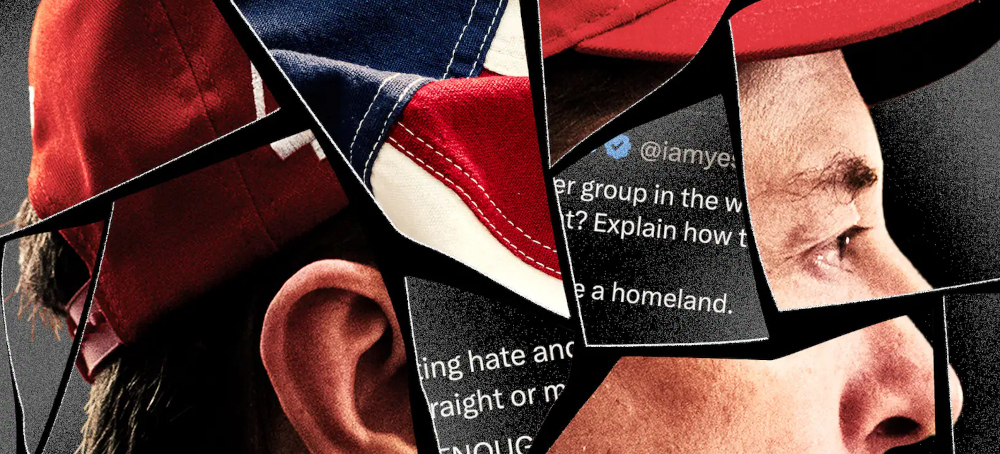 The billionaire posted 850 times on the topic in recent months, almost triple the rate for the previous two years. (photo: The Washington Post)
The billionaire posted 850 times on the topic in recent months, almost triple the rate for the previous two years.
“Whites are a rapidly dying minority,” Musk wrote in January in a post on his social media site X that has garnered more than 17 million views and 150,000 likes. In a February post liked by more than 365,000 accounts, Musk declared that “there has been unrelenting hate and poisonous propaganda in the West against anyone White, straight or male over the past decade or more,” adding, “No more guilt trips. ENOUGH.”
Musk’s X feed has for years served as a megaphone for his conservative views, especially since he emerged as one of the most prominent backers of Donald Trump in the 2024 presidential campaign. But a Washington Post analysis found that Musk has recently significantly increased his rate of online posts about race and his concerns about perceived threats to Whiteness or what he views as calls for a “genocide” against White people.
Over the past seven months, 6 percent of Musk’s posts on X, a total of about 850, have been about race, nearly triple the rate for the previous two years. More than half of those posts have used the word “white.” The billionaire has posted on X about race nearly daily — 166 out of 197 days — from last October to mid-April, The Post analysis found.
In addition to claiming that White people are subjected to unrelenting vitriol, Musk has suggested that race plays a detrimental role in hiring, touted the role of White people in eliminating slavery, and accused public figures and even an AI tool that competes against his own chatbot, Grok, of racism against White and Asian people. He has plunged into political debates about his native South Africa, which he claims has widely discriminated against White people in the post-apartheid era.
The billionaire has increased his use of racial rhetoric at a time he has also faced new business pressures.
His rocket maker SpaceX filed to go public earlier this year and he merged the space company with his artificial intelligence venture xAI, whose AI tools are less popular than those of rivals such as Google and Anthropic. He has also steered Tesla, where auto sales have struggled over the past year, to an unprecedented and ambitious transformation into a robotics company.
Musk has long dispatched unfiltered thoughts to his followers, an audience now numbering more than 238 million on X. Some of the views he has recently espoused about race have ventured into more extreme territory, according to people who have studied the politics of race.
“As far as I can tell, Musk at this point agrees with standard talking points of white supremacy,” said Heidi Beirich, co-founder of the Global Project Against Hate and Extremism, citing Musk’s claim that White people are a “dying minority.”
“You just don’t get more white supremacist than the stuff Musk is signing onto or pushing,” Beirich said.
Musk, Tesla and SpaceX did not respond to requests for comment.
The billionaire’s pronouncements about race have caught the attention of onetime Musk supporters, who in comments to The Post and in their own online posts have argued that his obsessions are a distraction from his business demands and harmful to his ambitions.
“Rivian: focused on autonomy and their next vehicle,” a popular Tesla fan account on X that has become critical of Musk, wrote in December, citing a competing electric vehicle maker. “Elon: focused on the percentage of white people in New Zealand.”
Musk’s recent posts about race could strengthen his reputation as a divisive political figure, an association that harmed Tesla last year after Musk’s actions in the second Trump administration triggered protests at storefronts and contributed to a drop in sales and its stock price.
Many of Musk’s posts on race cut against public opinion. Just 12 percent of Americans believe White people face “a lot” of discrimination, according to a Pew Research Center report from last year, the lowest percentage among any of the racial or ethnic groups reflected in the survey. A Gallup survey last year found that 59 percent of Americans do not believe racial minorities have the same job opportunities as White people, a proportion Gallup has recorded as rising steadily since 2001.
Tesla shareholders have attempted to turn Musk away from political concerns. In November, they agreed to a pay package potentially worth $1 trillion to the CEO, an effort to motivate him to renew his focus on the business after the year of upheaval that followed his endorsement of Trump and time overseeing the U.S. DOGE Service and its drive to reduce the size of government. Musk later fell out with Trump and his political work became untenable with investors. He departed the White House in May 2025.
SpaceX’s IPO, which financial analysts expect to attract record investment later this year, could become a new test of whether Musk’s political views constrict his business opportunities. Some market analysts suspect they may impose little drag on the rocket maker.
“I think there’s always been an Elon tax to own an Elon business,” said Shay Boloor, chief market strategist at the group Futurum, which provides market research and advisory services, referring to the way investors must accept Musk’s controversial public statements to get the potential upside from his businesses.
“I think that the spectrum of that Elon tax is widening,” Boloor said, because Musk’s comments have become more divisive. But many investors are focused on the value Musk commands with his companies, rather than his public rhetoric, Boloor added. “It’s bad to say but I just think for some reason society under-indexes polarizing statements like that,” he said. “Capitalism is surpassing all ethics.”
Some investors have decided that Musk’s statements about race have crossed a line.
In September, Musk posted on X to agree with a screenshot posted by another user that said White people faced a choice between being “conquered, enslaved, raped and genocided while being called ‘racist’” or reclaiming “our nations and our dignity while being called ‘racist.’”
“Yes,” Musk replied.
Fred Lambert, editor in chief of pro-electric vehicle site Electrek, later called that the moment when Musk’s “mask” was “fully off,” in a post on X. The Tesla investor sold off his stake in 2024 citing the company’s efforts to cater to Musk rather than its mission.
“The entire situation baffles me ... there’s no doubt he is a White nationalist based on his recent statements about White people ‘reclaiming their nations,’” Lambert said in new comments to The Post. “As for the massive institutions backing him and investing in his ventures — it’s money before morals.”
Ashley Jardina, associate professor of public policy and politics at the University of Virginia and author of the book “White Identity Politics,” said Musk’s positions constitute “standard white supremacy.”
“It’s just becoming more socially acceptable to express more overt and explicitly racist attitudes,” she said.
President Trump in particular has helped shift the norms around acceptable speech, Jardina said.
Views that in the past would invite public scrutiny and calls to step down as CEO of a major company for a figure of Musk’s stature, she said, are now being pushed into the mainstream. That in turn makes it more likely for others to adopt or promote similar positions, Jardina said.
“I think any time you have a major political figure or celebrity with this kind of microphone using this sort of language without being sanctioned for it does help make it more socially acceptable,” she said.
“I think having other influential ... figures condemning this is effective,” she added. “You don’t see a lot of that directed at Musk.”
The investment community’s tolerance of Musk’s views is part of a deepening pattern, Boloor said — but has become a recognized cost of doing business. “Capitalism beats feelings, unfortunately,” he said.
In one of Musk’s recent posts on X about race the billionaire appeared to suggest that White people should be considered Indigenous to the United States. “It certainly makes no sense that everyone except Europeans can have a homeland,” he wrote. “It’s absolutely ridiculous when you think about it. Where did White people come from??”
Asked how long one’s ancestors must have been somewhere for them be considered Indigenous, Musk replied: “250 years sounds like plenty to me.”
Methodology: The Post analyzed 65,918 posts from Elon Musk’s X account, from January 2023 to mid-April of this year, including 5,146 retweets and 31,663 replies. The artificial intelligence model Claude Haiku 4.5 was used to classify posts about race or racism, White people as a distinctive group or European or majority-White countries potentially losing their character. The model was provided the text of Musk’s post, text extracted using AI from any images and, when relevant, text or text from images in any post to which Musk was replying. Manually evaluating this approach on a set of 400 posts found that it had an accuracy rate of 93 percent.