DOGE Has the Keys to Sensitive Data That Could Help Elon Musk
Desmond Butler, Jonathan O'Connell, Hannah Natanson and Aaron Gregg The Washington Post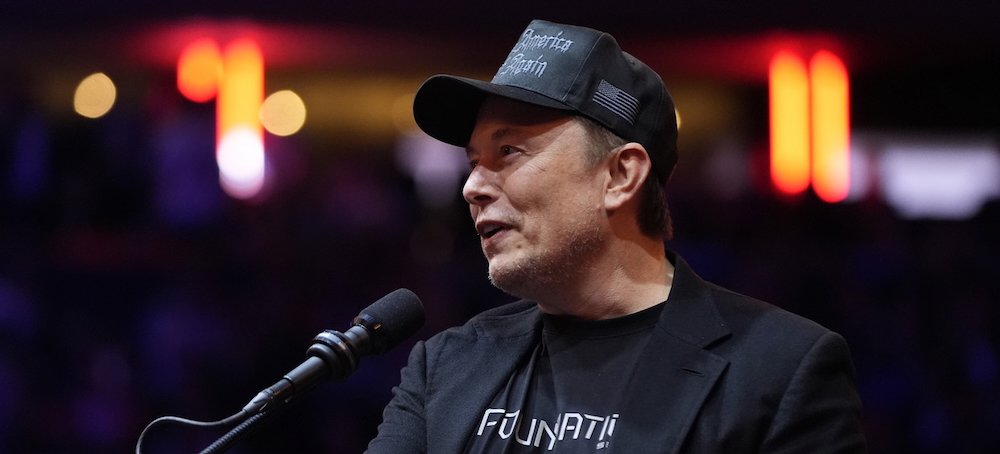 Elon Musk. (photo: Alex Brandon/AP)
A Washington Post review found that in at least seven major departments or agencies, DOGE secured the power to view records that experts say could benefit Musk’s businesses for years.
A Washington Post examination found that in at least seven major departments or agencies, DOGE secured the power to view records that contain competitors’ trade secrets, nonpublic details about government contracts, and sensitive regulatory actions or other information.
The Post found no evidence that DOGE has viewed or misused government information to benefit Musk’s business empire, which spans industries including artificial intelligence, space exploration and medical devices. But some competitors are alarmed about the possible exposure of their proprietary information or other private data.
“So much of the data that we submit to the government is competitively sensitive,” said one executive from a firm that competes with Musk’s aerospace company, SpaceX. “When we do that, we assume it’s protected. And now, it feels that we are vulnerable.”
The company has held internal high-level meetings to discuss DOGE’s access to federal contracting data but has not made those concerns public for fear that its government contracts could be targeted for cancellation, said the executive, who like others interviewed for this article spoke on the condition of anonymity for fear of retribution.
The Post examination sheds light on the scale of Musk’s overlapping interests during his more than four months leading DOGE. It also underscores Musk’s unprecedented view into the inner workings of a federal bureaucracy that has both aided his rise as a businessman and served as a check on his ambitions.
When President Donald Trump issued an executive order on his first day in office to establish DOGE, which stands for Department of Government Efficiency, he called for federal officials to provide the new unit with “access to all unclassified agency records, software systems, and IT systems.” He also ordered DOGE to adhere to “rigorous data protection standards.” Nearly 130 days later, after a contentious effort to slash government spending, Musk said he was stepping away from his government position to refocus on his businesses.
After his departure, Musk feuded with Trump this month over the cost of a proposed legislative package backed by the president, a rupture that threatened to curtail Musk’s influence within the federal government. His level of potential future involvement remains unclear. Some DOGE staffers have since left, while others have taken permanent jobs at federal agencies. White House officials, meanwhile, have insisted DOGE’s work will continue.
Regardless, the information the unit was able to view will remain valuable, experts said, because it has the potential to help Musk’s firms expand into new industries, win additional government contracts, or identify employees who reported unsafe working conditions to federal investigators.
The Post reviewed court documents and interviewed dozens of current and former U.S. government officials to determine which records DOGE aides were able to examine while Musk led the unit. Reporters also spoke with experts and business competitors about how that information, if improperly shared with Musk’s companies, could give them a competitive advantage.
DOGE aides, for example, were given near-blanket access to records at the Consumer Financial Protection Bureau, court records show. The agency holds proprietary information about algorithms used by payment apps similar to ones that Musk has said he wants to incorporate into his social media platform, X.
NASA employees told The Post that DOGE aides were able to review internal assessments of thousands of contracts, including those awarded to rivals of Musk’s SpaceX rocket company, which has already won billions of dollars of government work and is competing for more. (Among SpaceX’s competitors is Blue Origin, a company owned by Jeff Bezos, who also owns The Washington Post. Blue Origin and its executives did not respond to requests for comment.)
And Labor Department employees said in court filings that DOGE aides were allowed to examine any record at the agency, which holds files detailing dozens of sensitive workplace investigations into Tesla and other Musk companies as well as their competitors.
Musk and his companies, including SpaceX, xAI and Tesla, did not respond to requests for comment.
“We’re going to follow all the appropriate ethics and laws attributed to handling federal government and citizens’ data,” White House spokesman Harrison Fields said in response to The Post’s findings. “That is a priority of this administration and that’s exactly what we’re going to do.”
Musk has said that analyzing government datasets was an important part of DOGE’s core mission to find and root out wasteful spending. In an interview with Fox News in March, he said his team was “reconciling all of the government databases to eliminate the waste and fraud.” He added, “It’s frankly painful homework, but it has to be done and will greatly improve the efficiency of the government systems.”
To carry out DOGE’s work, Musk relied, in part, on people with ties to his business empire. At least 20 DOGE aides previously worked at his companies, The Post found. Musk himself retained his roles at Tesla, SpaceX and other firms and led DOGE as a “special government employee,” a designation that carries less restrictive ethical rules than regular government jobs but still prohibits misusing the position for financial gain. In February, as polls showed voters souring on Musk, Trump told reporters, “We’re not going to let him do anything where there’s a conflict of interest.”
A raft of ongoing lawsuits by employee unions, watchdog groups and others have challenged DOGE’s authority, including its right to view government records. Lawyers for the Trump administration have said in court filings that DOGE staffers received training for handling such data and had agreed to do so legally and ethically. Federal regulations prohibit current government employees, including DOGE aides, from disclosing nonpublic information to advance a person’s private interests.
But even Trump’s staunchest allies have raised concerns about giving DOGE broad access.
“I think we have to have a letter of certification that not one dataset or piece of data of the United States government or citizens of this country are held by anybody, or any copies held, except for the Trump administration and the U.S. government,” Stephen K. Bannon, a top White House adviser during Trump’s first administration, said at a conference in April. Bannon, who has publicly clashed with Musk, called for investigations into Musk’s immigration status this month after the billionaire’s split with Trump.
In April, when the interviewer said Bannon seemed not to trust Musk with government data, Bannon replied, “Trust, but verify.”
Expanding into new industries
Musk has long said he intends to turn X, his social media platform, into an “everything app” that provides banking and payment capabilities. He has championed the idea of X being an American version of the Chinese app WeChat, which has more than 1.3 billion active users.
“I think the fundamental thing that’s missing that would be incredibly useful is a single application that encompasses everything,” Musk told X employees in 2023, a year after taking over the company, according to a transcript obtained by the Verge. “… I actually mean someone’s entire financial life. If it involves money, it’ll be on our platform — money or securities or whatever. It’s not just, you know, send 20 bucks to my friend. I’m talking about, like, you won’t need a bank account.”
In January, the week after Trump was inaugurated, X announced that it would partner with Visa to begin offering peer-to-peer payments to users, marking the company’s foray into the financial services industry.
Weeks later, DOGE mounted a hostile takeover of the Consumer Financial Protection Bureau, a watchdog agency that regulates the finance sector and, in some cases, collects its trade secrets.
On Feb. 7, Musk telegraphed the fate of the agency in a post on X. “CFPB RIP” he wrote, adding a tombstone emoji. Less than an hour later, his aides began demanding access to the agency’s information systems.
At 5:36 p.m., an agency communications official received the first in a series of calls from two DOGE aides at the White House, according to interviews with that person, who provided detailed notes from the call.
The DOGE aides asked for passwords and full administrative control of the CFPB website and social media accounts, the person said. That night, Trump’s new pick to temporarily run the CFPB, Russell Vought, issued an order giving DOGE aides the authority to view all unclassified CFPB data, according to internal agency emails obtained by The Post.
Established by Congress in response to the 2008 financial crisis, the CFPB is supposed to enforce federal consumer protection laws. The bureau collects nonpublic information from the companies it regulates and from consumers who file complaints.
It is only one of several agencies housing data that could be used to vet potential customers for financial services, experts and employees said. DOGE has had access to such data — about millions of American consumers — at the Treasury Department, Social Security Administration and Education Department, The Post has previously reported.
A Treasury spokeswoman said that all its employees undergo training and ethics guidance, adding that nonpublic information may not be disseminated and that doing so for personal use could be punished under the law.
A Social Security official said in a statement that the agency “is solely focused on improving technology and delivering on President Trump’s executive order to eliminate information silos and streamline data collection across all agencies to increase government efficiency and save hard-earned taxpayer dollars.”
The Education Department and CFPB did not respond to requests for comment.
The Trump administration has acknowledged in court that two DOGE aides had credentials that allowed them to review the CFPB’s most sensitive records or grant that power to others. Administration lawyers noted, however, that DOGE aides assigned to the agency had certified in written agreements that they would abide by all federal security, confidentiality and ethics laws.
No single person had ever been granted such broad access to the bureau’s data systems, according to a declaration from Erie Meyer, the CFPB’s former chief technologist, later filed in court as part of a lawsuit brought by labor unions and advocacy groups seeking to limit DOGE’s ability to review government records. In interviews, Meyer and other staff called that near-complete access “God tier.”
“Musk could never have gotten ‘God tier’ access to this kind of information as a private citizen,” Meyer told The Post. “This kind of data access was unprecedented in government because there were protections in place, until now, to prevent it.”
Some of the agency’s information would be valuable to private companies looking to expand their footprint within the financial services industry, current and former CFPB employees and experts said.
In recent years the CFPB requested and received data from major tech firms that have built payment apps, such as Zelle, Cash App and PayPal, according to interviews with current and former CFPB staff. That information includes business strategies, internal assessments of products’ development, proprietary algorithms, AI models and the companies’ analyses of their competitors. In many cases, the businesses resisted providing data to the CFPB, arguing that it would be devastating if leaked. The CFPB assured the companies that the data would be protected, according to two officials familiar with the talks.
The CFPB employees who spoke with The Post said that they had not seen any indication that DOGE viewed commercially valuable data or that such information was shared with Musk or any of his companies. But the sensitive nature of the information is a source of anxiety for payment processors competing with X, now a subsidiary of Musk’s xAI.
A lobbyist who represents electronic payment companies described a variety of data held by the CFPB that could harm his clients if leaked to a competitor, including pricing structure, costs and the proprietary information about algorithms. The lobbyist said his clients are unsettled by their uncertainty about how DOGE has handled government data and have shared their concerns with members of Congress during routine meetings on other topics.
“It should be clear that they cannot use that information for competitive purposes,” the lobbyist said.
Government contracts
Since the 2010s, NASA has increasingly turned to the private sector to facilitate space travel, recently pursuing contracts with 14 American companies including SpaceX to help send people back to the moon. SpaceX has been dominant, winning more than $15 billion from the agency for its work on space programs, including those aiming to explore Mars.
Musk’s DOGE team at NASA, meanwhile, gained insight into all the agency’s contracts and grant data, according to interviews with more than a dozen employees and records obtained by The Post. The information compiled for DOGE’s review goes far beyond publicly accessible information about government contracts. It includes detailed descriptions of the services provided to NASA, as well as employees’ explanations for why each contract should be kept, cut or downsized — offering an intimate picture of which services NASA values and why.
NASA is one of at least two agencies that have ongoing contracts with Musk’s companies where DOGE had the ability to examine nonpublic contracting data, The Post found. Experts said such information, if obtained by a Musk company, could provide it with a significant edge in winning future government work.
DOGE is also authorized to examine nonpublic data about firms bidding for government work at the General Services Administration, according to two employees. DOGE was given access to two databases there holding records related to the award of contracts, permitting the team to see who submitted bids, for how much and what kinds of negotiations took place.
The agency, which administers contracts for technology and other services provided to government agencies, has multiple contracts with a subsidiary of Tesla for solar power generation, records show.
NASA declined to comment, and the GSA did not respond to requests for comment.
At NASA, acting administrator Janet Petro sent an email to employees on Valentine’s Day announcing that DOGE would be “reviewing our contracts to find efficiencies.”
By early March, three DOGE aides had been given user accounts within NASA’s internal systems, records show: Scott Coulter and two former employees of Tesla, Alexander Simonpour and Riley Sennott. The DOGE trio obtained “24/7” access to NASA’s administrative offices and the ability to review internal employee data, including employment and training history, records show. Sennott declined to comment. Coulter and Simonpour did not respond to requests for comment.
About a week later, top administrators began sending emails to NASA staffers who work with contracts or grants, outlining a new data request, according to messages obtained by The Post. Staff were told to help with a “comprehensive contracts and grants review” required by Trump’s executive order embedding DOGE aides at federal agencies.
One email directed employees to provide a long list of “supplemental information” for each of NASA’s roughly 13,000 contracts and grants. The information to be compiled included the employee’s recommendation of whether to keep, eliminate or shrink the contract or grant, their rationale for the decision and, in the case of a cancellation, its impact on “the agency’s mission.”
The email exhorted employees to be specific.
“Please ensure that contract descriptions and justifications … contain sufficient detail,” the email said. “Enough detail for a laymen to understand critical work being performed under the contract.”
Staff entered the requested information into a spreadsheet, according to records obtained by The Post, and sent it to the director’s office, where DOGE was installed.
“For any competitor to have that level of access within government agencies is a huge problem,” the executive from the SpaceX competitor said in response to The Post’s findings. “Nobody has that level of detail.”
Most active NASA contracts are listed publicly on a federal website. But the details laid out in those documents — including money allocated, vendor name and a brief description of work performed — fall far short of the information in the spreadsheet, said Christoph Mlinarchik, a former senior contracting officer for the Defense Department who now helps companies compete for and carry out federal contracts.
“Useful info about agency needs is extremely valuable — the coin of the realm — for proposal, sales and business development professionals trying to win government contracts,” Mlinarchik said. So, “getting your hands on a nonpublic spreadsheet that details every aspect of the agency’s contracts creates a tremendous advantage.”
Mlinarchik said that value “will endure for many years,” although it will diminish over time as the agency’s needs evolve.
The information could be useful to Musk’s companies in multiple ways, said Jessica Tillipman, associate dean for government procurement law studies at George Washington University Law School.
Learning which contracts the government plans to terminate or shrink — before that is announced publicly — could tip off companies about what services the government might need in the future, giving them extra time to prepare a more competitive bid, Tillipman said. And the spreadsheet, with its thousands of justifications, paints a detailed portrait of the services NASA officials see as priorities and why. Any company with that level of insight could tailor a more convincing bid, she said.
“This information gives an edge, it helps predict upcoming procurements, it details what the agency might need, and gives insight into its inner workings,” Tillipman said. “Basically you’re looking at the agency’s internal thought processes. And not only that, but who’s doing the thinking.”
Democratic lawmakers have sent several letters to Petro asking what access DOGE has to proprietary or confidential data at her agency, citing potential conflicts of interest for Musk. NASA officials declined to answer those questions directly, writing in a response that “DOGE has identified an individual who will be employed by NASA” who “will have all necessary access to NASA owned or managed resources as required for his duties.”
Regulatory actions
On Feb. 4, two weeks after Trump’s inauguration, leaders at the Labor Department informed headquarters employees that DOGE would be visiting the agency the next afternoon.
On Feb. 5, the day of DOGE’s expected arrival, employee unions and advocacy groups filed a lawsuit challenging DOGE’s authority to examine sensitive Department of Labor records. Agency leaders had told employees that “when Mr. Musk and his team visit, they are to do whatever they ask, not to push back, not to ask questions,” a union representative said in an affidavit filed as part of the lawsuit. Employees “were told to provide access to any DOL system they requested access to and not to worry about any security protocols; just do it.”
The department, tasked with protecting the rights of employees, job applicants and retirees, has more than 50 data systems that contain private information about individuals. DOGE attorneys have argued in court that accessing Labor Department data is required to root out waste and abuse.
But some data could provide Musk a window into sensitive government investigations of his companies, including the names of any employees who may have provided information to aid those investigations, said Jordan Barab, who was the department’s deputy assistant secretary for the Occupational Safety and Health Administration from 2009 to 2017, during the Obama administration.
“OSHA enforcement data remains protected by law, and the agency continues its inspections to safeguard workers’ health and safety — regardless of who the employer may be,” Labor Department spokesperson Courtney Parella said in a statement to The Post.
OSHA enforces workplace safety and health standards, collects information about workplace injuries and conducts investigations. It has investigated and penalized SpaceX and Tesla multiple times for safety violations, including an episode last year in which a contract worker at Tesla was electrocuted and killed while inspecting solar panels at the company’s Texas factory. Tesla is appealing the penalties related to last year’s electrocution.
OSHA has issued more than 40 penalties to Tesla and its subsidiaries since 2010, according to the corporate watchdog and research group Good Jobs First, and a half dozen penalties to SpaceX since 2014. In 2020, a Tesla executive said its injury rate was below the industry average.
The identities of workers who may have shared information about allegedly unsafe conditions are in OSHA’s data, putting them at risk of being outed.
“All that information about workers who file complaints, details of the investigations, are in OSHA’s files,” Barab said.
Workers who contact OSHA can and often do request that their names be kept confidential from the company, Barab said. The agency often publicly releases details about injuries it investigates but does not disclose who provided the information, such as in 2020 when a Tesla employee suffered a broken lower back installing solar panels.
“You’ve got people who are afraid of filing complaints for fear of the employer finding out. OSHA is required by law to keep that confidential if the employee requests that it be confidential,” Barab said.
Those investigations can also involve collecting company documents or taking photographs of jobsites — information that sometimes contains business secrets or proprietary information that companies do not otherwise share with outsiders.
OSHA regularly collects proprietary material in a database, Barab said, and is required by law to keep it private. Otherwise, he said, businesses wouldn’t feel comfortable complying with the agency’s inquiries for fear that the information they provide could be used by competitors.
Among the companies OSHA has investigated are rivals of Musk’s in the automobile and aerospace industry.
OSHA’s database is one of seven Labor Department systems that the employee unions raised as particular concerns in their February lawsuit.
Attorneys for DOGE and the government have pointed out in court filings that aides detailed to the Labor Department are required to act in accordance with applicable laws and regulations for data handling. They also said DOGE employees at the agency were required to fill out paperwork before accessing data systems and to acknowledge legal restrictions on the use of sensitive information. As of early April, attorneys for DOGE and the government did not list OSHA’s database as one DOGE had accessed, and it’s unclear whether DOGE has done so since then.
The judge in the case rejected the unions’ request for a temporary restraining order, allowing DOGE to continue to review agency data. But lawyers for the unions have argued the risk of the data being breached and shared with Musk or someone else in the private sector is too great.
“No other business owner on the planet has access to this kind of information on his competitors,” they wrote. “And for good reason.”