DHS’s Data Grab Is Getting Citizens Kicked Off Voter Rolls, New Complaint Says
Vittoria Elliott WIRED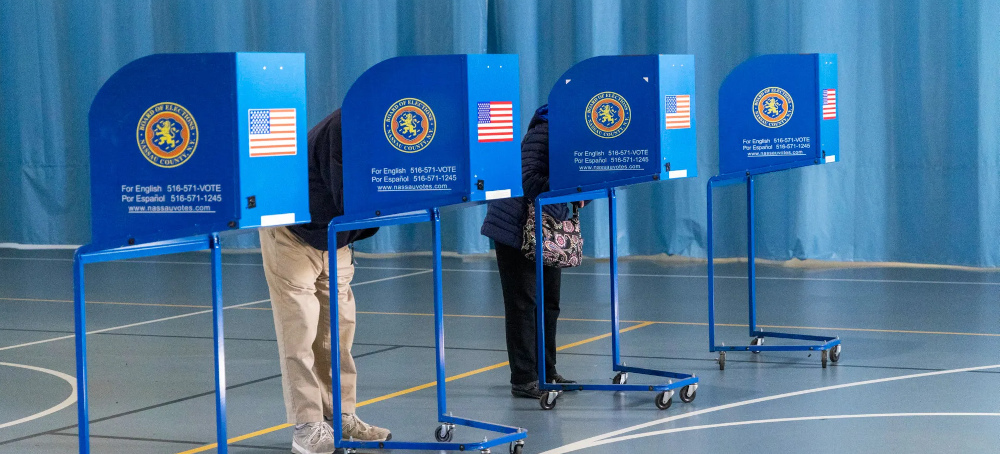 As states check voter registration against a mashup of federal data, a new complaint says US citizens are getting kicked off state voter rolls as a result. (photo: Howard Schnapp/Getty)
As states check voter registration against a mashup of federal data, a new complaint says US citizens are getting kicked off state voter rolls as a result.
In May, DHS began encouraging states to check their voter rolls against immigration data with the Systematic Alien Verification for Entitlements (SAVE) program, run by US Citizenship and Immigration Services (USCIS). SAVE now has access to data from across the federal government, not just on immigrants but on citizens as well.
Experts have warned that using disparate sources of data—all collected for different purposes–could lead to errors, including identifying US citizens as noncitizens.
According to the plaintiffs in a new legal complaint, it appears that it’s already happening.
The complaint, filed against DHS and the Social Security Administration (SSA) in the Washington, DC, District Court by the League of Women Voters and the Electronic Privacy Information Center (EPIC), alleges that the new SAVE expansion has led to American citizens being kicked off state voter rolls and that the creation of what amounts to a national citizenship data bank is unconstitutional.
“Eligible US citizen voters will be wrongfully purged from voter rolls based on inaccurate data from the illegally overhauled SAVE system,” says Nikhel Sus, deputy chief counsel at Citizens for Responsibility and Ethics in Washington, which is counsel for the plaintiffs in the case. DHS did not respond to a request for comment.
SAVE was created in 1986 as a way for states to check whether immigrants applying for government services were eligible to receive them, and it did not have access to information on natural-born American citizens. But as the Trump administration has sought to crack down on immigration, DHS has radically expanded the tool.
Last April, WIRED reported that SAVE was querying data from the SSA, the Internal Revenue Service, and state voter data. On May 22, DHS announced a “partnership” with the SSA and rolled out SAVE as a tool that state and local governments could use for voter verification. The goal, according to USCIS spokesperson Matthew Tragesser, was to “identify and stop aliens from hijacking our elections.” Twenty-two states, including Florida, Texas, and Louisiana, have agreements in place to use SAVE to verify voters’ citizenship by bulk-uploading information from voter rolls and personal identification information, the suit alleges. But in doing so, the complaint argues, some of these states are already disenfranchising eligible voters.
In October, Texas secretary of state Jane Nelson announced that the state had identified 2,724 “potential noncitizens” who were registered to vote. One of those, Anthony Nel, is, in fact, a US citizen. According to the complaint, SAVE identified Nel as a noncitizen “based on outdated data, leading to his voter registration being wrongfully canceled in December 2025.” In response to a request for comment, Texas assistant secretary of state for communications Alicia Pierce referred WIRED to the October press release where the state announced the findings from its use of SAVE.
“We're talking about a known error rate that will result—and already has resulted—in multiple people being kicked off the voter rolls, going into a critical election,” says John Davisson, director of litigation and senior counsel at EPIC, which is one of the plaintiffs in the case.
States are not supposed to immediately purge someone flagged by SAVE from their rolls but are supposed to reach out to the voter to confirm their status. But if voters don’t receive the notice or aren’t able to respond in time, their registration is at risk of being canceled. “It’s a burden that lawfully registered voters shouldn’t have to bear,” says Davisson.
Research has shown that instances of noncitizens voting are extremely rare. Trump and his supporters have spent years spreading misinformation and conspiracy theories about the integrity of US elections, making it a focal point of the right-wing media ecosystem. “Just by identifying potential noncitizen voters through SAVE, regardless of whether they actually are noncitizens, this false narrative will be further fueled,” says Sus. “There is a broader concern about sowing distrust in the integrity of our election results.”
The complaint argues, “DHS and SSA lack any statutory or constitutional authority to transform SAVE into a national data bank to conduct citizenship checks for purposes of determining individuals’ eligibility to vote in elections.” It argues that the inclusion of social security data not only introduced potential inaccuracies but effectively transformed SAVE into something else—a citizenship database.
A privacy threshold analysis (PTA) conducted by USCIS, which was obtained through a Freedom of Information Act request by the plaintiffs and has been reviewed by WIRED, warns that USCIS knew that “shortfalls in data accuracy in the system could cause incomplete or false results,” even as DHS was encouraging states to use the tool. The PTA marked SAVE as “not in compliance” with privacy regulations, in part because it had not yet issued a system of records notice, the legal notice required to inform the public that social security data was being shared for immigration purposes.
The PTA, which was completed in July 2025, noted that inaccuracies in the new SAVE system could be due to a lack of electronic records, particularly from the SSA, which were “not reliably recorded pre-1981.” The PTA further notes that USCIS “is not the source agency for Social Security Administration–related information” and therefore “cannot verify accuracy” of SSA data.
“Voters are being wrongfully and illegally removed from the rolls on the basis of data that is known to be inaccurate,” says Davisson.
Leland Dudek, former acting commissioner of the SSA, says the PTA accurately reflects potential issues with social security data being used in SAVE. “Social Security numbers were never intended for this use case,” says Dudek. “The records of Social Security are for the discreet and explicit purposes of old age survivors, disability insurance, and Social Security insurance.” Social Security numbers are issued to people legally allowed to work in the US and do not change once someone naturalizes. Immigration and naturalization processes are managed by DHS, and naturalized citizens are not required to tell SSA if they naturalize, meaning SSA data may be out of date. (In March 2025, SSA suspended a program that automatically mailed Social Security cards to newly naturalized citizens and people authorized to work in the US, requiring instead that they physically appear at one of the agency’s regional offices.).
Dudek says the new SAVE tool was likely not fit to be rolled out for voter identification. “It needed to be rolled out in a way that was thoughtful,” he says. “When you're targeting the most fundamental right of democracy, you have to give consideration and gather input.”
This use of social security data to create a kind of national citizenship verification system, Sus says, extends far beyond the authority of DHS. “Congress has provided no specific statutory authorization for the Department of Homeland Security to create a national citizenship data bank to look up any American’s citizenship status,” Sus says. “DHS is effectively imposing a backdoor, federal documentary proof-of-citizenship requirement for voters whose citizenship SAVE can’t confirm. Not only will this needlessly burden the voting rights of US citizens, but it undermines Congress’ choice to not adopt a documentary proof-of-citizenship requirement for voting.”
As the midterms inch closer, other government systems are being proposed to further tamp down on voting access. Congress is considering a SAVE Act that would require proof of citizenship to vote. Billionaire Elon Musk has publicly supported ending the congressional filibuster to pass an “election integrity” law. Earlier this week, a different court filing indicated that a member of the Department of Government Efficiency team at the SSA had signed a “Voter Data Agreement” with a political advocacy organization seeking to “find evidence of voter fraud and to overturn election results in certain states.”
The hurdles from the SAVE program, meanwhile, are more than enough to keep voting advocates concerned. Sus worries that the SAVE program could introduce further barriers to voting in the run-up to the 2026 midterm elections. “In Texas, there are primary elections coming up in March,” he says. “If a voter’s registration is canceled close to that election, and they don't have time to get together the documentary proof of citizenship that is required to reinstate their registration, then they may lose the right to vote.”