Congo’s Hidden Victims: Child Survivors Recount Gang Rape, Sexual Slavery by M23 Forces
Giulia Paravicini Reuters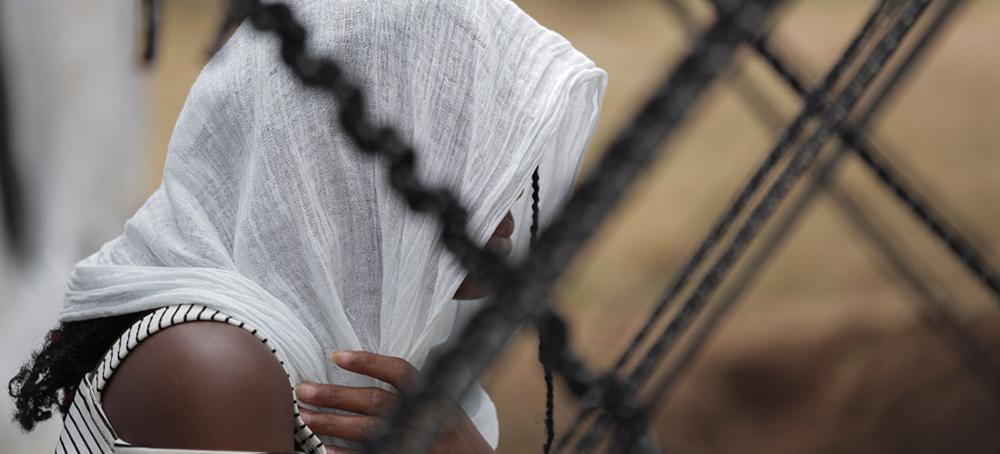 At least six M23 combatants entered the home of 17-year-old Jocelyne in January during the fall of Goma. (photo: Evrard Ngendakumana/Reuters)
M23 and other armed combatants are using sexual violence as a weapon of war in Congo. Reuters spoke with 46 rape victims, nearly half of them children. One was so badly injured that two surgeries have only begun to repair the damage. It’s a tactic of terror meant to destroy families and communities, a veteran doctor who works with rape survivors told Reuters.
A shell exploded nearby as the insurgents battled Congolese troops and a government-allied militia in January, about 25 kilometers northwest of the city of Goma. In the chaos, Salima, then 17, and another girl seized the chance to escape their tormentors.
Now living in hiding in a rebel-controlled area with her family, Salima is far from free. A victim of sexual violence, she is haunted by her nearly eight-month ordeal at the hands of M23 combatants.
“They would rape us as much as they needed it. Each day different men, but all of them raped us every day,” Salima said, her gaze vacant and downcast at the memory.
Salima’s suffering is part of the latest chapter in the troubled history of the Democratic Republic of Congo, a mineral-rich but desperately poor central African nation of more than 112 million people. Rape has been used as a weapon of war through decades of strife between the DRC’s military, ethnic Hutu militias and Tutsi insurgents. That discord is rooted in the 1994 mass slaughter of Tutsis by Hutus in neighboring Rwanda, a genocide that destabilized both nations and has kept them locked in conflict.
Still, sexual assaults have soared since the Rwanda-backed rebels of M23 seized a large swathe of eastern Congo in a lightning offensive this year in their bid to topple the government in Kinshasa. A child is raped there every 30 minutes, the United Nations children’s agency UNICEF said earlier this year, in what it characterized as the world’s worst outbreak of such conflict-related atrocities in decades.
Congolese gynecologist Denis Mukwege, 70, was awarded the Nobel Peace Prize in 2018 for his work on combating sexual violence in DRC. He has treated tens of thousands of rape victims and survived two wars, including the First Congo War of the late 1990s, when he said armed men massacred colleagues and patients at a hospital where he worked. But the sexual violence and brutality against women and children sweeping his country today surpasses anything he has seen, he said.
“Congo is experiencing the most difficult and gruesome moment in its history,” said Mukwege, who is still active but left Congo this year and has yet to return amid the fighting. “Today, our children are being massacred, our women are being killed, raped, or raped and then killed. It is one of the most dramatic crises our country has ever experienced.”
Through the first nine months of 2025, a reported 81,388 rapes occurred in eastern Congo, a 31.5% increase over the same period in 2024, according to the United Nations Population Fund (UNFPA), the U.N.’ s reproductive and sexual health agency. It said one-third of the victims were under the age of 18, and that these assaults were largely committed by armed men from all parties in the conflict.
Those figures are almost certainly a fraction of the actual toll, said Noemi Dalmonte, UNFPA’s deputy representative in Congo. Women and girls there often don’t disclose their assaults out of fear of reprisals by their attackers, she said. Hospital and aid workers who collect victim testimonies are likewise fearful of being targeted. Shame and social stigma inhibit victims, too. Yet each week hundreds more Congolese women and girls come forward to report sexual violence by armed combatants, Dalmonte said.
UNICEF spokesman James Elder said in April that “the rate of sexual violence against children has never been higher” in Congo, calling it a “deliberate tactic of terror.”
Their pain comes as Rwanda and Congo on December 4 signed a U.S.-led peace deal hailed as a “great miracle” by President Donald Trump. “We’re settling a war that’s been going on for decades,” Trump said at the Washington event. “We’re succeeding where so many others have failed.” Qatar is hosting parallel talks aimed at ending hostilities between the Congolese government and M23.
Facts on the ground tell a different story.
Fierce fighting has continued in eastern Congo since the Washington signing, with warring sides blaming each other. The Tutsi-led M23 rebels, sanctioned by both the U.S. and European Union for fomenting violence, currently control more DRC territory than any insurgency in two decades. On Wednesday, M23 forces entered the Congolese city of Uvira, a key base of operations for DRC’s army near the border with Burundi, sources told Reuters, the latest milestone in the rebels’ advance. Elsewhere, M23 is entrenching its gains in a conflict that has sucked in troops from Congo, Rwanda, Burundi, Uganda and South Africa over the past three years. This year’s fighting alone has killed thousands of people and displaced hundreds of thousands more. Rapes and other atrocities continue.
UNFPA’s Dalmonte says the eastern DRC remains “one of the most dangerous places in the world to be a woman or girl.”
In an emailed statement, a senior Trump administration official said that “President Trump and his Administration have arranged a historic agreement that secures commitments from both countries to stop the violence.” The U.S. expects “immediate action from Rwanda and DRC to lift defensive measures and combat armed groups,” the statement said.
For this story, Reuters spoke to 46 female victims of sexual abuse who said they were raped in Congo between 2023 and May 2025. Their attackers, they said, hailed from both sides of the conflict, reflecting the tug-of-war for territory.
Half of the victims said they were sexually assaulted by M23 rebels. Thirteen cited Congolese government soldiers. Two said their attackers were with the Congo-backed Wazalendo militia. The rest said they could not determine the affiliations of their rapists. The girls and women who identified the armed groups to which their assailants belonged said they did so through the languages, accents, uniforms and types of weapons their attackers used.
M23 didn’t respond to requests for comment on the findings of this article. Corneille Nangaa, leader of the Congo River Alliance of insurgents that includes M23, acknowledged that some women and girls may have been raped by alliance forces in the chaos of conflict.
“Within an army it is possible that some incidents of sexual violence might occur; that happens in every army,” Nangaa told Reuters in a November telephone interview. “However, sexual violence is very condemned by the internal code of our movement.”
Nangaa said an unspecified number of soldiers have been punished by an internal disciplinary committee of the rebel alliance. He did not elaborate.
The DRC government said in a statement that it condemns the crimes of rape and forced conscription of minors “in the strongest terms” and said they won’t be tolerated “regardless of the affiliation of the perpetrators.”
Rwanda’s Foreign Minister Olivier Nduhungirehe, in a December interview with Reuters, dismissed victims’ allegations of sexual violence by M23 as “propaganda” and “hate speech” fueled by anti-Tutsi forces in Congo. He said there “are groups receiving money (for) creating stories,” without elaborating. He called on the international community to investigate abuse claims on the ground.
Wazalendo and the Congolese Armed Forces didn’t respond to requests for comment.
Just under half of the victims Reuters spoke to were minors, 22 in all. The youngest to be raped was a 10-year-old child. Ten of the girls recounted being assaulted alongside their sisters or mothers. Rapists inflicted such severe internal injuries on a 15-year-old named Simon that she required multiple surgeries to repair her vagina and rectum and can barely sit or walk nine months after the incident, according to the girl, her doctor, family members and medical records viewed by Reuters.
Salima’s captivity was among the longest endured by the children who spoke to Reuters. She described traveling with a mobile unit of M23 insurgents for the better part of a year, serving as a domestic drudge and sex slave with two other girls, the youngest just 13.
Some boys, too, have been raped. A mother from Goma told Reuters that M23 troops sexually assaulted her, her 14-year-old daughter and her 13-year-old son during the city’s fall to the rebels. Other boys helped carry out systemic sexual violence under the command of armed combatants, witnesses said.
Robert was 16 when he said he was taken by M23 in January 2024 and eventually sent to the same unit as Salima. He said his job was rounding up females in every community captured as spoils of war. Beaten severely by the rebels after an escape attempt, Robert said he ultimately assaulted three women himself.
“We would not have mercy on them. We would rape them and let them go, and move on to another village and look for new girls,” the teenager said. Like Salima, Robert said he deserted his minders during the confusion of heavy fighting in January this year and is now in hiding with his family in insurgent-held territory.
More than 10,000 children are believed to be in the ranks of armed groups in North and South Kivu, two major provinces in eastern Congo, according to an official from an organization working with child soldiers in DRC. Robert and nine other boys interviewed by Reuters said they were forcibly conscripted by M23 or the government-backed Wazalendo militia.
Nangaa of the Congo River Alliance denied that the alliance has ever pressed children into service. He said underage volunteers are turned away.
“There have never been minors and children recruited into our ranks,” he told Reuters.
Reuters is withholding the full names of the rape victims in this story. Some of the interviews took place in rebel-controlled territory in Congo. Most were conducted in neighboring Burundi, where at least 70,000 Congolese civilians have fled since January 2025.
The news agency obtained consent forms from the parents or guardians of each minor interviewed. Reporters spoke with the children in the presence of a psychologist or a social worker employed by aid agencies assisting the young people. Reuters also reviewed medical records or “rape certificates” provided by 18 victims who had received care from a medical charity. For eight children, it reviewed “demobilization certificates,” an official document issued by the Congolese government’s social services division that identifies a minor as having exited an armed group.
In addition, reporters spoke to more than 40 people, the majority of them working on the ground in Congo and Burundi. Those sources include doctors, humanitarian workers, diplomats, U.N. officials and civil-society activists.
Many of these people said recent peace initiatives have failed to improve the lot of Congo’s people, particularly women and girls.
Mukwege, the Nobel Peace Prize winner, said both the Qatar and U.S. efforts are happening without input from Congo’s people, civil society or its parliament.
The process is “neither inclusive, nor sustainable, nor fair. The victims are completely ignored,” he said.
‘They would kill people like animals’
Salima’s ordeal began in June 2024, as M23 was gathering strength and positioning itself for an assault on Goma, a strategic Congolese city of more than one million people on the border with Rwanda.
The daughter of a small-scale trader in surrounding North Kivu province, Salima told Reuters she was returning home aboard a motorcycle taxi after a day of selling clothing and household items with her mother in the town of Mushaki when she spotted M23 combatants blocking the road ahead. The men stopped the driver and ordered her off the bike, she said. When she asked why she was being detained, Salima said the men beat her and dragged her into the forest.
What followed, she said, was a gauntlet of privation, cruelty and abuse. Salima said she and two other captive girls spent their days cooking, gathering firewood and hauling heavy boxes of ammunition for the unit, which moved frequently across the hills of eastern Congo towards Goma.
Rapes came more frequently than meals, Salima said, typically three times a day. “We were eating scraps of the food that we prepared for the soldiers. I could never wash for all the months I was with them; I slept on the grass without even a blanket,” she said.
A month into their bondage, the three girls were preparing to escape but were foiled when an M23 fighter overheard them. Salima said one of the trio, a 15-year-old named Safi, tried to run and was shot dead by the gunman. The killer, she said, left the girl’s body to rot in the forest as a warning to Salima and her remaining companion, Nsimire, the 13-year-old, who would become pregnant in captivity.
“They would kill people like animals,” Salima said.
Robert, the child soldier who was part of the same M23 unit, confirmed parts of Salima’s account, including the circumstances of Safi’s killing and Nsimire’s pregnancy.
Salima got another chance to escape in January 2025. As the M23 unit engaged in intense fighting around them, she and Nsimire fled.
“I was terrified. I ran and I thought about life and death,” Salima said.
Raised in the area and familiar with its topography, the girls trekked 20 kilometers barefoot to Mugunga, a sprawling camp for internally displaced people on the outskirts of Goma. At the time, the camp was run by the Congolese government and humanitarian agency partners. Salima reunited with family members residing there.
Their joy would be short-lived.
On January 27, M23 marched into Goma as government forces retreated. A bloodbath followed. Around 3,000 deaths were reported in the city, DRC Prime Minister Judith Siminwa told the U.N. Human Rights Council in Geneva on February 24. She said 90 refugee camps were destroyed, displacing 450,000 people. Mugunga was among them.
Salima and her family fled and are now living in a location in eastern Congo that is still under M23’s control. She doesn’t know what became of Nsimire and her baby. Reuters was unable to locate Nsimire.
Salima’s account was deemed credible by two social workers and one aid worker who assisted her and other minors who exited armed groups. All requested anonymity for fear of reprisals by M23.
Reuters also obtained a copy of Salima’s March 11 government-issued demobilization certificate. The two-page form lists Salima’s age as 17, attests that she was held by an armed group and describes her as a victim of sexual violence who suffers nightmares and needs urgent medical and psychological support.
Robert, the former boy soldier, is struggling, too.
Born into a farming family in eastern DRC, he said he was forcibly conscripted by M23 rebels in January 2024 at the age of 16. Robert described harsh treatment by superiors, saying he was beaten 150 times with a stick on the soles of his feet for an early escape attempt.
Robert said he had recognized Salima and Nsimire in his unit because the three teens all grew up in the same area. He said the girls were largely kept separate from his group, so he didn’t witness their frequent rapes or Safi’s killing. But he said word spread quickly around the camp about their ordeal. “An M23 soldier shot her,” Robert said of Safi.
An aid worker who helped Robert after he fled the armed group confirmed to Reuters that the boy and Salima were in the same unit of M23.
Robert also recounted his role in rounding up women and girls for rape. He said he did it out of fear of M23. Now 18, he spends his time shuttling between relatives’ homes in rebel-controlled territory, worried about being discovered. “I live in hiding,” he said. “I can’t move freely.”
Suffering, surgery and stigma for rape victims
Conflict – and the use of sexual violence as a weapon – have plagued Congo for decades. The First Congo War of 1996-1997 was stoked in part by the 1994 genocide in nextdoor Rwanda, when refugees and militant forces surged across the border into DRC. The embers of those conflicts ignited the Second Congo War, which ran from 1998 to 2003. It drew in seven countries and killed more than 5 million people, many of them from hunger and disease.
Today’s fighting began in 2022 when Rwandan forces entered Congo to back the M23 rebels, who claim the DRC government has failed to protect Tutsis living there. Rwanda has long denied supporting M23, an assertion widely discredited by the international community.
When gynecologist Mukwege opened Panzi Hospital in the eastern city of Bukavu in 1999, he had one goal: to create a center of excellence for maternal health in a country with appalling mortality rates for pregnant women. As it turned out, some of his first patients were babies raped by combatants in the Second Congo War. The youngest victim was just 6 months old, Mukwege said.
He said mass rape is not a byproduct of the region’s wars, but rather a core strategy used to wage them. Panzi Hospital has treated more than 80,000 victims of sexual violence since its founding, according to its website.
“Rape is an effective weapon because it’s a weapon that destroys the victim, as well as their family, the community,” Mukwege said. “It destroys the social fabric, thus rendering the community completely unable to organize itself.”
Today, the number of rape victims aged 12 to 17 has increased dramatically, Mukwege said, with minors accounting for 30% of those who give birth at his hospital. Many child survivors cope with sexually transmitted infections, infertility, incontinence and chronic pain for the rest of their lives. Pregnant girls whose bodies aren’t fully developed face life-threatening complications in childbirth.
Stigmatization is another life sentence, he said. Survivors often don’t return to school and their marriage prospects are harmed. Children born from rape are marginalized alongside their mothers. Many rape victims end up abandoning their children at the hospital, Mukwege said.
Simon is among the girls whose lives have been shattered by sexual violence. She said she was at home with her family on March 1 when M23 insurgents entered her house in the town of Kamanyola, about 50 kilometers southeast of the Congolese city of Bukavu. Simon, her mother and 8-year-old sister were all sexually assaulted. But the perpetrators saved their worst for Simon, who was then 15.
The family would later find the teen naked, bound and unconscious in a nearby field. Her rapists had penetrated her with bladed weapons and tree branches, leaving fragments of wood inside her.
“It was dark and night, I felt atrocious pain in my intimate parts,” said Simon, now 16, recalling the attack to Reuters, her skeletal body elegantly wrapped in a traditional cloth called pagne and her brown eyes wide. Tears rolled down her sunken cheeks.
Simon’s account of that night and what followed was confirmed by the girl’s aunt and uncle.
As fighting in the area raged, Simon’s parents couldn’t risk trying to get her to Mukwege’s Panzi Hospital in Bukavu. At home, the teen drifted in and out of consciousness for a week. With her health deteriorating fast, the family decided to seek medical care in neighboring Burundi, a safer but much longer and costlier trip. Simon’s father, a motorcycle taxi driver, sold his motorbike, the pillar of the family’s income, to finance the journey and her treatment.
There, Congolese gynecologist Dr. Aganze Mweze Gloire, who had studied under Mukwege, performed two reconstructive surgeries on the girl. Dr. Gloire said Simon’s injuries suggested that she was raped multiple times and penetrated with knives and pieces of trees, decimating the tissue separating the vagina and rectum. He described the damage as the most horrific he’s ever treated.
Simon had “fecal matter passing through the vagina with multiple lacerations. The vagina and rectum were almost completely shredded,” Dr. Gloire said. “In a young girl like that, 16 years old, it was truly a shock. I’ve never seen anything like it.”
Dr. Gloire said Simon needs additional surgeries to continue her recovery. But the family couldn’t afford further treatment and returned to Congo.
These days Simon barely leaves the house, terrified by the mere sight of men in uniform, her uncle said. She has been ostracized by her community, he said, as have Simon’s mother and younger sister. The extended family have all relocated to a different city, he said.
Simon “can’t walk properly, she can’t even sit on a chair, she is very skinny and barely eats and is in terrible pain, but we can’t afford to go see a doctor,” her uncle told Reuters by phone in November.
As rapes soar, the U.S. cuts aid
Some health and humanitarian workers on the front lines of caring for Congo’s rape victims said they, too, are under threat by M23 combatants.
The U.N. Human Rights Council said in a September report that all parties to the conflict in eastern Congo had committed serious rights violations that may amount to war crimes and crimes against humanity. The report said M23, the Congolese army and a Hutu militia subjected female victims to systematic sexual violence, including sexual slavery. The army and the Hutu militia declined to comment.
In response to the report, M23 leader Bertrand Bisimwa told Reuters in September that the U.N.’s allegations were fabricated and were an attempt to turn public opinion against the group. M23 has also denied past allegations that it has committed atrocities.
Reuters spoke with 18 doctors, NGO staffers and civil society activists who have treated Congo’s rape survivors or work collecting victim testimonies and data on abuses. They described what they said were efforts by M23 to intimidate them into covering up these crimes.
A doctor in Goma who assists victims of sexual violence told Reuters that M23 officials visited their hospital earlier this year and ordered health workers who log rape cases to stop noting in their records the armed group to which the alleged perpetrators belonged. The doctor showed Reuters earlier registries where those groups were recorded and new ones where that column is now left blank.
The head of a civil society organization assisting victims of sexual violence in Congo told Reuters that M23 officials this year forced the group to delete all statistics it had gathered on rape, kidnapping, summary executions and other abuses. Chantal Murekatete, the rebels’ senior advisor in charge of gender, family and children, education, social and humanitarian affairs, told the group and other local organizations working with survivors “not to question victims about rape,” the civil society executive told Reuters.
In addition, M23 disbanded a police task force that had handled sexual violence cases, the head of the civil society organization said. M23 has taken charge of the civil service and police in Congolese territory it controls.
M23 and Murekatete did not respond to requests for comment on their handling of sexual violence cases, the treatment of aid groups or the alleged disbanding of the task force.
Aid workers assisting rape victims said they’re also hampered by a shortage of emergency kits to help survivors. These so-called post-rape kits include medications to prevent HIV and other sexually transmitted infections as well as unwanted pregnancies.
U.S. foreign aid cuts are a big reason. In July, Reuters reported that the Trump administration canceled a major contract to supply emergency kits for rape survivors in Congo, leaving thousands without access to potentially life-saving medications.
Trump’s shuttering of the United States Agency for International Development has been a major blow. The top U.S. aid agency once funded 50% of all sexual and reproductive health services in eastern DRC, according to UNFPA, across more than 2,000 health facilities in North and South Kivu provinces. Loss of that funding has put the region’s system “on the brink of collapse,” the agency told Reuters, leaving many facilities with “no kits at all at a time when rape was soaring.”
Across North Kivu, a province of more than 10 million people, there were only enough post-rape kits available to treat 845 survivors as of the end of October, UNFPA told Reuters. For the period from August through November, the projected need exceeded 23,000 individuals, it said.
The U.S. State Department did not respond to a request for comment.
UNICEF told Reuters in November that without additional funding, 300,000 children in eastern DRC could lose access to essential sexual violence and protection services. The children’s agency said that many such programs financed by various partners had come to an end due to cuts linked to U.S. grants. So far, no other country or aid organization has filled the funding gap.
For many rape victims in Congo, healing is far away. Simon dreams of additional medical treatment to mend what’s left of her broken body, and of a fresh start somewhere else.
“I wish that my family and I could leave this place so that I no longer have to see the men in uniforms,” she said.