California City Approves Industrial Park Next to One of Earth’s Oldest Trees
Shannon Osaka Washington Post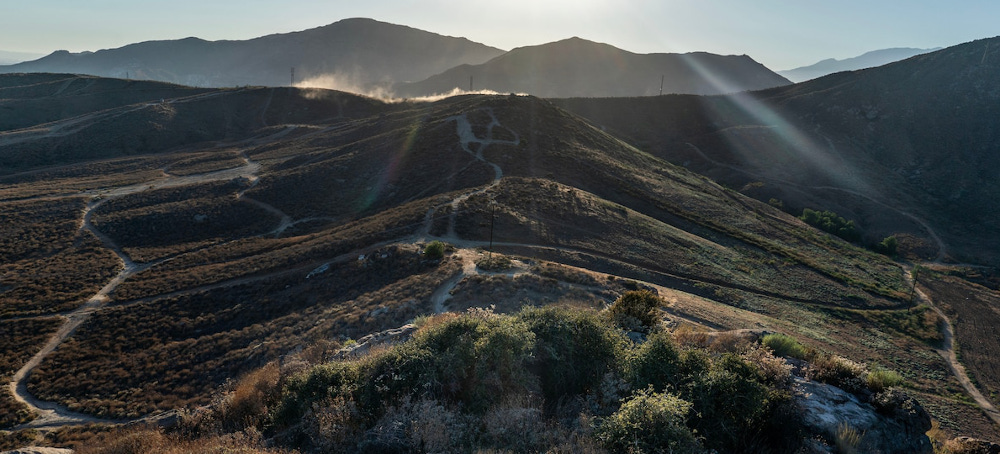 Looking more like a sprawling tree shrub, the Jurupa Oak has survived since the last ice age. (photo: Melina Mara/The Washington Post)
After months of deliberation, the city of Jurupa Valley approved a development next to an oak tree that is at least 13,000 years old.
After months of debate that thrust the small city of Jurupa Valley, Calif., into the national spotlight, the city council approved a plan on Thursday night to build a development next to the Jurupa Oak, an ancient tree that has survived since the last ice age. The vote was 3-2.
“It’s shocking and sad to see the city fail to protect an ancient plant that is truly a wonder to behold,” Meredith Stevenson, an attorney at the Center for Biological Diversity, said in a statement.
Scientists have estimated that the Jurupa Oak, a species known as the Palmer’s oak, is between 13,000 and 18,000 years old — putting it in rare company as one of the oldest living plants in the world. Unlike traditional oak trees, this species reproduces by cloning itself, allowing it to make genetically identical sprouts after being burned in wildfire.
Nestled on a craggy outcrop overlooking ATV trails, the ancient tree looks more like a spread-out shrub. But that modest appearance defies the tree’s longevity. It has survived where many of its fellows died.
The tree was identified in the 1990s, but scientists calculated its age only in 2009. It is living in an environment that should be too hot and dry for it to survive: Scientists and environmentalists hypothesize that the tree is protected from heat by the ridge it sits on and ample groundwater.
The development — a 1.4-square-mile project that includes 1,700 homes, an elementary school and a light industrial park — has been under discussion for years. The developer, Richland Communities, has argued that the tree will be protected by a 450-foot buffer from construction equipment and a 550-foot buffer from any buildings. The company will also fund a preserve in the immediate vicinity of the oak.
The city council hearing on Thursday night lasted almost six hours, as locals came to the microphone to voice their opinions. Representatives from local building unions expressed their support for the project as a job creator. Other residents and environmentalists argued that it could kill the tree.
Tim Krantz, an environmental scientist and conservation director at the Wildlands Conservancy, argued that the 550-foot buffer was insufficient to protect the tree. Paving the surrounding hills, he pointed out, could also keep groundwater from flowing to the tree.
“One can still do this project and create all the jobs and still maintain this iconic tree,” Krantz said. “This should be on your city emblem.”
At earlier hearings, environmentalists raised concerns that the development would produce an urban heat island effect, harming the tree. On Thursday, the developers presented evidence from a study that the heat would have minimal impact on it.
“The oak has already survived in very hot conditions,” said Jim Pechous, the city planner of Jurupa Valley.
Environmentalists countered that the study involved only one visit to the oak at 7:30 a.m. in the morning — long before the heat of the day.
Some environmental groups may push for legal action in the aftermath of the city council’s decision. In an email, Stevenson, the attorney, said the coalition of groups is looking at options moving forward.
Until then, the tree — which has already witnessed the entirety of recorded human history — will wait.