Biden’s Approval of Willow Oil Project in Alaska Upheld by Judge
Timothy Puko The Washington Post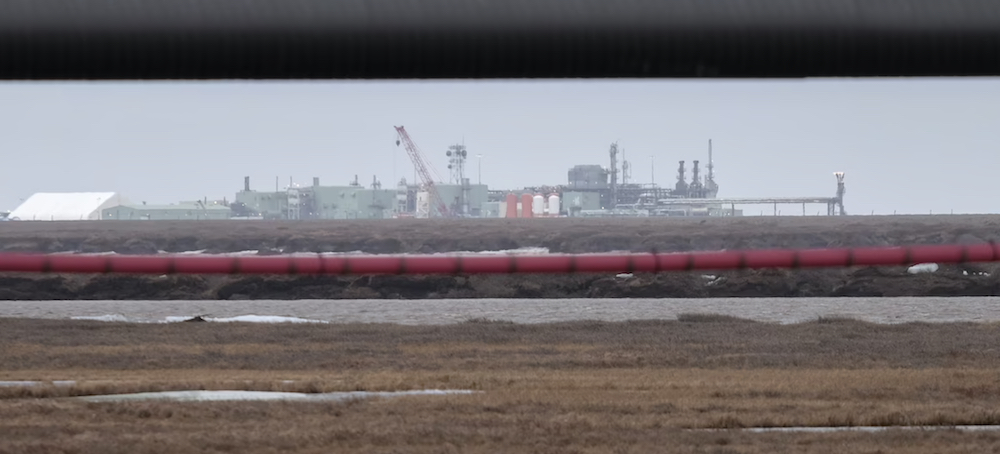 Oil pipelines stretch across the landscape outside Nuiqsut, Alaska, where ConocoPhillips operates the Alpine Field. (photo: Bonnie Jo Mount/WP)
Decision helps ConocoPhillips proceed with giant North Slope oil drilling. Environmentalists say they will appeal a project they call a ‘carbon bomb.’
U.S. District Judge Sharon L. Gleason on Thursday rejected calls from an Alaska Native group and environmentalists to vacate the Interior Department’s decision from March to permit the project. She rejected several claims, determining the Biden administration did proper environmental assessments underpinning its decision.
Its owner ConocoPhillips said Thursday evening it can now go forward with a full winter construction season to build the site. Previously, company officials had said a ruling against them could have killed the project.
Opponents of the Willow project plan to appeal and say they still hold hope they will prevail. The plaintiffs include Sovereign Iñupiat for a Living Arctic and the Center for Biological Diversity, which has retained the Earthjustice firm as their lawyers.
“While today’s ruling is disappointing, we are entirely confident in our claims,” Earthjustice attorney Erik Grafe said in a statement.
An Interior Department spokesman declined to comment. ConocoPhillips officials, in response, said they look forward to developing an oil field they’ve sought for decades.
“We now want to make this project a reality and help Alaskan communities realize the extensive benefits of responsible energy development,” Erec Isaacson, president of the company’s Alaska arm, said in a statement.
Willow has been a top target of climate activists because it is one of the largest oil developments on federal land, which meant that President Biden’s Interior Department had the task of evaluating it. Some environmentalists have called it a “carbon bomb” because of its potential to contribute to global warming far into the future.
Slated for the National Petroleum Reserve-Alaska (NPR-A), the nation’s largest expanse of public land, Willow is projected to produce 576 million barrels of oil over the next three decades.
Biden had promised to end new oil drilling on federal land. But ConocoPhillips has held leases to drill from the region since the late 1990s, which the president and legal experts said limited his ability to reject the project. He also faced strong political pressure to approve it from key lawmakers in Alaska.
In filing their two cases against the project, opponents lodged several challenges against the federal government and the company. Gleason rejected the vast majority of them and ruled none invalidated the project’s approval.
She said the Interior Department had fulfilled its legal obligations to consider the impacts of several different alternatives in line with what she called a clear vision from Congress that large parts of the reserve would be developed for oil and gas production.
Some project opponents say they haven’t given up hope. “We maintain confidence in our legal claims that Interior has unlawfully ignored the significant environmental harms stemming from Willow,” Hallie Templeton, legal director for Friends of the Earth, said in a statement.