After the Flood
Elizabeth Bruenig The Atlantic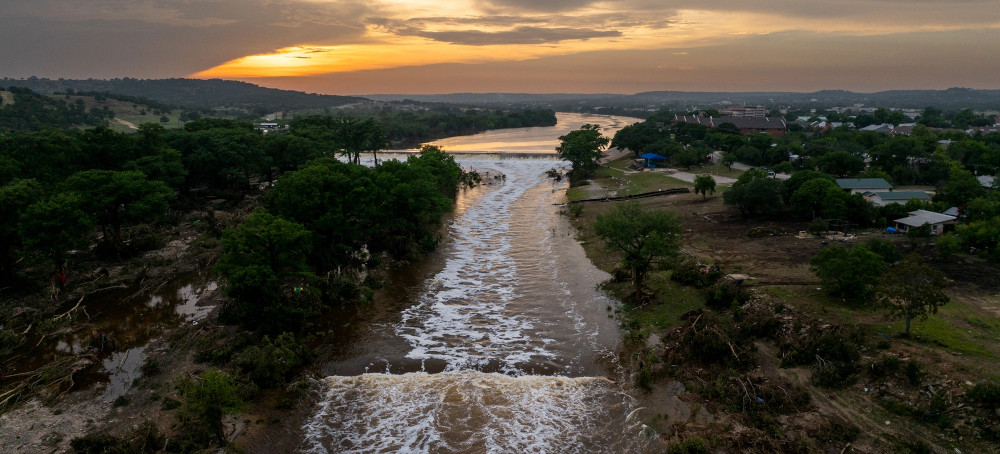 When the earth drinks in the last of the floodwaters, the places that remain will be different than they were before—turned sacred by overwhelming loss. (photo: Brandon Bell/Getty)
When the earth drinks in the last of the floodwaters, the places that remain will be different than they were before—turned sacred by overwhelming loss.
Floods unmake creation and leave behind remnants of an apocalypse. On the banks of the Guadalupe River in Texas are relics of a lost world: a summer-camp bunk in muddy disarray, children’s bedding and little girls’ lunch boxes split open on the floor; a sodden pink backpack plucked from the destruction. More than 100 people have been declared dead from the floods, roughly two dozen of them children. Many more are still missing. And when the earth drinks in the last of the floodwaters, the places that remain will be different than they were before—not just stripped of structures and signs of human cultivation, but also turned sacred by overwhelming loss.
Texas is and always has been somewhat inhospitable to human habitation. Its climate is prone to extremes: Hurricanes blast its Gulf coast, tornadoes rip across its plains, and boiling heat beats down ruthlessly all summer. These frequent confrontations with the violent forces of nature perhaps account in part for the grandeur of the Texan spirit; it takes a certain tenacity to persist there when milder alternatives are readily available. This was perhaps doubly true of those Texans who lived and died before society achieved certain compromises with the elements: air-conditioning for the heat, tornado shelters for the storms, seawalls and surge gates for deadly tides. With countless adjustments like those, today’s Texans expect to live relatively comfortably in a volatile environment—a human triumph over nature.
But human activity seems to be tipping that balance in the opposite direction. As greenhouse gases gather in the atmosphere and the Earth warms, intense storms are becoming more common, including storms with massive rainfall. A recent Washington Post analysis found that “freshwater flooding was responsible for 54 percent of all direct deaths from tropical cyclones in the United States between 2013 and 2024,” a much higher percentage than in previous decades. Humanity has created a category of unnatural disasters, climactic events on a biblical scale brought on not strictly by the ordinary vicissitudes of weather but also by political and cultural choices.
This is not to say that what was lost in the flood was in some sense wicked; on the contrary, what was lost was wrenchingly pure and innocent. The fact that climate change generated by human industry may have played a role in precipitating the tragedy by no means indicates that the death and destruction were deserved, as certain commentators have suggested. There are political elements to this story—policies aimed at halting and ameliorating climate change are crucial, and elected officials ought to be judged on whether they’re attempting to fix the problem or exacerbate it in the name of profit and gross excess. But the consequences of those decisions are visited on everyone, the just and the unjust, without respect to desert or fairness: This was not pine punishment with a built-in moral design, but rather a catastrophe half-engineered by humanity, lacking in moral design altogether.
The wreckage left by the floods darkly presages a future Texas where territory once wrested from the elements is lost again, and the civilization once built on the alluvial plains of the Hill Country is washed out or consumed by the earth, old doorframes and fence posts rotting in the mud, high waterlines staining the walls of the structures yet to crumble. Missing from this picture are people, and therefore the soul of Texas. The state is not just its land but its people, a hardy and fine people; may they persist within its borders evermore.