100,000 Immigrant Kids Are in Limbo Because of a Technicality
Laila L. Hlass and Rachel L. Davidson Slate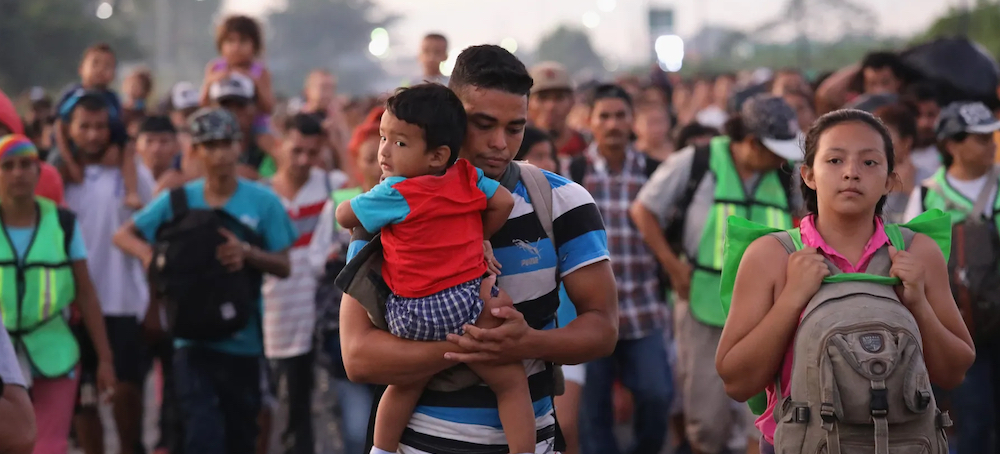 Members of a migrant caravan. (photo: John Moore/Getty Images)
The one child protection that does exist in immigration law is called special immigrant juvenile status. Congress created this humanitarian classification for children who have been abandoned, abused, or neglected, in order to create an expedited pathway to lawful permanent residence and citizenship. Unfortunately, this protection is not working as Congress intended, and new research we’ve just released demonstrates that more than 100,000 children have been negatively affected by an oversight in the law.
How the system is supposed to work is this: After a state court makes a determination about custody and the harm the child has suffered, the child may petition the immigration agency for special immigrant juvenile status. If approved, the child should be on the path to lawful permanent residence. But a technical oversight in the law is preventing thousands of children from accessing the stability and protection of the SIJS program in a timely manner. Confoundingly, the visas SIJS children need to obtain permanent residence come from the same pool, with strict annual limits, as for people seeking employment-based green cards. So, children whom Congress, the immigration agency, and the courts recognize as deserving of this special protected status have been forced into a growing, yearslong green card backlog, trapped in foster care systems, facing labor exploitation, and unable to obtain federal student aid to go to college and reach their dreams.
As immigration lawyers who represent children, we have seen firsthand the devastating consequences of this legal limbo. One young person, Claude, sought safety in the United States after years of abuse from his dad and after being hospitalized from violent homophobic attacks. A straight-A student, Claude won a scholarship to attend an American college but had to drop out when he couldn’t cover the cost of education and couldn’t access federal student aid. After getting his SIJS approval, Claude thought he would finally be able to restart his life. But when he realized that he would have to wait at least five more years to apply for his green card, he was despondent, saying, “We’ve already been abused in so many ways; we’ve never had stabilities throughout our lives. It’s just a matter of time, and this question that’s haunting you, when is it going to stop?”
For the past three years, we have been working with the National Immigration Project’s End SIJS Backlog Coalition, a group of impacted youth and advocates, to push Congress to fix the backlog. When we first met with members of Congress, they wanted to know how many young people were affected and where they lived. We made a public records request and had to sue the immigration agency for them. We obtained more than 200,000 SIJS-related records.
On Monday, we published a report, “False Hopes: Over 100,000 Immigrant Youth Trapped in the SIJS Backlog,” based on these records and firsthand testimonials. In the report, we reveal that the SIJS backlog has more than doubled in the past two years, with more than 107,000 SIJS youth now trapped. SIJS youth affected by the backlog come from 151 countries and live in all 50 states, with the highest populations in New York, California, Maryland, Massachusetts, Texas, New Jersey, Virginia, Tennessee, Louisiana, and North Carolina.
To fix the backlog, Congress needs to pass the amendments in the Protect Vulnerable Immigrant Youth Act that would exempt SIJS youth from the visa caps that prevent them from seeking green cards. In the meantime, the Biden administration should act to improve the lives of youth stuck in the backlog by encouraging the immigration agency to terminate SIJS youth’s deportation cases, making sure they have timely access to work permits to protect them from labor exploitation, and ensuring access to federal student aid.
Another impacted youth, Kasey, told us, “I don’t think about the future anymore because I don’t want to have false hope.” As Congress and the Biden administration consider how to help vulnerable immigrant children, we urge them to act quickly to fix the backlog. Claude, Kasey, and tens of thousands of other young people are waiting to live their fullest lives—it’s shameful to allow a technical oversight in the law to keep holding these young people back.