Why the Future of the Amazon Could Depend on Brazil’s Election
Sergio Peçanha and Ana Ionova The New York Times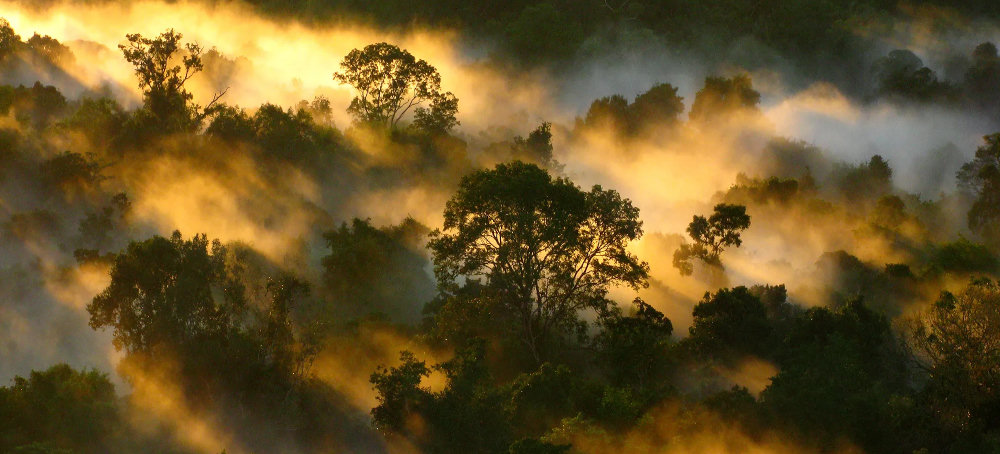 About 17 percent of the Amazon rainforest has been deforested since the 1970s. (photo: Getty)
About 17 percent of the Amazon rainforest has been deforested since the 1970s.
A map highlights accumulated deforested areas in the Amazon region since the early 2000s.
Much of that area is in Brazil, which holds about 60 percent of the rainforest.
A map highlights accumulated deforested areas in the Brazilian Amazon deforested between 2002 and 2025.
Deforestation surged under the presidency of Jair Bolsonaro but slowed under his successor, Luiz Inácio Lula da Silva.
Two maps side by side show that the deforestation footprint under Mr. Bolsonaro’s administration was nearly double than under Mr. Lula.
Now Flávio Bolsonaro leads in this month’s presidential race. Conservationists fear a return to his father’s policies.
A map shows total deforestation under Mr. Bolsonaro’s administration.
Flávio Bolsonaro, a right-wing senator and the front runner in next Sunday’s presidential runoff, has promised to make it easier to harvest the riches of the Amazon. While he has also promised to end illegal deforestation, many experts worry that he may do so by allowing more trees to be cleared legally. And even as he has pledged tougher policing, Mr. Bolsonaro has signalled that he may weaken agencies safeguarding the Amazon.
Mr. Bolsonaro, a son of the former president Jair Bolsonaro, does not believe that climate change is caused by humans and has defended opening up protected lands to mining and farming. His candidacy has been supported by the farm lobby and by members of the economic and political elite who want to see new highways, railroads and oil drilling in the Amazon — projects that research shows would accelerate deforestation.
“The biggest way to address the subject of environmental issues is what we did during the Bolsonaro government,” Mr. Bolsonaro said during his campaign, referring to his father’s presidency.
Excited about the possibility of another Bolsonaro in power, the candidate’s supporters have already warned Indigenous groups in the Amazon that they plan to invade their lands if he wins the election.
Under President Luiz Inácio Lula da Silva, deforestation in the Amazon has dropped to the lowest level on record, according to Brazil's space agency.
Research shows that, if deforestation continues undeterred, the Amazon could receive dramatically less rainfall and much of the rainforest could gradually start turning into savanna by 2050. This process is “hard to reverse once set in motion,” said Nico Wunderling, a professor at Goethe University Frankfurt who studies climate change.
The pressure on the forest is largely driven by a global appetite for commodities. Brazil is the world’s top exporter of beef and soybeans, which are also the country’s two main drivers of deforestation. In recent years, vast stretches of the forest have been turned into pasture for cattle.
Mr. Bolsonaro promises to streamline environmental protection and cut red tape, making it easier for miners and ranchers to obtain permits to clear trees.
Under the elder Mr. Bolsonaro, total deforestation rates spiked to nearly 4.6 million hectares, more than 11 million acres. The increased deforestation during his four-year tenure was the equivalent of 5,777 Central Parks — about four parks for each day of his presidency. The rate of loss far exceeded the average in the decade before.
If all those Central Parks were stacked top to bottom, the cleared land would stretch more than 14,000 miles.
The younger Mr. Bolsonaro has been vague on details about his plans for the Amazon, other than his promise to end illegal deforestation by 2029. While that may seem ambitious, it is in line with Brazil’s current goal of ending illegal deforestation by the end of the decade. And experts say the nation must actually push towards ending all deforestation, including the legal clearing of trees.
Under Brazilian law, landowners in the Amazon may remove up to a fifth of the rainforest on their properties. As a senator, Mr. Bolsonaro co-authored a failed bill to lift those limits.
Mr. Lula, a defender of the Paris climate agreement, has strengthened environmental agencies, invested in forest restoration and reduced deforestation to its lowest levels in years, promising to halt it altogether by 2030.
“What we really have to fight for is zero deforestation,” said Carlos Nobre, a Brazilian scientist studying the Amazon and climate change. Legal deforestation, he said, put the Amazon at “total risk” and could sharply reduce rainfall throughout much of South America, threatening Brazilian agriculture and global food prices. Brazil is the world’s second-largest food exporter and could surpass the United States this year. “We are going to lose all of this,” Mr. Nobre said.
The threats go beyond deforestation. Drug gangs have expanded into the Amazon, having seen weaker policing under the elder Mr. Bolsonaro as an opportunity. They traffic drugs through the rainforest but they have also added illegal logging, wildcat mining and land grabbing to their criminal portfolios. Many observers worry that a victory for the younger Mr. Bolsonaro could embolden these groups to push deeper into the rainforest.
Most of the world’s cocaine is produced in three countries neighboring Brazil: Colombia, Peru and Bolivia. But the rainforest’s vast river network has become an important means of moving that cocaine to transatlantic markets.
Moving drugs in the Amazon is complicated and as gangs establish transit networks they have infiltrated local communities. “There is a much larger ecosystem of illegal miners, loggers, smugglers, transporters and corrupt middlemen,” said Robert Muggah, from Igarapé Institute, a Brazilian research institute focused on crime. These illicit markets overlap, he added, ultimately driving more deforestation.
Mr. Bolsonaro, an ally of President Trump, has said that he plans to expand monitoring the rainforest with satellites and supports a militarized response to drug gangs, which he wants to designate as terrorist groups. Yet his plans to slash public spending and his proposal to streamline enforcement agencies have raised concerns about weaker oversight.
Rather than military force, the Amazon needs lasting solutions like investment in sustainable jobs and international cooperation to root out organized crime, said Ariadne Natal, a senior researcher at the Brazilian Forum on Public Safety, a nonprofit group monitoring crime.
“Once again, we find ourselves at a crossroads,’’ Ms. Natal said, “facing very different paths for how things could play out.”