Who Is an American? The Supreme Court Will Decide
Nina Totenberg and Bronson Arcuri NPR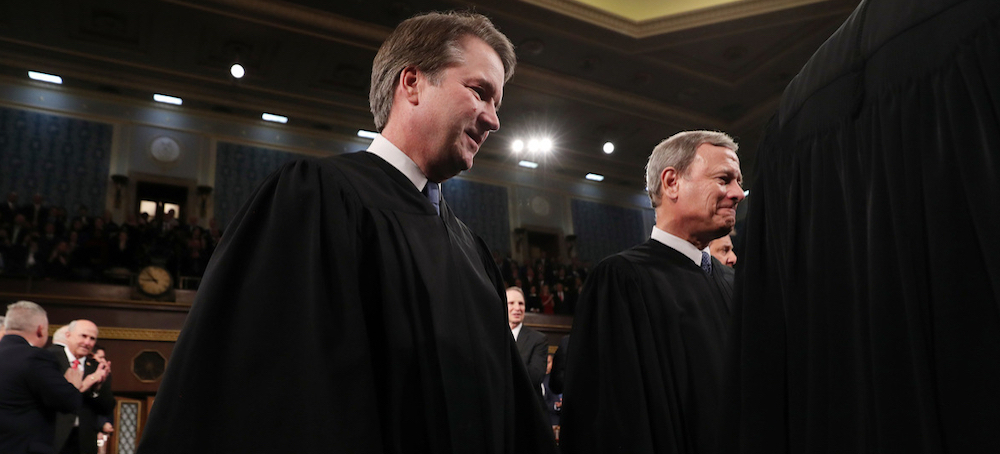 Justice Brett Kavanaugh and Chief Justice John Roberts. (photo: Getty Images)
But will that claim hold up in court?
The 14th Amendment to the Constitution, enacted after the Civil War, was aimed at reversing the Supreme Court's infamous Dred Scott decision, a ruling that declared Black people, enslaved or free, could not be citizens of the United States. The amendment says: "All persons born or naturalized in the United States and subject to the jurisdiction thereof, are citizens of the United States."
Challenges to birthright citizenship have long been considered a fringe legal theory. That's because 127 years ago, the Supreme Court ruled to the contrary. Moreover, as if to put icing on the cake, Congress in 1940 passed a statute codifying birthright citizenship for any child born in the U.S. Trump, however, has long maintained that the Constitution does not guarantee birthright citizenship.
So, on Day 1 of his second presidential term, he issued an executive order barring automatic citizenship for any baby born in the U.S. whose parents entered the country illegally, or who were here legally but on a temporary visa. With the case before the Supreme Court and an opinion expected today, we will almost certainly see a historic ruling.