US Push for Lebanon Ceasefire Stalls as Israel Eyes Beirut Strikes
Barak Ravid Axios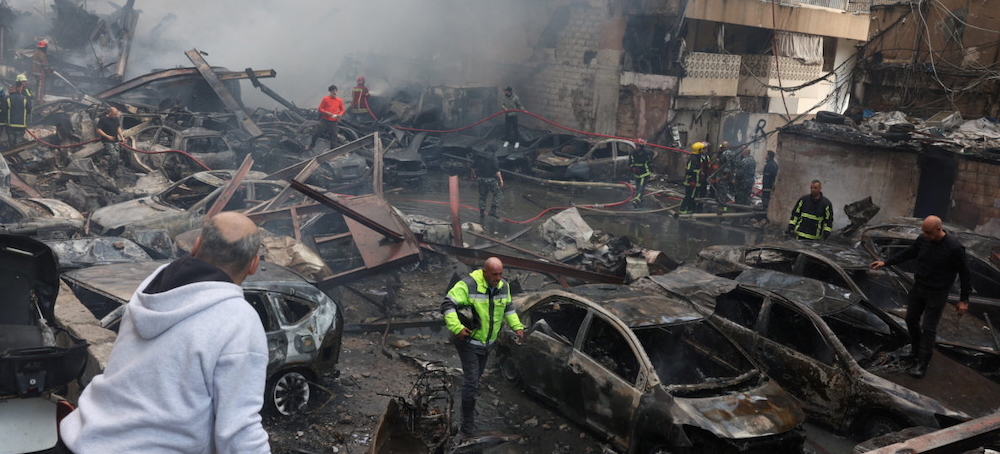 Rescuers work at the site of an Israeli strike in Beirut, Lebanon, on April 8, 2026. (photo: Mohamed Azakir/ Reuters)
Why it matters: The U.S. has urged Israel against striking Beirut for several weeks as part of a broader de-escalation push, but a U.S. official hinted that position could soften. "The U.S. does not expect Israel to absorb ongoing attacks on its civilians by a terrorist organization," the official told Axios.
The big picture: The Trump administration's de-escalation effort in Lebanon has been partially motivated by its desire to reach a deal with Iran.
- The memorandum of understanding the U.S. and Iran are negotiating includes an end to the fighting in Lebanon.
- At the moment, the conflict is expanding and appears likely to spiral out of control.
Driving the news: Secretary of State Marco Rubio spoke over the past 48 hours with both Lebanese President Joseph Aoun and Israeli Prime Minister Benjamin Netanyahu to try to push forward a new ceasefire initiative, a U.S. official told Axios. A Lebanese official confirmed Rubio raised the initiative with Aoun.
- The basic idea was that Hezbollah would halt its missile and drone attacks against Israel, and Israel would avoid escalation in Beirut, according to the U.S. official.
- The U.S. official said Aoun was supportive and asked the speaker of Lebanon's parliament, Nabih Berri, to press Hezbollah to halt its attacks on Israel.
- The U.S. official claimed Berri, who leads a major Shiite party and has links to Hezbollah, gave an "evasive and disappointing" response, suggesting it should be Israel that stops firing first.
Reality check: President Trump and Rubio have announced several ceasefires between Israel and Lebanon over the last two months, but they have existed mostly on paper, with both Israel and Hezbollah violating them.
Zoom out: Rubio's latest ceasefire push comes in the context of ongoing negotiations between Israel and Lebanon, which have yet to yield a major breakthrough.
- On Friday, Israeli and Lebanese military officers met at the Pentagon to discuss a possible ceasefire, the withdrawal of Israeli forces, the disarming of Hezbollah and the deployment of the Lebanese armed forces in southern Lebanon.
- Later this week, Israeli and Lebanese diplomats are expected to meet at the State Department for another round of talks.
Catch up quick: Hezbollah started launching missile and drone attacks against Israel after Israel went to war with its patron, Iran, and assassinated Supreme Leader Ali Khamenei.
- The Israeli military responded with airstrikes and a ground invasion of southern Lebanon, which has since turned into an occupation. Meanwhile, Hezbollah has increased the range of its missile and drone attacks into Israel.
- Israel has expanded its ground operation in recent days and has also asked the Trump administration to allow it to conduct major strikes in Beirut, Israeli officials say.
- Trump has previously stressed that Israel should only conduct "surgical" strikes.
Between the lines: A senior Lebanese official said neither Hezbollah nor Israel want a ceasefire and that the U.S. has not taken firm action to prevent Netanyahu from escalating.
- On the other hand, Iran's Revolutionary Guard has been urging Hezbollah to escalate in order to gain a bargaining chip in the U.S.-Iran talks, the Lebanese official contended.