US Pauses Attacks on Iran for a Second Day as Peace Talks Continue
Andrew Roth Guardian UK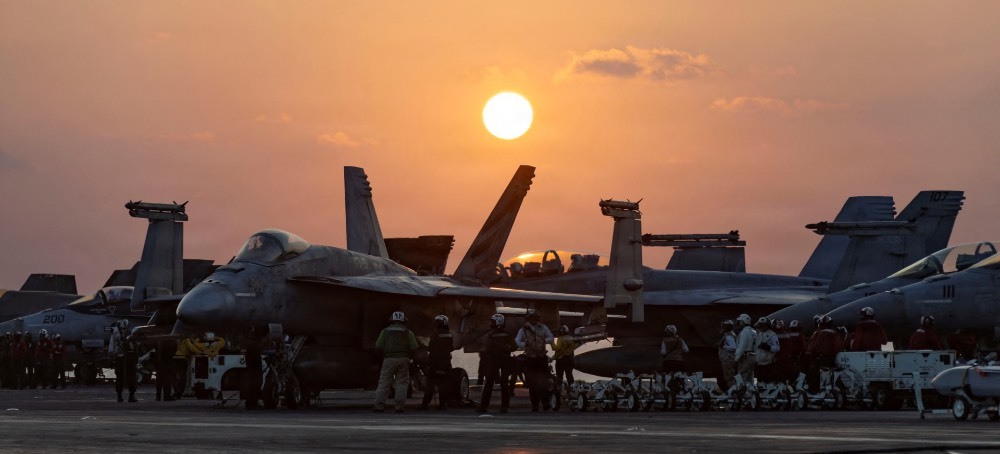 U.S. Navy sailors prepare for flight operations on the flight deck of the Nimitz-class aircraft carrier USS Abraham Lincoln in support of Operation Epic Fury. March 4, 2026. (photo: Reuters)
Trump weighs up his options after military chiefs warn of dwindling munitions stockpiles
Donald Trump is said to be weighing up diplomatic and military options in the nearly five-month-old conflict, with Benjamin Netanyahu expected to visit the White House on Tuesday. The Israeli prime minister is a vocal critic of Washington’s negotiations with Iranian leaders.
Netanyahu is under considerable political pressure to show that his military campaigns against Iran and Hezbollah in Lebanon have yielded results before elections scheduled for October.
Tehran said on Sunday it would pause what it called “retaliatory” attacks against US allies in the region. “These [US] attacks continued until two nights ago, but over the past two nights the Americans have stopped their attacks,” said the army spokesperson Mohammad Akraminia. “Our strategy has essentially been retaliatory, we have also halted our retaliatory operations.”
Senior officials in the Trump administration are reported to have warned the president about dwindling munitions stockpiles that could hamper a sustained military campaign in the region.
The lull in fighting, which began on Friday evening, follows nearly two weeks of strikes against Iran and the collapse of a ceasefire brokered by Trump. Washington blamed Iran for strikes on US forces and allies in the region and its closure of the strait of Hormuz, a conduit for an estimated 20% of the world’s oil and gas.
Senior diplomats from Iran and Oman were said to be holding negotiations on Sunday on reopening the vital waterway and an official in Tehran confirmed colleagues had been in touch with US negotiators to prevent a return to war. Iran has demanded payment and control over which ships pass through the strait.
“Mediators are working and trying to prevent tension from escalating,” the Iranian foreign ministry spokesperson, Esmail Baghaei, told a press conference on Sunday.
But an Iranian army spokesperson signalled defiance, saying the US had no clear strategy and was “experiencing strategic decision-making fatigue”.
The US vice-president, JD Vance, and Dan Caine, the chair of the joint chiefs of staff, warned Trump of the risks of a renewed military campaign against Iran at an Oval Office meeting on Friday, according to media outlets. The president then ordered the military to call off new strikes, which he had warned could “knock out everything they have”.
“We’re talking to [the Iranians] right now,” Trump told reporters on Friday. “I think they’re getting more and more serious as the days go by. We’re locked and loaded and ready to go, but we’re talking to them.”
At a White House Correspondents’ Association dinner that evening he said he did not think Iran was ready to make a deal but he was ready to listen.
Caine warned Trump about dwindling munitions stockpiles, which include Patriot missile interceptors and offensive weapons like Tomahawk cruise missiles. Vance campaigned on his opposition to US military interventions in the Middle East and has grown more vocal in his opposition to the war in Iran.
Netanyahu’s office announced on Sunday that he would convene a meeting of his security cabinet before leaving for Washington on Monday. He played a crucial role in lobbying Trump to launch joint strikes against Iran in February and has said that US negotiators must take a strong line on Iran’s nuclear and ballistic missile programme. US negotiators have instead prioritised opening the strait of Hormuz.
Netanyahu will travel to Washington amid some of the worst violence this year in the West Bank, where his military is launching an “extensive” operation after the deaths of four Palestinians and two Israelis when armed settlers entered a Palestinian village on Thursday.