Trump Withholds Origin of New ‘Cheap Foreign Beef’ as Ranchers and Farmers Sound the Alarm
Chelsie Napiza International Business Times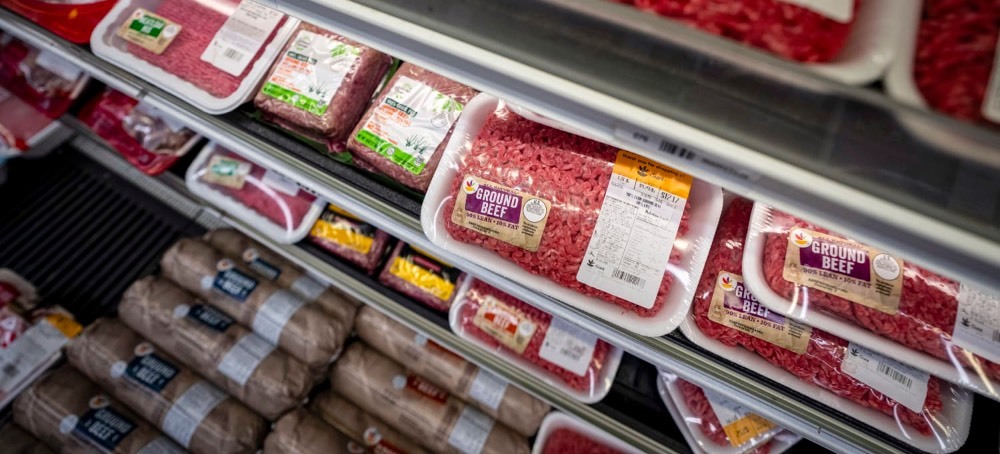 Beef prices have gone up in recent years, in part due to reduced domestic supply. (photo: Al Drago/Getty)
President Trump announces tariff-free beef imports, but details remain unclear, sparking backlash from ranchers and lawmakers
On Friday, 21 August 2026, Trump announced on Truth Social that the United States would accept up to 300,000 metric tons of imported ground beef trimmings over the next 90 days without the tariff normally charged once a country's import quota is exceeded.
He said he had secured a commitment that the meat would sell at 25 percent below the current market price of £5.05 ($6.89) per pound, easing costs for households while giving the domestic cattle herd time to rebuild.
He did not name a single supplying country, exporter or company behind the arrangement, leaving ranchers, retailers, rival lawmakers and consumers to guess.
A Tariff Waiver Announced Without a Single Supplier Named
Trump's post gave few operational details. The White House later said an executive order formalising the waiver would be signed within two weeks, and a White House official told Roll Call that high beef prices stemmed from supply shortages that began under the Biden administration, while insisting the administration is also working with ranchers to expand domestic production over the longer term.
Asked which countries were supplying the beef, Trump told reporters only that a handful were involved and that they would send high-quality product.
Beef prices have climbed steadily amid the herd shortage. Ground beef averaged £5.05 ($6.885) per pound in July 2026, up from £4.58 ($6.254) a year earlier and £3.22 ($4.388) in July 2021, according to Federal Reserve Bank of St Louis data.
The US cattle herd stood at 86.2 million head in January 2026, its smallest size since the 1950s, a figure the White House has cited as the root cause of the increase. Speaking to reporters after the announcement, Trump defended the plan in personal terms.
'The ranchers are great. They are my people,' he said, adding that producers had told him they needed help bringing prices down.
Mandatory country of origin labelling for beef was repealed in 2015 after a World Trade Organization ruling, and groups such as the South Dakota Farmers Union have pushed to restore it ever since.
Union president Doug Sombke argued that labelling lets shoppers know where their beef originates in the first place, a principle he said matters even more once foreign supply floods the market.
Cattle Groups and Senators From Both Parties Push Back
The backlash was immediate. National Cattlemen's Beef Association chief executive Colin Woodall said flooding the market with subsidised imports is 'not the way to rebuild the American cattle herd,' and noted that cattle futures fell sharply within hours of the announcement, according to DRGNews.
National Farmers Union president Rob Larew went further, warning that without mandatory origin labelling, meatpackers can blend cheap imports with domestic beef and pocket the difference without passing savings on to shoppers or ranchers.
Republican senators from cattle states broke with the president too. Nebraska's Deb Fischer said the administration should not lower grocery bills 'at the expense of American producers'.
South Dakota's Mike Rounds warned the move 'harms hardworking American ranchers and consumers who want American-made beef'.
Montana's Tim Sheehy and Nebraska's Pete Ricketts issued similar warnings, and Kentucky Representative Thomas Massie renewed his push for mandatory labelling and the PRIME Act, which would support small meat processors. Ohio Democrat Marcy Kaptur called the plan a 'slap in the face to ranchers, producers, and farmers'.
Washington's Second Beef Import Expansion in Six Months
Friday's announcement was not Trump's first attempt to use imports to cool beef prices. On 6 February 2026, he signed an executive order titled 'Ensuring Affordable Beef for the American Consumer,' quadrupling Argentina's tariff quota by an extra 80,000 metric tons across four quarterly tranches, a deal worth roughly £586 million ($800 million) over the year.
The NCBA raised safety concerns at the time as well, warning that expanded Argentine imports without stronger inspection protocols could put American consumers and herds at unnecessary risk.
In May, the administration quietly paused a follow-up plan to widen imports further. R-CALF USA chief executive Bill Bullard called the idea 'no doubt an experiment'.
August's 300,000 metric ton allowance is nearly four times the size of the Argentina quota and would account for close to 15 percent of all US beef imports, based on 2025 volumes. It also lands 74 days before the November midterm elections, as Republicans face mounting voter frustration over living costs in rural districts the party needs to hold.
Until the promised executive order surfaces, American shoppers and the ranchers whose herds it may undercut are left trusting a supply chain that the president himself will not name.