Trump Announces New Tariffs of Up to 20% on China, the EU, and 12 Other Nations
Ben Werschkul Yahoo! Finance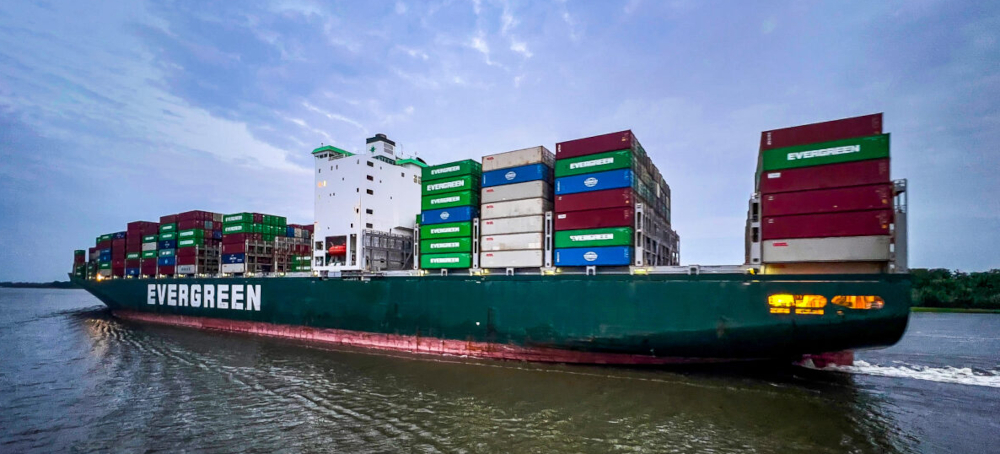 The Trump administration on Wednesday proposed new tariffs of up to 20%. (photo: Mike Tomko)
The duties could be a shock to the global economy, with China a main target.
The proposed 20% tariff on many Chinese goods was described by the Trump administration as a "deal rate" that could go higher depending on how ongoing talks progress. The new tariff would be stacked on top of at least some preexisting tariffs, resulting in a total rate of over 40% on some goods.
The new tariffs won't go into effect until after additional hearings and a public comment period and "probably will be in January at the earliest," according to a US official who briefed reporters ahead of the announcement.
An existing trade truce with China is set to expire on Jan. 10.
Several other Asian nations are also in line for higher duties, with a new 20% tariff proposed for Vietnam. Cambodia, Indonesia, and Malaysia are in line for 18% rates. India would have a 17% rate, but only, the administration said, if ongoing talks produce a deal.
The new rate announcements were accompanied by detailed investigative reports on each country, with China's report alone spanning 456 pages.
China immediately pushed back, with a Foreign Ministry spokesperson saying "the so-called issue of overcapacity is a false proposition, and China opposes using it as a pretext for political manipulation," according to state media.
The US official said the rates could go even higher depending on how the countries respond, and added that the investigation had concluded that a new 40% tariff on China and a 35% rate on Vietnam was "warranted," even as a lower rate is being proposed for now due to ongoing talks.
On Wednesday, the White House listed an array of "Proposed Rates" that were higher across the board, ranging from 20% to 40%, and announced plans to modify some tariffs on Brazil with an additional 10% tariff on sugar and finished aircraft.
The effects elsewhere could be more muted, with new duties designed not to overstep rates negotiated in recent trade deals. That meant trading partners, including the EU, South Korea, and Japan, would all see a 15% tariff rate, which is in line with what they negotiated in recent months.
"We're sticking to that," when it comes to these nations, US Trade Representative Jamieson Greer said in a CNBC appearance Wednesday, "because we think a lot of these deals we made actually solve a lot of problems we see in excess capacity."
The Yale Budget Lab and other trade trackers didn't offer an immediate read on how the new tariffs would affect overall tariff levels, but the group calculated earlier this month that the effective US tariff rate sits at about 11.3% across all trading partners. That same measure was 13.86% just before the Supreme Court struck down Trump's blanket tariffs in February and was above 15% for much of 2025.
In a note to clients ahead of the announcement, Ed Mills of Raymond James described the move "as an effort to restore the previous tariff structure" that existed before the Supreme Court's intervention.
This investigation has long been expected to wrap up by the end of the year, but the unveiling this week was notable amid growing concerns in Washington over semiconductor exports, Nvidia, and questions about "mass smuggling" of advanced chips to China.
The announcement also came on the heels of a trip to Asia where President Trump held a trade signing ceremony with Thailand and announced what he called a trade deal with the Philippines but left many of the major trade issues between the US and China unresolved.
That meeting ended with no apparent agreement to extend the truce that has lowered tariffs between the US and China that expires on Jan. 10.