The US West Has Lost Nearly 300 Glaciers Since the 1960s. Climate Crisis Is Drastically Shrinking What’s Left
Oliver Milman Guardian UK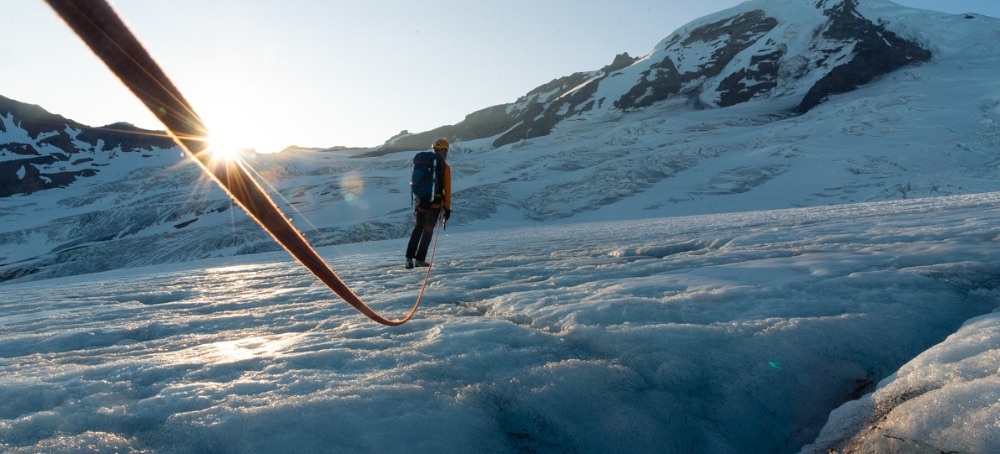 Coleman glacier, located on Mount Baker in Washington. (photo: Matthew Tangeman)
At the midpoint of the last century the region had 1,450 glaciers and a new study reveals the extent of losses
At the midpoint of the last century more than 1,450 glaciers – large tongues of ice, snow and rock that move under their own weight and gravity – were threaded throughout the mountains of the American west, providing cool water for ecosystems and agriculture as they gradually melted.
Some, in the Sierra Nevada of California, were formed a few thousand years ago while others, such as those in the Pacific north-west, are remnants from even further back in the last ice age, which ended about 11,700 years ago.
The long stories of these perennial masses of ice are coming to a rapid end, however, due to global heating caused by the burning of fossil fuels. The total area of glaciers in the US west has shrunk by a third since the 1960s, the new research found, with evidence this loss is speeding up as temperatures continue to rise.
About 300 of these glaciers have functionally disappeared, meaning they have reduced to the size of about two football fields and no longer move. After dominating mountaintops for thousands of years, hundreds of once regal glaciers have been reduced to tiny, sad scraps of ice just within the span of time since the Beatles released their first record.
“When I realized this it was like, ‘Yikes – that’s a lot more than I thought,’” said Andrew Fountain, a geographer at Portland State University and lead author of the new study.