The Bomb, and the Trouble With Hindsight
Bobby Ghosh Substack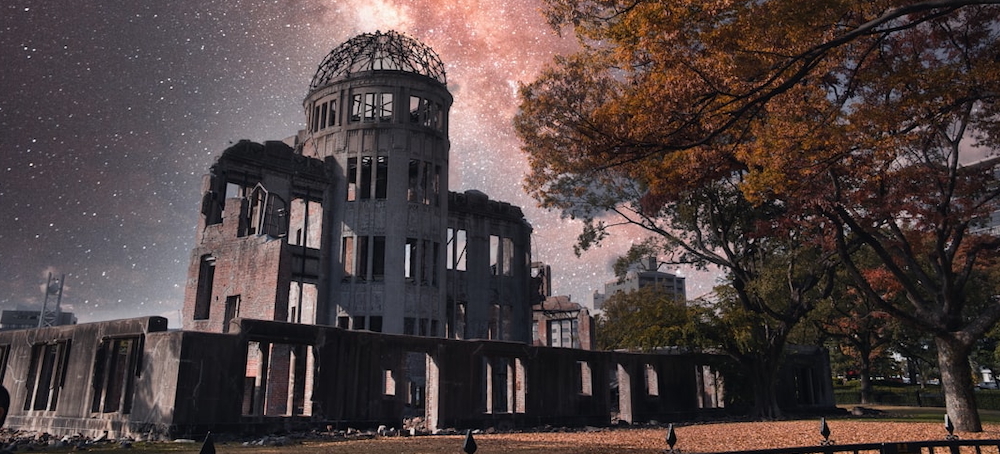 "Four books for a weekend when the argument over Hiroshima and Nagasaki refuses, once again, to be buried." (photo: Yu/Unsplash)
ALSO SEE: Ghoshworld, Bobby Ghosh on Substack
Four books for a weekend when the argument over Hiroshima and Nagasaki refuses, once again, to be buried.
This year the debate has an extra edge: Prime Minister Sanae Takaichi has floated the once-unthinkable idea of loosening Japan’s postwar ban on hosting American nuclear weapons. Even as the Washington Post reported the change in her tone, an editorial in Japan Times reassured readers that a genuine nuclear debate is nothing to be frightened of.
I am drawn to this argument — and rehashed it with a friend this week — but I’m suspicious of the way most people conduct it. It is too easy to reach back into the summer of 1945, armed with certainties the men of that season did not, could not, possess: eight decades of nuclear taboo, the accumulated terror of the arms race, and not least, the moral clarity that comes cheap when someone else has already paid for it. To judge them by the mores of our time is the very definition of a category error.
But for a change, I will not argue my case. Instead, I offer for your weekend consideration the work of four historians that, taken together, cover most of the arguments. I have arranged them here on a spectrum, from the strongest case against the bombs to the strongest case for them. Read in that order, they are an education in how honest people, staring at the same evidence, can reach competing convictions.
Tsuyoshi Hasegawa’s Racing the Enemy (2005) makes the most rigorous, scholarly case that neither bomb was necessary. Having studied the Japanese, the American and the Soviet archives, Hasegawa’s conclusion is that the event which finally broke the deadlock in Tokyo was not Hiroshima but Stalin’s declaration of war two days later. It destroyed Japan’s last fantasy, of a peace brokered by Moscow, and left surrender to the Americans as the only door still open. Take the bombs out of the picture, Hasegawa argues, and the Soviet invasion would have ended the war anyway. It is meticulous argument and it has been infuriating patriots on both sides of the Pacific for twenty years.
If Hasegawa says neither bomb made a difference to Japan’s decision to surrender, the late Sadao Asada argued that one of them did. His 1998 essay in the Pacific Historical Review, “The Shock of the Atomic Bomb and Japan’s Decision to Surrender,” is an excellent study of how the first bomb changed the conversation in the Japanese corridors of power and decision. Asada believed Hiroshima delivered the psychological shock that allowed Emperor Hirohito and the peace faction in the leadership to overrule the generals and other hardliners. But the bombing of Nagasaki, he concluded, was “unnecessary to induce Japan to surrender,” whatever confirming effect it may have had.
Richard B. Frank’s Downfall (1999) confronts the comfortable claim that Japan was about to surrender anyway and dismantles it, with hard evidence. He builds his case on the MAGIC and ULTRA intercepts, decrypted Japanese cables that were not fully released until 1995. The selective snippets on which the revisionists had built their case, he shows, collapse once you read the whole. The intercepts reveal a military high command committed to the strategy of Ketsu-Go, a defiant last stand on the home islands designed to bleed the American invasion — no matter the cost in Japanese blood and treasure — until Washington agreed to gentler terms. This outcome could only have been averted by a series of shocks to jolt the leadership into sense. The bombs, in concert with the Soviet entry, provided just that.
And finally, to Wilson Miscamble’s The Most Controversial Decision (2011), for my money the most persuasive of the four. Miscamble, a Catholic priest as well as a Cold War historian, makes the case for both bombs, without looking away from what they were.
His history is tight: Japan was not surrendering on any terms an Allied leader could sign; the alternatives on the table were a blockade that threatened mass starvation, months of firebombing, and eventually a ground invasion, each of them a slower and bloodier path to the end of the war. And not only for American and Japanese; remember that across occupied Asia, thousands of noncombatants were dying daily under Japanese rule. (Miscamble also makes short work of the seductive theory that Truman bombed Japan chiefly to intimidate Stalin.)
What lifts his book above the standard defense of Truman is its deliberate refusal of comfort. Miscamble does not pretend the bombings were clean. Taken in isolation, he concedes, each was “a deeply immoral act.” But his point is that they cannot be taken in isolation. Truman had no innocent options, and the bomb was the least evil one within reach. Miscamble is impatient with those who moralize from the safety of the future. “Must we still ask,” he demands, “was it right?”
I think Miscamble is nearer to the truth than the others, because he holds two convictions in his head whereas most people who engage in this argument tend to drop one: that the bombs were an atrocity, and that every other choice before Truman led somewhere worse. The decision-makers in Washington were neither monsters nor saints: they were tired men, deciding in fog, trying to end the bloodiest conflict in human history without any idea that they were opening the door to a new kind of war.
That, more than anything, is why the argument will outlive the hibakusha. Japan itself spent this week weighing whether to let American nukes on its soil. If the one nation that lived through the bomb hasn’t put the question to rest, the rest of us have no business pretending we do.
Read the three books and the essay, in your own time and reach your own verdict. Mine, for what it is worth, is with the priest.