Shares of Elon Musk’s Tesla and SpaceX Tumble After Republicans Are Routed
Ryan Mac and Jack Ewing The New York Times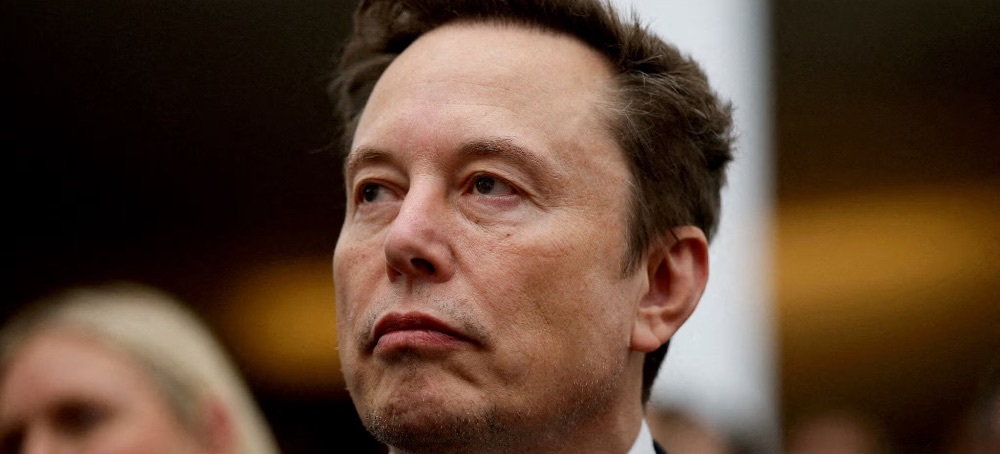 SpaceX and Tesla, both run by Elon Musk, are based in Texas, where voters elected a Democratic senator and governor. (photo: Evan Vucci/Reuters )
ALSO SEE: Elon Musk’s Business Empire Braces for Democratic Wave as Texas Flips Blue
The world’s richest person has antagonized Democrats, some of whom have signaled their intent to investigate him when they take control of Congress.
Tesla’s stock dropped when markets opened, and later traded down more than 2 percent. SpaceX, which conducted a blockbuster public offering in June, followed a similar pattern, before settling at a loss of closer to 3 percent. The declines stood out among tech stocks, as Meta, Microsoft, Google and the wider stock market rallied at the start of trading.
SpaceX and Tesla are exploring a merger, which could be complicated by a Congress controlled by Democrats, some of whom have already signaled their intent to investigate the world’s richest person and his companies. In recent years, Mr. Musk has antagonized Democrats, spending heavily to elect President Trump, involving himself deeply in firing federal workers and shutting down government agencies while aligning his companies’ interests with those of the administration.
“They are going to need to plant new forests for all of the subpoenas we’ll be printing,” Senator Edward J. Markey, Democrat of Massachusetts, posted on X on Tuesday night about potential hearings for technology executives.
Investigations could also complicate plans by SpaceX’s Starlink division, which offers satellite internet access, to expand into mobile telecommunications. Qualcomm Technologies said Wednesday that it would supply Starlink with equipment for base stations that would be part of a nationwide cellular network.
Mr. Musk spent at least $474 million on the midterm elections, the most money of any donor in a U.S. election cycle, apart from candidates who have funded their own runs for office. About $224 million was spent on races in Texas, particularly in support of the losing campaign of the Republican Ken Paxton for a Senate seat against the Democrat James Talarico.
Both SpaceX and Tesla have their headquarters in Texas. During the Covid-19 pandemic, Mr. Musk moved there after declaring that California had become too liberal for his taste. He also complained about overbearing regulations.
Both companies are developing extensive infrastructure in Texas, including a joint effort to build a more than $100 billion chip manufacturing plant in the state, though those efforts could now face greater scrutiny. Texas is set to have a Democratic governor after the election of Gina Hinojosa, as well as a Democratic attorney general and lieutenant governor.
Ms. Hinojosa campaigned on promises to rein in development of data centers. That could create problems for Tesla, which is testing autonomous driving technology in Austin that relies on a data center there.
“Texas welcomed data center companies who were unable to get permits in other states,” Gary Black, managing partner of the Future Fund, an investment firm, said on X. “Its status as a data center hub may now be over.”
Mr. Musk was also attracted to Texas by corporate law that limits shareholders’ ability to sue. Tesla shifted its corporate domicile to Texas from Delaware after a Delaware judge voided his pay package in response to a shareholder lawsuit. The decision was later overturned. SpaceX is also domiciled in Texas.
Democrats also appeared poised to take control of the Texas State House and the court that hears appeals from the Texas Business Court, which would hear any lawsuits stemming from the merger of SpaceX and Tesla. Judges on the appeals court are elected.
But the law that shields company managers from shareholder lawsuits has bipartisan support and is unlikely to change, said James Spindler, a law professor at the University of Texas at Austin.
“It was seen as a way of bringing business here,” Mr. Spindler said. “Everyone wants more tax revenue. Everyone wants more jobs.”
Mr. Musk, 55, did not return a request for comment.
Mr. Musk’s midterm spending, while substantial, will have little impact on his overall wealth. As of Tuesday, he was worth $898 billion, according to Bloomberg, meaning that his political contributions amounted to a tiny sliver of his net worth.
In relative terms, it was akin to a 55-year-old with the median U.S. net worth of about $411,000 spending a little more than $217.
Mr. Musk, who avoided posting on X for most of Tuesday night as votes were being counted, returned to his social media platform in the early hours of Wednesday to joke about his political losses and his companies’ prospects.
“Data centers in space looking pretty appealing right now,” he wrote, referring to SpaceX’s goal to put A.I. computing clusters in orbit.
Mr. Musk also appeared to be deleting old posts. On Tuesday, he told his more than 240 million followers on X to “vote red today!”
On Wednesday, that post could no longer be found on his account.