Revealing the Invisible Injustice of Extreme Heat
Bob Berwyn Inside Climate News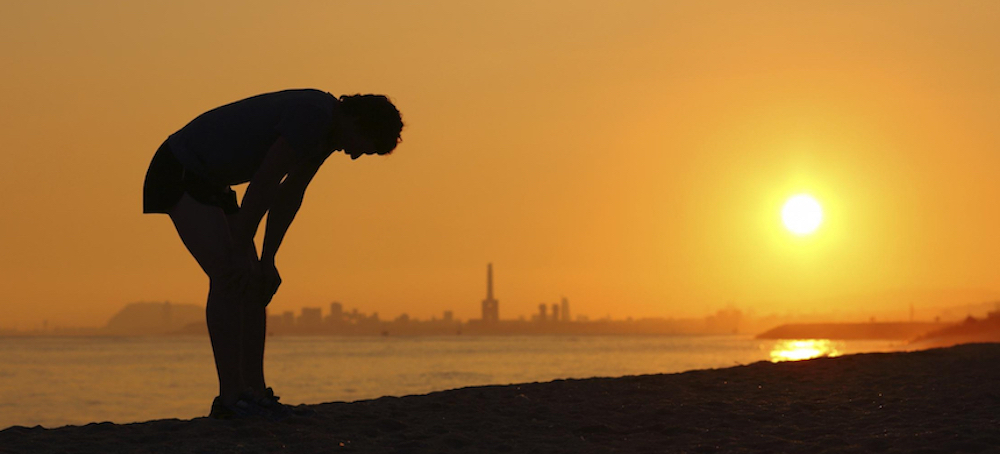 Extreme weather events like heatwaves have increased in frequency and intensity partly due to climate change. (photo: NOAA)
Thermal imaging shows how people experience scorching heat varies depending on their circumstance.
The final toll will likely be higher. A 2024 United Nations report estimated about 175,000 annual heat-related deaths across Europe, and total deaths in European Union countries spiked above 60,000 in 2022 and 2024.
The heat started earlier than ever, in late May, and kept coming in deadly, unrelenting waves that destroyed crops and vineyards, buckled railroad tracks, turned forests to kindling and dried up rivers and lakes. When it settled heavily over Bologna, Italy, in late June, residents of the industrial region said it was like a stifling, life-threatening force that you feel in your bones, transforming streets and buildings into radiators blasting warmth day and night, making routine outdoor chores dangerous.
Heat is hard to see, but you feel it in the pavement, in the walls of poorly insulated apartments, in sweat that never quite dries and a bedroom that just won’t cool down. And people do not experience it equally.
Bologna photographer Michele Lapini made those differences visible, using his iPhone and a thermal sensor to document temperatures in homes, workplaces and public spaces as the heat gripped the city. The images show that construction workers in direct sun, delivery riders crossing the city and residents of old apartment buildings and poorly cooled senior centers inhabit radically different thermal worlds than people with access to air conditioning, shade and well-insulated homes.
Lapini said he felt a great sense of resignation as he talked with people about the heat. What could they do? They had no choice but to work. They couldn’t move or get a permit to install air conditioning, or afford it. The problem sometimes feels too large to solve individually, and he said he felt that recently as he tried to decide whether to install air conditioning, knowing that it would make the overall problem worse.
Federico Grazzini, a Bologna-based expert with the regional meteorological service, said the daytime high temperatures in the summer of 2026 made it stand out from other recent extreme summers, including 2003. The 2026 heat was also notable for its persistence, “with five major heatwaves, at least a week long,” separated by only short cool spells.
In Bologna, the central downtown weather station recorded 81 tropical nights, of which 24 were “equatorial nights,” with temperatures staying above 77 degrees Fahrenheit, and there were 52 “scorching days,” with daytime highs above 95 degrees Fahrenheit.
Grazzini said 2026 “represented a landmark year in people’s perception of the climatic crisis,” as the heat became one of the main topics in daily discourse. But he faulted Italian mainstream media for not explaining the links between global warming and the heat. “In most cases,” he said, “they fail to convey the large picture behind the chronicle and drama of the single events.”
Lapini’s images capture the thermal tension running through Bologna’s cityscape. What looks like a Europe-wide heatwave through satellite sensors becomes something much more unequal at street level. Staying out of deadly heat can depend on whether you own or rent a home, whether your building has been renovated and whether you have access to trees, shade or a public place where you can escape the heat.
“Thermal comfort should not be a luxury,” said Eleni Myrivili, global chief heat officer with the United Nations Environmental Programme. On a planet wracked by human-caused warming, protection from extreme heat is a necessity for “health, dignity, productivity and increasingly, for survival.”
Myrivili was elected to the Athens, Greece, city council in 2014, served as deputy mayor for resilience and climate adaptation and later became the city’s first chief heat officer in 2021, the first such position in Europe at the time.
At an online briefing on extreme heat in early September, she said cities struggle to develop and implement heat protection measures because the pace of climate impacts is accelerating. And city governments are often hampered by fragmented politics, limited capacity and financing. The decisions needed to make cities safer, from retrofitting buildings to expanding shade and green space, “often do not bring votes,” she said.
Elected officials can “put their heads in the sand” because voters don’t hold them responsible for providing solutions, she said. Central European cities and countries, she added, have the resources to protect people, but need the political courage to use them.
Lapini said his images reveal how political decisions, as well as inaction,can have unfair consequences. He said that, as he documented thermal injustice, he realized that climate policies need to start with the communities and people most affected. And it’s impossible to make effective climate laws, he said, without considering the economic and political structures that produced the climate crisis.