Mar-a-Lago Documents: Why Is Donald Trump Asking the Supreme Court to Intervene?
John Fritze and Bart Jansen USA TODAY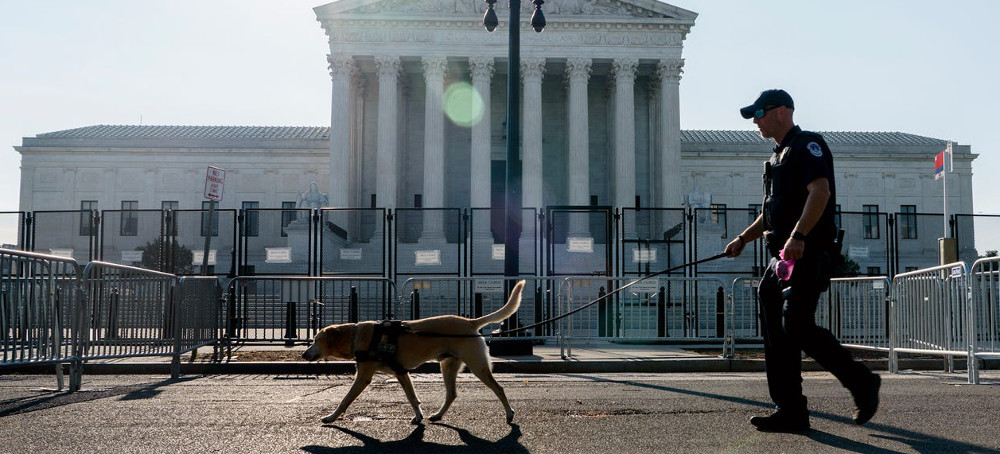 Former president Donald Trump has once again brought a fight over documents to the nation's highest court, though his record on such appeals is spotty at best. (photo: USA TODAY)
Former President Donald Trump has once again brought a fight over documents to the nation's highest court, though his record on such appeals is spotty at best.
What did Trump file at the Supreme Court?
Former President Donald Trump filed what's known as an emergency application challenging part of a Sept. 21 ruling from the Atlanta-based U.S. Court of Appeals for the 11th Circuit. That ruling allowed the Justice Department to continue reviewing classified documents seized at Trump's Florida estate and blocked a lower court's ruling requiring the government to submit the documents to an independent arbiter, or special master, for review. Trump's appeal challenges the second part of that ruling and if he wins then the special master, U.S. District Judge Raymond Dearie, would review the documents.
Why did Trump file a Supreme Court appeal?
The 47-page document is pretty technical and it raises questions about whether the 11th Circuit had jurisdiction to rule the way it did. Trump's ostensible argument is about having an independent entity review the documents, not just the Justice Department. The appeal is sprinkled with references to the "unprecedented circumstances" of the seizure, "an investigation of the Forty-Fifth President of the United States by the administration of his political rival and successor." Any limit on a transparent review of the documents, Trump's lawyers told the Supreme Court, "erodes public confidence in our system of justice."
What is Trump's record at the Supreme Court?
Trump's record at the nation's highest court is not great. In January, for instance, the Supreme Court refused to block the House committee investigating the Jan. 6 Capitol attack from getting Trump's administration documents. In 2020, the court ruled that Trump could not keep his tax returns and financial records away from a New York City prosecutor who was pursuing possible hush-money payments during the 2016 White House race. That prosecutor did not seek reelection and two of his deputies who had been leading a criminal probe departed the Manhattan District Attorney's Office in February.
How soon could the Supreme Court act in Trump's case?
The emergency application docket – known colloquially as the "shadow docket" – can move quite quickly. It is often used, for instance, to handle last-minute appeals for people on death row and facing execution in a matter of hours. However, the court seemed to pump the brakes on the case hours after Trump's filing. Associate Justice Clarence Thomas, who handles such emergency appeals rising from the 11th Circuit, gave the federal government until Tuesday to respond. That's fast by Supreme Court standards, but it's not as speedy as these cases sometimes can move.
Who's the special master in Trump's case?
On Sept. 15, U.S. District Judge Aileen Cannon appointed a semi-retired federal judge in Brooklyn, Raymond Dearie, to review the thousands of documents seized at Trump’s Florida estate. Dearie, 78, was agreed to by both Trump and the Department of Justice. Dearie is reviewing some of the documents FBI agents seized Aug. 8 at Mar-a-Lago for personal records and documents that potentially are protected by attorney-client privilege or executive privilege.
What are experts saying about Trump's Supreme Court appeal?
Steve Vladeck, a law professor at the University of Texas, noted on Twitter that Trump's "track record in the Supreme Court in cases involving him personally (as opposed to his official actions as president) has been abysmal." On Thomas' week-out deadline for the government to respond, Vladeck wrote that "this delay doesn’t help Trump. At all. It’s a pretty big sign from Thomas that even *he* isn’t in a hurry, which does not bode well for Trump’s chances of getting the full court to side with him."
Renato Mariotti, a former federal prosecutor, agreed. "It means that he doesn’t view this as the 'emergency' that Trump claims it is," Mariotti posted on Twitter. "This narrow move for Supreme Court review sure looks like an effort by Trump’s attorneys to find an excuse to litigate something to placate their client, even though 'winning' would not achieve anything substantial."