Investigate Them
Neal K. Katyal The Atlantic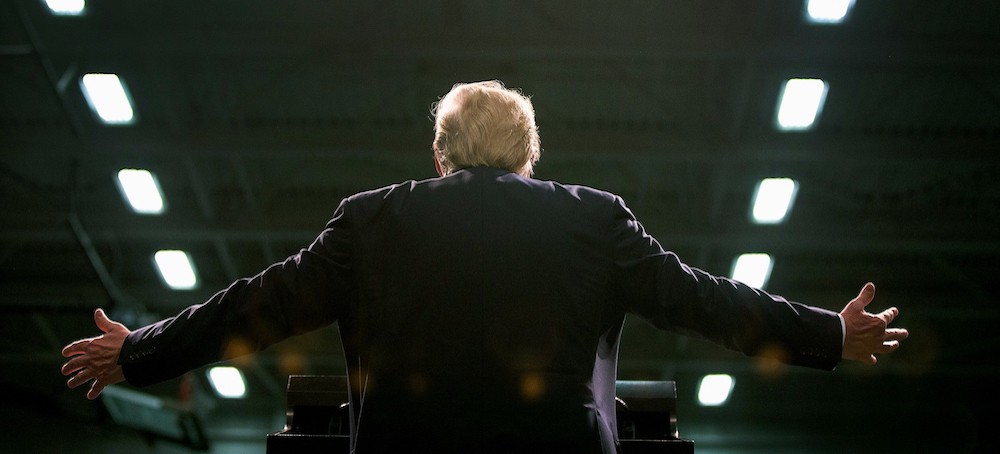 Donald Trump. (photo: Scott Olson/Getty Images)
08 January 22
The DOJ must examine the roles of government officials, including former President Donald Trump, in the Capitol insurrection. To look away is fantastically dangerous.
Caveats abound. Perhaps Garland’s critics have it wrong, and the silence about whether he is investigating Trump and his enablers is actually evidence of his supreme competence. Garland dropped hints in his speech yesterday that could suggest the existence of such an investigation, for example, when he said the department “remains committed to holding all January 6 perpetrators, at any level, accountable.” We are talking about a legendary public servant, someone who steered the Oklahoma City–bombing investigation to success as a Justice Department lawyer and later, in his two decades serving on our nation’s second-highest court, was never reversed once by the Supreme Court. Criminal investigations are generally secret, and perhaps what is going on is that Garland has proceeded apace, just not publicly. If so, the critics are premature, and Garland is doing exactly what he is supposed to do.
But what if that isn’t right? There is so far zero evidence of an actual investigation into Trump and his advisers. It’s been an entire year, and the governing U.S. Attorney’s Manual, which establishes the rules for federal prosecution, says, “When the community needs to be reassured that the appropriate law enforcement agency is investigating a matter … comments about or confirmation of an ongoing investigation may be necessary.” Moreover, if such an investigation were happening, it is likely that we would have learned of it by now, either through leaks or an interviewee saying something (or someone trying to block the inquiry through a public lawsuit, as the Trumps have done in New York). Law-enforcement officials know you can’t easily start such interviews a year or more after the fact—evidence disappears (a known issue with Trump folks) and memories fade. So it is very much worth worrying about whether the caution Garland cultivated as a judge—for you don’t sit on the nation’s second-highest court for two decades and avoid reversal without a heaping amount of caution—is driving his decision making today. If so, what would be the harm in “moving on” from what happened, as many top Republicans have argued?
David A. Graham: The paperwork coup
Here’s the harm: The essence of the rule of law is to treat like parties equally. That’s why Lady Justice appears blindfolded, because she is to dole out justice impartially. I teach my criminal-law students that this is a “same yardstick” principle—what law is, at bottom, is a command to judge people according to the same yardstick, whether you like them or not. And that means that if there is serious evidence of crime, you don’t look the other way, no matter how hard prosecution may be. At the same time, that principle doesn’t mean Garland ought to be announcing criminal charges against Trump and his pals right now. Merrick Garland is the attorney general, not Santa Claus. It merely means that people, including high-ranking government officials, need to be interviewed and documents examined to determine whether probable cause exists. The yardstick principle asks us to pretend that those responsible were Democrats, and to use that thought experiment to decide whether an investigation is warranted.
When it comes to January 6, Attorney General Garland must realize that this yardstick points in a clear direction. As one senior government official put it, “There is no question—none—that President Trump is practically and morally responsible for provoking the events of the day. No question about it. The people who stormed this building believed they were acting on the wishes and instructions of their President … The leader of the free world cannot spend weeks thundering that shadowy forces are stealing our country and then feign surprise when people believe him and do reckless things.”
Moreover, given the public record already available—including evidence of “war rooms” at the Willard Hotel, bogus legal memos that circulated among senior government leaders, and even a member of Congress who is known to have worn body armor that day—it’s very hard to see how an investigation into all of this wouldn’t be required. To fail to investigate government officials, including the former president, who had to know that the attempt was to interfere with the counting of the vote, to say nothing of its potential for accompanying violence, is fantastically dangerous. The whole point of criminal law is to provide societal condemnation of evil acts and to deter them in the future. If government leaders and their private army of advisers can get away with encouraging a mob to, in 2021, stop one of our nation’s most solemn functions, the counting of electoral votes, what is to stop them from trying again in any other year?