Humiliated by Trump on the Iran Front, Netanyahu May Set the Middle East Ablaze
Esther Solomon Haaretz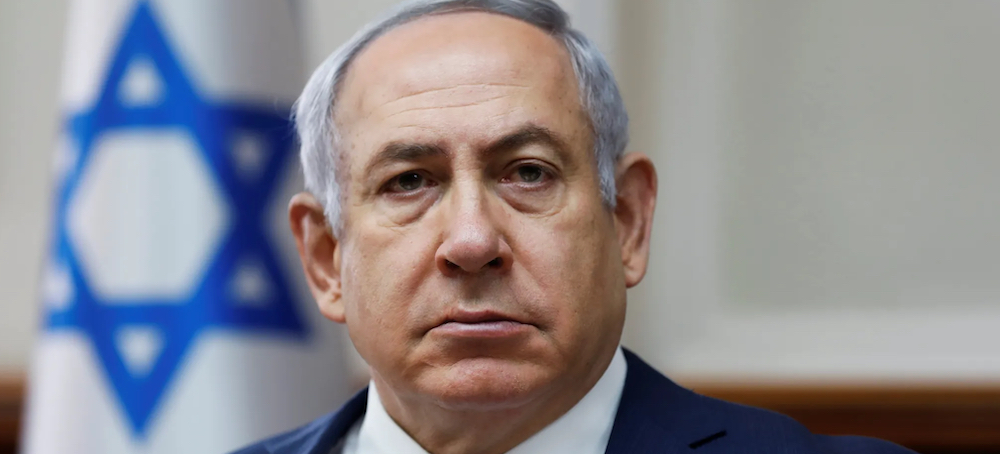 President Donald Trump speaks to Israeli Prime Minister Benjamin Netanyahu. (photo: Kenny Holston/NYT)
The terms of a U.S.-Iran agreement are unlikely to be kind to Netanyahu's extravagant promises to crush the ayatollahs. But with election pressure rising, Israel's prime minister seems intent on taking out his desperation on Trump, Tehran and the wider Middle East | Analysis
"The aim of the operation is to end the threat from the Ayatollah regime in Iran. [It] will continue as long as necessary. ... If we don't stop them now, they will become invulnerable. Their representatives in negotiations are trying to buy time, attempting to gain time in fruitless and deceitful negotiations with our American friends."
That's Netanyahu, in a recorded message to Israelis on February 28, the evening that the U.S. and Israel launched their attack on Iran. Now, exactly 15 weeks later, the U.S. and Iran are reportedly closer than ever to signing a memorandum of understanding toward ending the conflict. So much for Netanyahu's closest friend in the White House seeing through Tehran's "fruitless and deceitful" negotiating strategy – and so much for crushing the "Ayatollah regime."
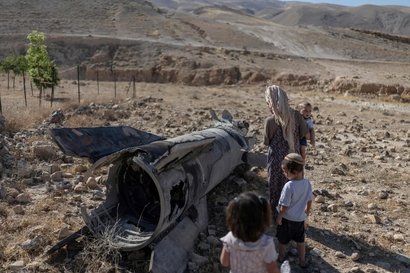
An Israeli family residing at an illegal West Bank farm outpost looking at a rocket fired by Iran that landed near Jericho on June 9.
Credit: Ilia Yefimovich/AFP
One doesn't need to be a grizzled diplomat or cynical pundit to see that this deal-in-the-making has the ingredients to be a disaster for Israel's national security – you just need eyes and a pulse. It appears that the details of Iran's nuclear program have been kicked down the road to be dealt with in the next negotiating period of 60 days. Tehran's ballistic missiles and its network of regional proxies have been kicked out of the negotiations park entirely.
For Netanyahu, this is a failure on multiple fronts. The last year of U.S.-Israeli attacks were supposed to be a culmination of his decades-long obsession to comprehensively defang Iran's capacity to threaten Israel.
But the emerging agreement is far from that aim; instead, it seems more likely that Iran will emerge from its sanctions-laden financial deep freeze with the capacity to pump far more cash and munitions into developing its missiles and proxies. The suggestion in recent reports that Iran itself would dilute the highly enriched uranium on its own soil is, to put it diplomatically, barely credible.
Netanyahu's much-flaunted relations with U.S. President Donald Trump are, at a critical moment, also exposed in their nakedness. Israel has been frozen out of the negotiations while being forced by the president to sit on command. Trump has tired of a war lacking instant gratification but rich in economic costs, tired of Netanyahu's "strength through force and then more force" mantra and tired of the backlash from the isolationists and Israel skeptics in his own administration and party. After Sunday's Beirut attack, Trump reported said he is "so pissed off" at Netanyahu, adding that the Israeli prime minister "has no fucking judgment."
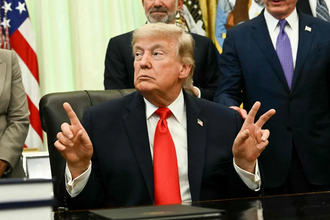
U.S. President Donald Trump addressing media and gesturing in the White House's Oval Office on Thursday.
Credit: Kent Nishimura/AFP
But while Trump is trying to please his MAGA camp by wrapping up the Iran war, Netanyahu offers NADA – Neutralizing Any (national) Defense Advantage won over the last three years.
Netanyahu has constantly declared that under his watch, Israel would be changing the face of the Middle East, a claim he has made with greater intensity since the Hamas attack of October 7, 2023. The catastrophic devastation in Gaza is perhaps the truest, grimmest expression of his contention. But Netanyahu meant not only the evisceration of the ayatollahs, Hamas and Hezbollah: He meant Israel's rise as the prime regional hegemon courted by its neighbors near and far.
There have been glimpses of what a different Middle East could have looked like, even if not entirely in the style Netanyahu intended. Both post-Assad Syria and post-Nasrallah Lebanon have engaged with Israel; Beirut, in particular, has made unprecedented overtures. But Netanyahu's response is more bombs, less diplomacy.

Lebanese army soldiers standing guard after an Israeli airstrike targeted a building in Beirut's Dahiyeh neighborhood on Sunday.
Credit: Ibrahim Amro/AFP
Trump's bizarre idea to force membership of the Abraham Accords, and thus normalization with Israel, on a swath of the Middle East and South Asia was just a brief burst of static. Even though Israel's partnership with the United Arab Emirates has deepened, it's not clear how far they will be in lockstep over an Iran deal, and Saudi Arabia won't budge without movement on the Palestinian issue – the eternal elephant in the room for Netanyahu's political philosophy, and an issue he denies even exists.
During the past year and a half, despite the times when it seemed Israel was the verge of a historic change in the balance of power in the region – when Hamas, Hezbollah and the Houthis were at their weakest – Netanyahu has managed to snatch defeat from the jaws of victory, out of hubris, deliberate diplomatic obtuseness and fear of his coalition allies.
For Netanyahu, the even worse news is that every Israeli can see with her own eyes how far reality has strayed from the prime minister's extravagant, now-tired, pledges of total victory and a new Middle East, and the potential Iran deal will make that chasm undeniable. What are the center-right voters, likely to determine the forthcoming elections, to make of being told that the Iranian regime are "barbarians" about to "crash our gates and destroy our societies," that they're a replay of 1930s Germany – but that Israel will be bound by what will look like appeasement?
Sadly, what's bad for Netanyahu's election chances ends up being bad for the Middle East, because he will only seek more extreme methods to win. On Sunday, he ordered the bombing of Beirut's Dahiyeh neighborhood, a transparent effort to both complicate the Iran MOU's signing and to answer his far-right allies' calls for more destruction.
In election season, everything – from the independence of the judiciary and the media, to West Bank settlement expansion, to the lives of Palestinians and Lebanese – is for sale to his ragtag coalition, and everything is in play for the IDF: If Netanyahu is blocked on Iran and Lebanon, he'll go for Gaza, again.
During the same Iran war press conference on March 19, when he said that Jesus Christ "had no advantage" over Genghis Khan and kicked off a global storm, the prime minister also noted that the "function of leaders is to stand and tell people the truth, even when things are uncomfortable." From the moment those words came out of his mouth, Netanyahu clearly had no intention of standing by them – but, amid all the spin trying to turn abject failure into triumph, that was still a moment that Netanyahu actually spoke the truth.