How Cops Use Flock to Track People, Not Cars
Joseph Cox 404 Media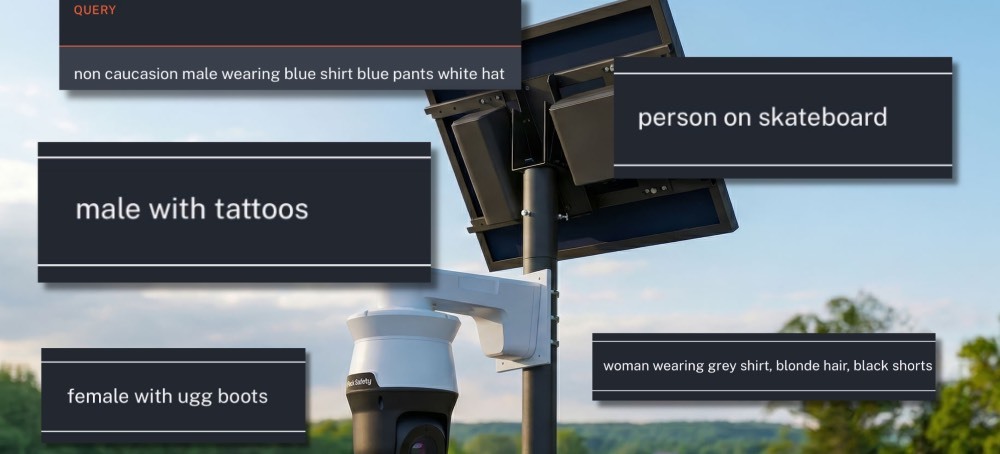 Flock Screenshots. (photo: HaveIBeenFlocked.com)
Cops have used Flock's FreeForm search feature to look for people with tattoos and wearing specific sport shirts, and searches sometimes include the target's race, according to data reviewed by 404 Media.
The searches highlight that while most people associate Flock cameras with scanning license plates and tracking vehicles, some of the cameras are also capable of following the movements of particular people or groups of people. Flock’s nationwide network of cameras lets police officers in one state search for a vehicle across many other states at once; the people searches do a similar thing, typically on a smaller scale, sometimes querying many hundreds of cameras at once. These are called “FreeForm” searches, and allow cops to use Flock’s system as though they would use a search engine, with Flock’s AI and image recognition interpreting what footage and which people are relevant to a police officer’s search.
“Much of the world hasn’t quite caught up yet to how much more powerful a surveillance camera is today compared to a few years ago. AI video analytics means that giant oceans of video data can now be searched the same way big text files can be, including for sensitive content such as t-shirts, tattoos, and bumper stickers. Even without face recognition, that’s a significant increase in surveillance capability,” Jay Stanley, senior policy analyst for the American Civil Liberties Union’s (ACLU) Speech, Privacy, and Technology Project, told 404 Media in an email.
“This is a classic bait-and-switch. Your town was pitched a tool to catch stolen cars and find missing kids,” Tom Bowman, policy counsel, security … surveillance, at the Center for Democracy … Technology, told 404 Media in a statement. Instead, cops now have the capability to search for a specific person or description of a person across a wealth of camera networks at once. “It's like being sold a smoke detector and only later finding out it's been recording every conversation in your house.”
The searches sometimes stretch across dozens or even nearly a hundred networks of Flock cameras at once. Sometimes the searches are so vague that they can pull up images of innocent or unrelated people. Other examples in the data reviewed by 404 Media include:
- Dunwoody GA PD looking for someone wearing a “backpack,” and later “person walking” and “black sweatshirt.” The latter two searches were across nine networks of cameras each
- Pocatello ID PD searching for “a male on foot” across 38 cameras. Another search was “atlanta falcons,” referencing the NFL team
- Corona CA PD searching for “american flag shirt” and “dodger shirt.”
- Milford CT PD looking for “male with tattoos,” “male with brown hair,” and “woman blue shirt,” across more than a hundred cameras
- The California Highway Patrol looking for someone wearing a “gray shirt” across 274 cameras
- The Texas Department of Public Safety searching 96 networks of cameras for “man weasring [sic] a black t-shirt and shorts.”
- Florence SC PD looking for “person with gun” across 61 cameras
- Chamblee GA PD searching 85 camera networks for “white woman wearing grey shirt, blonde hair, black shorts with blue and white shoes.” The agency also searched for “female with ugg boots.”
- Brookhaven GA PD looking for “tall man.”
Some searches referenced the race of the person authorities were looking for. The California Highway Patrol was “Looking for a white male about 6ft 1in tall, longer brown hair almost to his shoulders, slender build, will have been wearing blue jeans, boots with white paint stains on the toes and possibly carrying a black helmet.” Atlanta GA PD searched for “non caucasion [sic] male wearing blue shirt blue pants white hat.”
Some searches are part of an “investigation,” according to the “reason” field in the data. Others are part of a missing persons case. In some it is not clear what the reason for the search was because it is redacted.
“Unfortunately, this ability to search cameras as though doing a search engine inquiry is increasingly common for surveillance cameras,” Beryl Lipton, senior investigative researcher at the Electronic Frontier Foundation, told 404 Media. “AI-enabled video analysis across reams of footage exacerbates the risk that law-abiding people minding their own business end up with police observing them without their knowledge and opens them to possibly being implicated in a crime or being treated as a criminal. Imagine how many people at any given moment may be walking on foot, wearing a backpack, or existing with brown hair. It wasn’t that long ago that Trayvon Martin was murdered by someone who could argue that wearing a hoodie justified suspicion and a claim of self-defense.”
404 Media reviewed data collected by HaveIBeenFlocked.com, a website that collates Flock search-related data obtained through public records requests. Since 404 Media revealed local police were performing Flock searches on behalf of Immigration and Customs Enforcement (ICE), journalists, activists, and residents across the country have requested “Network Audits” from their local police departments. These spreadsheets show in granular detail when an officer searched Flock cameras, how many cameras they queried, and the stated reason why.
A sometimes overlooked part of those audits is a field called “text_prompt.” This relates to a feature in Flock called FreeForm search, which lets officers search cameras not by typing in a license plate but with a natural language phrase. Sometimes these FreeForm searches are descriptions of vehicles, but they often include descriptions of people.
Flock primarily advertises its FreeForm as a feature for its Condor video cameras, which are separate from its automatic license plate reader (ALPR) cameras. These video cameras have “people detection alerts,” and “Guardian Mode” automatically zooms in on people and vehicles. “Deploy AI-powered video where it matters most—no blind spots, no hassle, and fully integrated into Flock,” the company’s website reads. But the AI-analyzed feeds are not entirely divorced from ALPR; Flock has designed the systems to work in tandem. Kevin Cox, a Flock consultant who previously worked for the Grand Prairie Police Department in Texas, previously said, “video combined with the LPR evidence of placing a vehicle at the scene or nearby is an incredibly game changing experience into the prosecutorial chain of events.”
tFlock launched FreeForm in February 2025, although the company’s announcement at the time focused on searches related to vehicles. Some FreeForm searches 404 Media reviewed indicate a target’s potential political affiliation, such as the Anne Arundel County MD PD searching 198 networks for “white jeep with trump flag.”
One example search Flock gives on its website is for “camo hat orange vest.”
Flock told 404 Media in a statement “FreeForm is designed to help investigators quickly search through large amounts of footage when they are working with limited information, such as a witness description of a person or vehicle.”
“FreeForm is not facial recognition. Flock’s products do not have facial recognition, and we have no facial recognition technology in development. FreeForm cannot identify a person by name, verify someone’s identity, or search for a specific face,” the company added. Flock said authorities used FreeForm searches in a September 2025 AMBER alert case and in Emporia, Kansas, when an elderly man left an assisted living facility.
Flock said FreeForm searches have “guardrails,” including users not able to search attributes such as “race, ethnicity, religion, nationality.” When they do, an alert is generated and sent to the agency’s administrators, Flock said. Some of the searches 404 Media found did discuss someone’s race.
Stanley from the ACLU added, “Imagine that your police department stationed officers on corners around your community writing down notes on where you are at what time, but also what you’re wearing every day, what objects you might be carrying — and writing down those details on everybody, 24/7. You would ask, why are they keeping notes on everybody? That’s pretty intrusive. But that’s basically what these systems do.”
“All this goes to show that Flock is eager not just to expand its surveillance of drivers across America through license plate readers, but to expand into every new kind of surveillance that technology makes possible. And then to link these data streams together to capture even more information about how everybody is living their lives. I don’t think most Americans want to live under that kind of constant automated surveillance,” he wrote.
In May 2025, 404 Media revealed Flock planned to use hacked data as part of a massive people lookup tool. The idea was to use information from data brokers and data breaches to “jump from LPR [license plate reader] to person,” according to internal Flock meeting audio 404 Media previously obtained. Flock scrapped the plan to use hacked data after 404 Media’s coverage and internal pressure.
In December 2025, 404 Media reported Flock left at least 60 of its people-tracking cameras exposed to the wider internet, letting anyone watch their feeds in real time. Those were Flock Condor cameras, and not its more widespread license plate reading cameras.