How Congress Treats Its Serfs
Ed Kilgore New York Magazine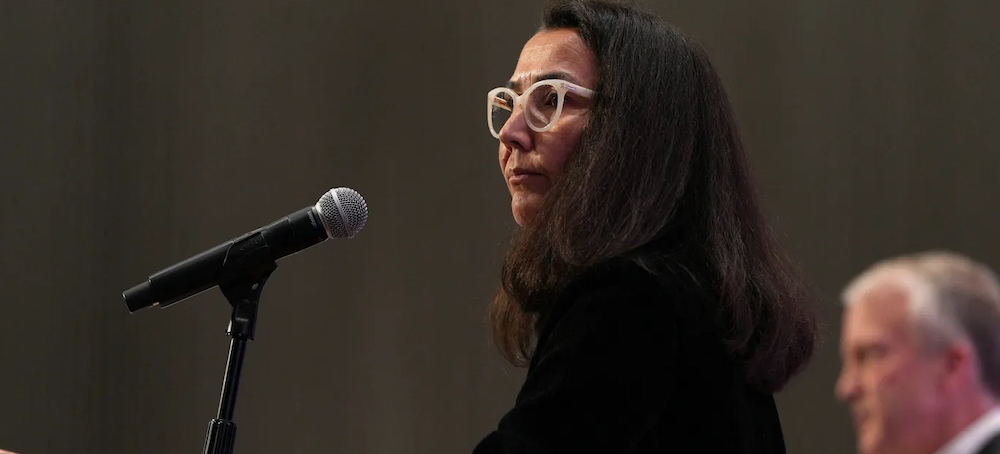 Is Mary Peltola meaner than the average congressional tyrant? (photo: Kerry Tasker/Reuters)
Some have viewed the importance of these complaints skeptically, including Jonathan Chait at The Atlantic:
Democratic staffers (they are almost always Democrats) complain off the record about the private behavior of their boss, who is almost always female, toward them. The behavior in question ranges from inappropriate to, more often, somewhat inappropriate to completely appropriate.
Chait goes on to cite past brouhahas over alleged abuse of staff by Amy Klobuchar of Minnesota and Katie Porter of California and suggests a double standard at best and a culture of Democratic staff whining at worst:
The overall impression the story conveys is not an office beset by chaos, but one rife with staffers burdened with unrealistic expectations of workplace norms. Berating subordinates is a poor management practice. But it does not constitute chaos or the level of abuse that would justify a national news story.
The claims of partisan or gender bias in media reporting on congressional misconduct toward staff may have merit. Certainly the alleged sins of Peltola, Klobuchar, and Porter pale in comparison to the pattern of sexual misconduct so regularly exhibited by male members of Congress from both parties, which is almost certainly underreported — a few examples from the very recent past include scandals involving Eric Swalwell, Tony Gonzales, Chuck Edwards, and Cory Mills. But being mean to staff or making inappropriate demands on their time and work has arguably been more the rule than the exception in Congress over the years.
Until the 1990s, Congress routinely exempted itself from civil-rights and labor-relations laws it imposed on the private sector and other branches of the federal government. It was known as “last plantation,” a term that reflected not only the systemic racism so common in congressional institutions, but also a general atmosphere of indifference to the working conditions of the staff who made the Capitol function.
Ultimately, Congress reversed course, eliminating its exemptions from most workplace laws and creating its own HR operations, including the Office of Congressional Workplace Rights. But the whole system is overseen by the House and Senate ethics committees, which are not exactly neutral when it comes to potentially career-ending allegations against members of Congress. More important, treatment of staff is decisively shaped by the power imbalances between lordly elected officials, along with their top hirelings, and the eminently replaceable serfs beneath them in the often-arbitrary chain of command in most congressional offices. (I make these observations as a former Senate employee and as someone who spent years in federal-state relations, maintaing close contact with House and Senate staff).
Though there are exceptions, most congressional operations and the campaign organizations that shadow them (often producing future congressional staff) are governed by the Sun King principle. All honor and glory are focused on the member, whose survival in office is the source of the staffers’ at-will jobs. It’s vital that everyone convey the impression that the boss combines the wisdom of Pericles with the compassion of Jesus and awakens each morning determined to serve the public and the party (from whom all congressional blessings flow, particularly in this era of maximum polarization and close divisions in Congress). All the good things staffers do for constituents are credited to the members, whose name is all but tattooed on their souls.
As for the staffers themselves, most view their tenure on the Hill (or in state or district offices back home) as a brief purgatorial experience and resume-enhancing necessity, during which they must grit their teeth and keep their own counsel about the boss’s unreasonable demands and erratic behavior. This is the classic example of a labor market flooded with a virtually unlimited supply of human cannon fodder. It also reflects a society in which white men still tend to be rewarded far beyond their workplace contributions, while women and people of color tend to do a lot of under-compensated chores.
So when former staffers go to the New York Times with a litany of anecdotes about the tyrant who signed their paychecks, we should also look at the bigger picture.
Before anyone votes against Mary Peltola for how she treated her staff, let’s at least ask if her 2026 opponent Dan Sullivan is better or worse. I am not casting any aspersions on the junior senator from Alaska; I know nothing about how he behaves toward the powerless serfs he employs. But it’s the institution as a whole that is set up to encourage abuse. And at the risk of showing sympathy for the devil, I’d say Americans generally deserve some of the blame as well, for demanding their elected officials in Congress maintain dual residences, take on all their grievances with the federal government (and often state and local governments beyond their jurisdiction), and deal with the pervasive belief they are all crooks.
For that matter, constituents are often as guilty as members in abusing congressional staff. Once, I overheard a Senate constituent-services staffer being berated by an angry John Q. Citizen with a completely unjust grievance he couldn’t satisfy, shouting “You work for me!” The staffer snapped and replied: “That’s right, boss. How about a raise? I’m living on food stamps!”
Too bad the New York Times didn’t cover that story.