How America’s dying coal industry found a lifeline in Trump’s White House
Martha Muir, Ian Hodgson Financial Times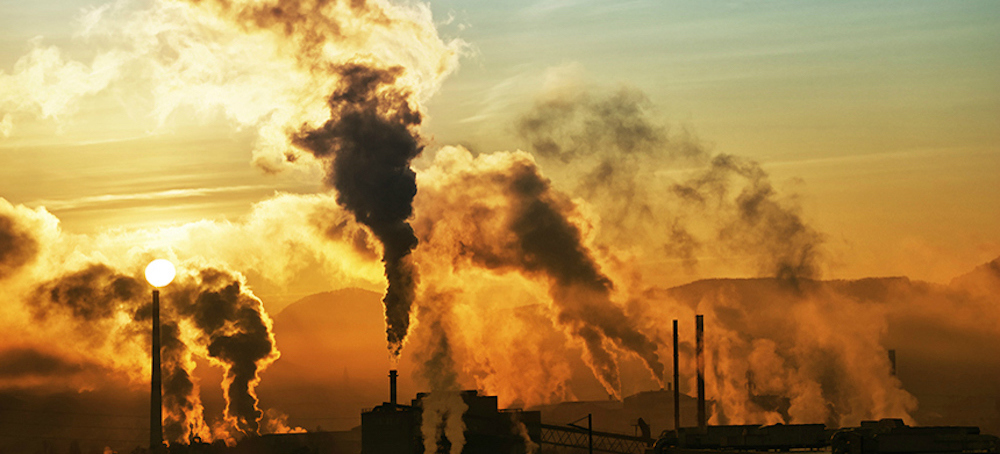 Pollution from a factory. (photo: Science Focus)
The long-stalled project attracted little financing from investors and lenders. But after meetings between industry executives, coal-country politicians and senior US officials, Donald Trump’s administration awarded $75mn in June to finally get it going.
The West Gateway project’s salvation illustrates how the coal industry has revived its fortunes in Washington through extraordinary access and influence with the White House, turning that access into policy. It has become just one facet of the Trump administration’s multibillion-dollar effort to revive the coal industry, sidelined decades ago in favour of cleaner-burning lower-cost alternatives.
Industry executives have cultivated direct relationships with senior officials, helped shape US policy and fed priorities into a White House-led process. The result has been action on much of the industry’s wish list, from weaker pollution rules and longer lives for ageing power plants to cheaper federal leases, public funding and help opening export markets.
While the biggest headlines from Trump’s energy policy have sprung from his oil-focused gambits in Venezuela and Iran, in his second presidency he has thrown the weight of his presidency behind a revival of the coal industry. He rhapsodises about “clean, beautiful coal” in public appearances and issues orders ensuring the material’s use as a fuel source.
“When we would meet with the [Joe] Biden administration they were like, ‘Let’s just keep that coal in the ground’,” said Michelle Bloodworth, chief executive at America’s Power, an industry trade association and lobby group.
“It’s been just amazing, unbelievable to have President Trump and the administration talk so publicly about the importance of coal.”
The fuel has featured more prominently in Trump’s executive orders than under any recent president. An FT analysis of 1,583 executive orders signed since 1993 found his second term alone accounts for eight of the 22 orders explicitly mentioning coal — more than any previous president or presidential term.
Trump’s fondness for coal is reciprocated in the political support he received from America’s coal country. Trump won nearly two-thirds of the vote in counties with at least one operating coal mine in the 2024 election, according to an FT analysis. By comparison, he won less than half the vote across the nation’s 2,984 counties without one.
“Other presidents didn’t take good care of you,” Trump said at a White House event in February. “You’ve never had a better friend in the Oval Office than me.”
However, the sector’s economics remain challenged, and the Democrats are threatening to unwind parts of his agenda.
While his administration says the intervention is necessary to keep the grid reliable as power demand surges, climate advocates say he is keeping the US yoked to a shrinking carbon-intensive industry the market has evolved beyond.
Through it all, the coal industry has achieved a level of access to decision makers in the White House that it lacked for decades through Democratic and Republican administrations.
Core Natural Resources, the US’s second-biggest coal mining company, has spent more than $2.6mn on lobbying since January 2025, nearly double the rate of the predecessor companies it was formed from during the Biden years.
But Core’s chief executive Jimmy Brock, who golfs with Trump’s son Eric Trump, said lobbying now matters less than personal access.
“We have direct contact with the administration,” he said. “I have all of their numbers; I can walk in and see them tomorrow.”
Over the past two decades, numerous coal plants have closed, companies have gone bankrupt and industry employment has collapsed. But the US suddenly needs huge amounts of new power, with data centre demand projected by S…P to grow 137 per cent by 2030.
At a February event at the White House, Trump emphatically told a group of executives, officials including Interior secretary Doug Burgum and House Speaker Mike Johnson and miners in hard hats not to leave the word “coal” unadorned.
“You’ve gotta say beautiful clean coal,” he said. Trump has repeatedly said this to people who leave it out, several people who have witnessed the exchanges told the FT.
“‘Beautiful clean coal’ is the president’s branding,” said Rich Nolan, chief executive of the National Mining Association. “It’s a message he enjoys reciting over and over again.”
On the 2016 campaign trail, he made coal country a priority, visiting 13 times. In Charleston, West Virginia, hundreds of miners greeted him in a “concert-like environment”, according to Chris Hamilton of the West Virginia Coal Association.
Soon after the election, Trump moved to dismantle then-president Barack Obama’s climate rules, quit the Paris Accord and pursue policies protecting coal plants.
Less than a month after returning to office in 2025, Trump formed the National Energy Dominance Council. The administration hosted regional “listening sessions” to brainstorm policy ideas with coal companies and experts across the industry.
Trump also resurrected the National Coal Council in June 2025, which was shut down during Biden’s presidency. It is leaner and more industry-dominated than in previous iterations, chaired by the chief executives of the US’s largest coal companies, Peabody’s Jim Grech and Core’s Brock.
Senior administration officials including Burgum and energy secretary Chris Wright have attended the council’s meetings, which take place every six months and have been held at the White House.
The administration has acted on 10 of its recommendations, spanning environmental regulation, coal leasing, power plants and exports.
Donors such as Joe Craft, chief executive of Alliance Resources, reappeared in Trump’s second term, donating $1mn to the Trump/JD Vance inaugural fund and $250,000 to the Maga Inc Super Pac (political action committee).
“They’ve been incredibly customer-service friendly,” said Sam McKown, executive director of the Kentucky Coal Association.
Coal policy now runs through a streamlined chain. Burgum, Wright and the NEDC take the industry’s priorities — often channelled through groups such as the NCC — and push them up to Trump. Executives say they can call officials directly and get in the room fast.
After being told by industry that the US could face blackouts because of the closing of its coal fleet, Wright issued the first emergency order in May 2025 to keep a coal plant in service that was scheduled for retirement. The order keeping Consumers Energy’s JH Campbell plant in West Olive, Michigan, open for an additional 90 days has been continually extended, citing grid reliability concerns. The administration has since issued 24 such orders for six coal plants across the US.
Another big request was a reinforced customer base for coal-fired power.
In an executive order signed in February, Trump directed the defence department — by far the biggest consumer of energy in the federal government — to buy electricity for military bases across the country from coal power plants.
Part of the intent was to provide the bases with “reliable” energy. According to a senior White House official, another goal was to undo prior administrations’ “green new scam” policies: George W Bush and Obama-era mandates to procure a quarter to 30 per cent of the Army’s electricity from renewables, and a Biden initiative to install rooftop solar panels and heat pumps at the Pentagon.
The administration’s backing of the West Gateway project has been its biggest move.
Shipping coal out of the Powder River Basin in Wyoming and Montana to utilities in Japan and South Korea has long been an industry north star, so that it can expand into overseas markets and offset declining US demand. The project was a top priority for the industry, raised through the NCC.
The project faced fierce local opposition, years of litigation and financial struggles. Its backers, led by real estate developer Phil Tagami, looked inland for help to the coal-rich states of Utah and Wyoming, including Mark Gordon, the Cowboy State’s governor.
Gordon had backed numerous proposals for coal ports along the west coast, which had fallen to environmentalists. But in Tagami, Gordon thought he had found a likely winner.
Five years later — after “numerous conversations and calls” with the administration to pitch the project — Gordon stood behind Trump in the Oval Office in June as he awarded the $75mn.
The funding only covers a third of its projected costs but is intended to reduce risk for private investors.
“The financial support is one of the last steps to get this across the goal line,” said Kyle Haustveit, US under-secretary of energy.
The would-be developers of the Oakland export terminal have beaten in court the city’s attempts to ban coal at the site and terminate its lease. But these victories have not extinguished local opposition to the project.
California governor Gavin Newsom has signed a bill that will require coal projects to undergo stringent new environmental reviews. Democratic lawmakers, led by senator Alex Padilla of California, have called for an investigation into Trump’s use of taxpayer money to support coal. If Democrats win back Congress in the November midterm elections, they may try to block the funds.
Local activists say they are not backing down.
“Investors who are taking a look at this project will see red ink,” said No Coal in Oakland’s Ted Franklin.
Despite the administration’s efforts, coal mining has barely benefited, data from the Energy Information Administration indicates.
Coal production is set to fall 2 per cent in 2026, while generation will slump 8 per cent. Miners are still losing their jobs, with employment in the sector down 6 per cent since Trump returned to the White House.
Plants covered by the emergency retirement delay orders burn less than one per cent of the coal used by the US power sector, according to the Institute for Energy Economics and Financial Analysis.
In February, utility CenterPoint Energy wrote to Wright asking him to stop extending the life of the FB Culley Unit 2 plant in Indiana, saying it is at risk of “catastrophic mechanical failure”. The plant has since received two more extension orders, which the company said it will comply with.
“I think a lot of it has been theatre,” said Jeremy Fisher, principal adviser for climate and energy at the Sierra Club. The orders “haven’t really been a lifeline to any one company. And it hasn’t stopped other coal plants from continuing their retirement programmes.”
The government’s plan for the Pentagon to buy coal-fired power has also been scaled back somewhat, with the original plan for contractors to build plants on or near military installations under 30-year contracts shifting to shorter 10-year deals for existing plants, according to Defense Logistics Agency tender documents.
The coal industry has signalled the gains it has made thus far are not enough.
At a meeting of the NCC in July, EPA administrator Lee Zeldin told the members that helped shape Trump’s coal policy that “many of the items that were on your wish list are now done” and that “hopefully” more will follow.
“The vibe is definitely better. Instead of impending doom, it’s ‘Hey, we might not be on death row,’” said Isaac Orr, vice-president of research at Always On Energy Research. “But where the industry goes from here is a big question.”