
He Was Asleep in His Car. Police Woke Him Up and Created a Reason to Kill Him.
Sara Gelsomino USA TODAY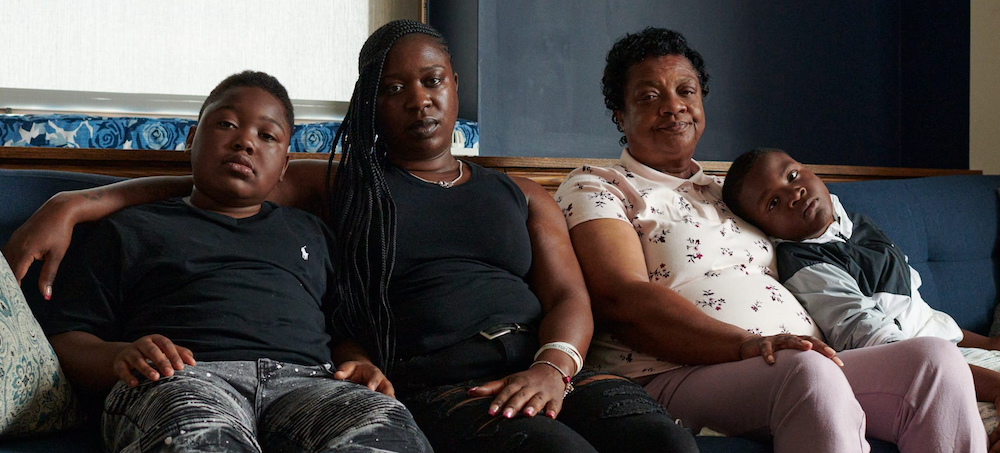 Members of Luke Stewart's family. (photo: USA TODAY)
23 October 21
Catalani knocked on Luke’s window, startling him awake. They did not announce themselves as officers. Luke sat up and started the car. Catalani and Rhodes immediately opened Luke's car doors and reached inside to forcibly remove him. Catalani grabbed Luke’s arm, and he wrapped his arm around Luke’s head and pulled, while Rhodes pushed from the passenger side.
Scared, Luke attempted to drive away, but Rhodes jumped into the passenger seat. Luke looked at Rhodes and asked, “Why are you in my car?”
Rhodes attacked Luke. He punched him, stunned him with a Taser six times, then used the Taser to strike him in the head. Luke never hit back. Moments later, Rhodes shot Luke five times, killing him. Rhodes had been in the car with Luke for only about one minute before he opened fire.
Luke's killers escape justice
Rhodes had no reason to jump into Luke's car, let alone to use deadly force against him. The 6th Circuit Court of Appeals held that a jury could find that Rhodes’ decision to shoot Luke had violated his constitutional rights. However, even acknowledging this, the court dismissed Luke’s civil rights lawsuit. Why? Because of the hotly debated, court-created doctrine of qualified immunity.
Qualified immunity was meant to protect officers from gray areas and unforeseeable changes in the law: Officers can be held liable only for violations of clearly established laws, and they are protected when they had no advance notice that their conduct would be unconstitutional. The question of what is "clearly established" is constantly in flux but has generally been interpreted in a manner that protects police even when they demonstrate a lack of concern for people’s lives and safety. Unless a court has already found that a highly similar fact pattern violated the Constitution, qualified immunity will protect police from lawsuits and trial.
This defies common sense and undermines constitutional rights for all people. Any reasonable, safe and professional police officer should know the Constitution doesn’t permit police to see a person who isn’t committing a crime, open their car doors, jump into the vehicle, beat them and kill them. But Luke’s case was tossed out of federal court because that same situation had not previously been considered in court – so Luke’s constitutional rights in that situation were not clearly established in the eyes of the court.
In practical terms, that means so long as officers continue to violate people’s rights in unique ways, courts will not hold them responsible.
Federal law allows officers to use deadly force when facing an imminent threat of death or great bodily harm. But qualified immunity shields officers from accountability when they act unreasonably and in violation of the Constitution. Qualified immunity is particularly concerning when used to absolve officers who create dangerous situations and then rely on the danger to justify killing people.
Qualified immunity: perversion of law
Rhodes made the unreasonable, unnecessary and extremely dangerous decision to jump into Luke’s car – and then to remain in that car when he could have left. Luke did not present an emergency or danger to the community, and such drastic action was not necessary.
Rhodes put himself in danger, then he used the danger he created to justify shooting and killing Luke.
Rhodes remains a police officer today. The Euclid Police Department did not discipline him for his actions. And because of qualified immunity, Rhodes has been completely shielded from civil liability under federal law.
For the Stewart family, Luke’s death remains an open wound. Knowing that Rhodes has never been held accountable causes them pain and fear daily.
“It’s disappointing and disheartening that the system allows Matthew Rhodes to be shielded by qualified immunity when it’s clear as day that he murdered Luke out of an act of rage and impulse,” says his sister, Terra Stewart.
Luke Stewart was killed for sleeping while Black. Qualified immunity robbed his family, and community, of accountability.
We must not forget.

