Haitians Brace for End of Protected Status: ‘There Is No Other Option For These People’
Jack Crosbie Rolling Stone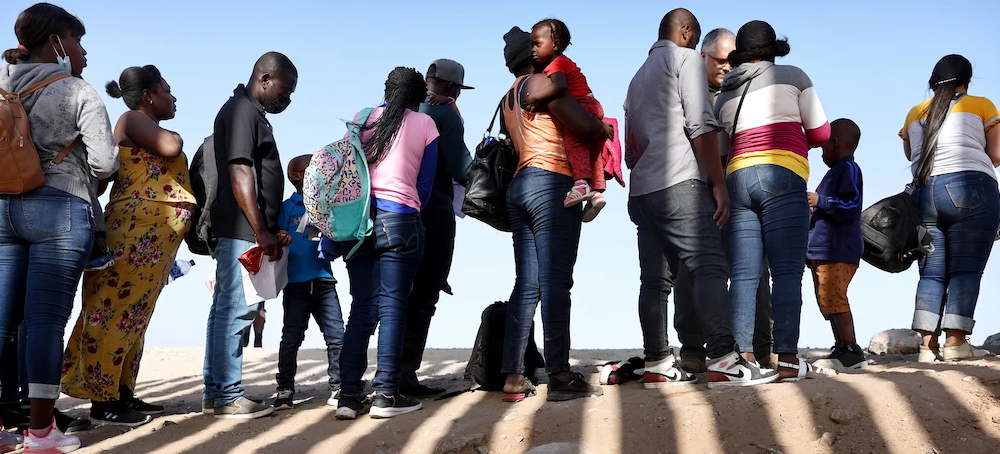 Immigrants from Haiti wait in line to be processed by immigration authorities. (photo: Mario Tama/Getty Images)
Trump has stripped legal status from immigrants who came to America from the island nation plagued by gang violence
On Monday, more than 300,000 Haitian immigrants lost their TPS designation, meaning they can no longer legally live and work in the United States. Donald Trump’s administration — top adviser Stephen Miller, in particular — have been working to end TPS for months, securing a key Supreme Court decision in late June that said the designation could be stripped from Haitians, Syrians, and other groups who have used it for decades to start new lives in the U.S.
In a 6-3 decision, the Supreme Court ruled that the federal courts that had previously blocked Trump from ending the TPS program did not have the jurisdiction to do so, clearing the way for Trump to start stripping protections from various immigrant groups. Writing for the majority, Justice Samuel Alito argued that the TPS program’s original language did not account for judicial review of when it could be started or ended.
Haitians have been eligible for TPS since 2010, when the country suffered a massive earthquake that killed over 300,000 people. Trump attempted to end this TPS designation in his first term, but the process was hung up in court proceedings until Joe Biden took office. In his second term, Trump pushed through the courts, despite the fact that the State Department — even under Trump — has repeatedly advised that Haiti’s ongoing political instability and consistent gang violence represent a significant threat to anyone traveling to the country.
“We have been hearing from our Haitian neighbors about the devastation that the community is about to face,” Murad Awawdeh, the president and CEO of the New York Immigration Coalition, tells Rolling Stone. “Unfortunately, there is no other option for these people.”
Haitian communities around the country will be the first to feel the loss of the system, and are bracing themselves for widespread raids by Immigration and Customs Enforcement. In New York City, where around 40,000 Haitian immigrants live, including in the vibrant Caribbean neighborhood of Flatbush, ICE has already been spotted making reconnaissance trips around the area, according to Awawdeh.
“Everything that makes New York, New York is being attacked in this moment,” Awawdeh says. “We are all going to be worse off for it.”
The Trump administration has specifically persecuted Haitians living in Springfield, Ohio, repeatedly spreading racist lies during the 2024 campaign that those immigrants were abusing pets. In his ruling, Alito admitted that the president and his proxies had used “heated language” when calling Haiti a “shithole country,” suggesting that Haitians had AIDS, and peddling a lie that they were eating pets. Ultimately, Alito concluded that none of those statements were “overtly racial.”
The TPS program was designed to protect certain immigrant groups that could face physical danger or persecution if they returned to their home countries. Haitians are the Trump administration’s first target, but TPS is also expected to end for Syrian refugees and then Salvadorian immigrants in the coming weeks and months.
The TPS program is the backbone of many immigrant communities. When people lose that status, they could face immediate deportation — and the consequences could devastate the economies and industries that rely on their labor.
“This moment is where most people are going to realize the contributions of our immigrant communities,” Awawdeh says. “When they go to the hospital and they only have one nurse, when they can’t find a home health aid, when construction workers start disappearing en masse.”
Some Republican lawmakers have even broken with their party over the end of TPS, particularly in South Florida, which has a large Haitian immigrant population.
“We don’t see any difference in the political situation in Haiti,” Republican Congressman Carlos Giménez said last week. “Like I said, some people in the administration seem to think that somehow you say TPS is a bad word. It’s not a bad word. It’s there for a reason. And Haiti and Venezuela are the prime examples of why TPS was established in the first place.”
But none of this has swayed the administration. “The Biden Administration weaponized TPS as a backdoor amnesty to flood the country with millions of unvetted migrants — and that loophole is finally closed,” the Trump administration said in a statement after the Supreme Court decision.
Awawdeh says that the most important thing families can do is actively prepare for enforcement: contact immigrant groups and trusted immigration lawyers, know their rights, and make plans for how they will react if family members are arrested or detained.
The Trump administration has made it clear that they eventually want to end the system entirely. Awawdeh says this is the end result of years of broken immigration policy by both Republican and Democratic leaders. “The reality that we find ourselves in is that there is no pro-immigrant party in this moment,” he says. “Oftentimes you see Republicans say the horrific things but the Democrats put those things into law.”
What this means is that even a change in administration may not bring back the protections that immigrants have enjoyed for decades. Trump’s changes, like so many others he has made, could be permanent. Still, Awawdeh thinks that the better lives so many Haitians have created here will continue to exist through the bonds they have already formed.
“Yes it’s deflating, yes it’s fucked up, yes it’s incredibly gut wrenching — it’s incredibly hard to speak to people who are losing their livelihood,” he says. “But our communities have been resilient forever.”