DOGE Broke America’s Weather Machine. Now Fishermen, Insurers and Farmers Are Paying for It
Alan Ohnsman Forbes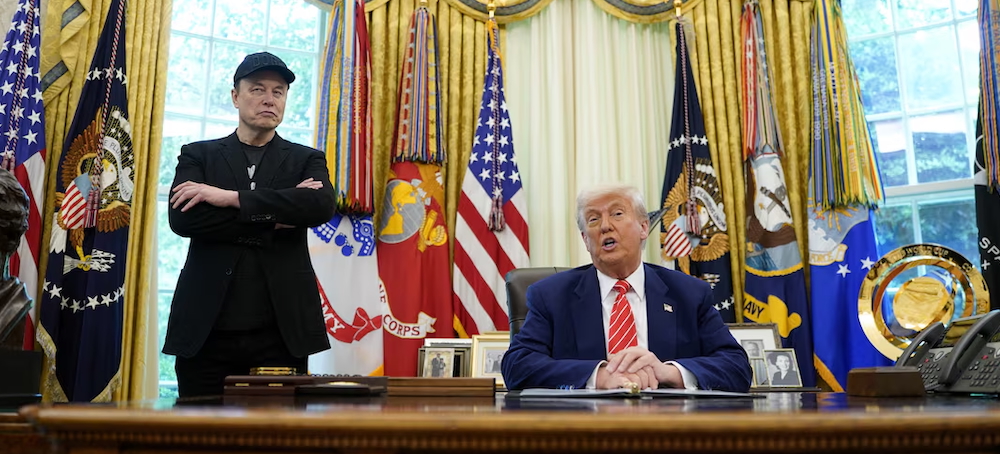 U.S. President Donald Trump and Elon Musk attend a press conference in the Oval Office of the White House. (photo: Nathan Howard/Reuters)
Elon Musk’s DOGE gutted staffing and budgets at NOAA and the National Weather Service early last year. It left America’s fishing fleets, farmers and insurers exposed to the fallout.
“It's a long season and we've gone half a year without knowing what the wind is doing in a part of the inlet that we fish a lot,” said Ritchie. “That's pretty important, especially for charter fishing. Because the people that I take out like watching ‘The Deadliest Catch,’ but they don't like living it.”
Ritchie’s weather station issue, which hasn’t resulted in any disasters so far, isn’t an isolated headache. Nationwide, launches of weather balloons have dropped, decreasing the amount of data on temperature, air pressure, humidity, wind speed and direction that feeds into weather prediction models, fire and marine weather forecasts and aids the aviation industry. Off U.S. coasts, fewer buoys are measuring wave conditions than in 2024. As wildfires rage across western states, there’s a tight supply of specialized meteorologists to provide detailed weather data that helps communities and firefighters make lifesaving, tactical decisions, people familiar with the matter told Forbes. A 20-year-old program that measures arctic ice just got cut, and plans for next-generation weather satellites to replace two critical ones that may begin to fail in the early 2030s have been halted.
This is what happens when the government dismantles the country’s vast environmental intelligence system. Built over decades, NOAA’s sprawling network of satellites, balloons, buoys, radar stations and scientists underpin much of the U.S. economy. Fishermen use it to decide whether waters are safe to sail. Farmers use it to determine when to plant and harvest. Airlines use it to route flights. Insurers and reinsurers use it to assess risk of losses from major events like hurricanes, fires and large-scale accidents. Utilities, builders and emergency officials use it to manage power grids, protect infrastructure and keep people alive.