
Do Trump’s Social Media Threats Count as Witness Tampering?
Dahlia Lithwick Slate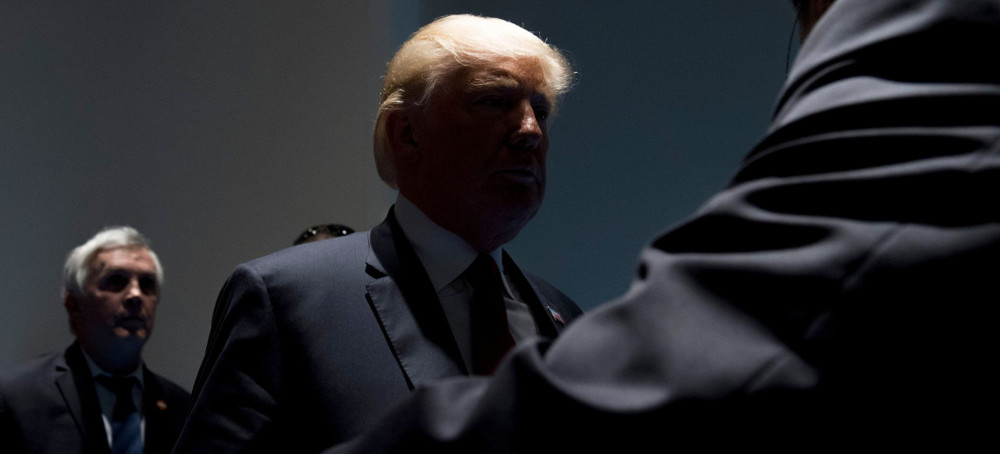 'It is a crime to try to influence a juror or to threaten or attempt to bribe a witness.' (photo: AFP)
I want to remind you that it is a crime to try to influence a juror or to threaten or attempt to bribe a witness or any other person who may have information about your case, or to retaliate against anyone for providing information about your case to the prosecution, or to otherwise obstruct the administration of justice.
The next day, Trump posted on Truth Social a warning in all-caps: “IF YOU GO AFTER ME, I’M COMING AFTER YOU!” Immediately, special counsel Jack Smith’s office asked Judge Tanya Chutkan for a protective order to limit what Trump’s team can do with any evidence that will be shared with them during discovery. The government’s lawyers noted that the former president has been known to share evidence and attempt to influence witnesses in prior lawsuits and that he “has previously issued public statements on social media regarding witnesses, judges, attorneys and others associated with legal matters pending against him.”
When Trump’s lawyers asked for extra time to respond to that motion, Chutkan declined. The Trump team had to respond to the request for a protective order by 5 p.m. Monday, which they did.
On Saturday, Trump posted again, with respect to a key witness: “WOW, it’s finally happened! Liddle’ Mike Pence, a man who was about to be ousted as Governor Indiana until I came along and made him V.P., has gone to the Dark Side.” In separate posts over the weekend and Monday, he then went after Smith and Chutkan by name. To the extent any of this constitutes witness tampering or threats is a tricky legal question to which Trump and his lawyers have already responded by citing his First Amendment rights to say what he wishes about the trial. I asked David Alan Sklansky—who teaches and writes about criminal law, criminal procedure, and evidence at Stanford—to help unpack the contours of a defendant’s right to speak in advance of his trial. Our conversation has been condensed and edited for clarity.
Dahlia Lithwick: It feels like folks are conflating a huge number of ideas when they discuss Trump’s Truth Social posts—witness tampering, threats to the judge and prosecutor, disclosure of evidence, among other things. Will they all fall under the same single protective order the special counsel requested?
David Alan Sklansky: Yes, there are a bunch of different issues here, and no, they don’t all get handled in a single protective order. The protective order the prosecutors have proposed places restrictions on the ways in which Trump and his lawyers can use the information that the prosecutors provide to them. It’s not a gag order. It doesn’t stop Trump from talking about the case—publicly or privately.
From a criminal justice perspective, what is the real concern here? That he is chilling witness testimony? Poisoning the jury pool? Painting a target on the judge?
I think those are all concerns—especially the chilling of witnesses’ testimony, or placing witnesses in danger. One part of the proposed protective order does say that Trump’s lawyers can’t give Trump documents with sensitive information about witnesses, like their home addresses. It says they can show those documents to Trump, but they can’t let him copy down the sensitive information about the witnesses. But there is a broader concern about the safety of witnesses, and efforts to intimidate witnesses or to influence their testimony, and depending on how things go, the judge may wind up issuing other orders responding to those concerns.
We know from Cassidy Hutchinson’s Jan. 6 testimony that Trump made attempts to influence witnesses, through their lawyers or through proxies. Does that enter into Judge Chutkan’s thinking?
Sure. She has to take seriously any possible efforts to intimate witnesses, or anything that might place witnesses in danger.
Robert Reich suggested earlier today that these comments alone mean that Trump should be in jail. That in fact “At this moment, about 400,000 criminal defendants are in jail in the United States awaiting trial because they didn’t meet a condition of their release.” Is there really a scenario under which Trump goes to jail for these kinds of pretrial comments?
It’s hard to imagine him going to jail for the comments that he has made so far on social media. They don’t go far enough. And the prosecutors haven’t done anything to suggest that they might seek to revoke his pretrial release because of any of those comments.
Given that But Free Speech! forms the bulk of Trump’s substantive defense in the D.C. trial, how much will “free speech” protect what he says about the trial as it proceeds? It feels like the more the court tries to keep him from discussing the case in public, the more it feeds his argument that this is all just about his political speech.
There may be some difficult balances to be struck in that regard as this case moves forward. Judge Chutkan will have to strike a balance between, on the one hand, respecting Trump’s First Amendment rights, and allowing him to continue his campaign, and on the other hand protecting the integrity of the trial process—and the safety of potential witnesses.

