Democrats Need to Realize How Much Dobbs Mattered
Amy Littlefield The New York Times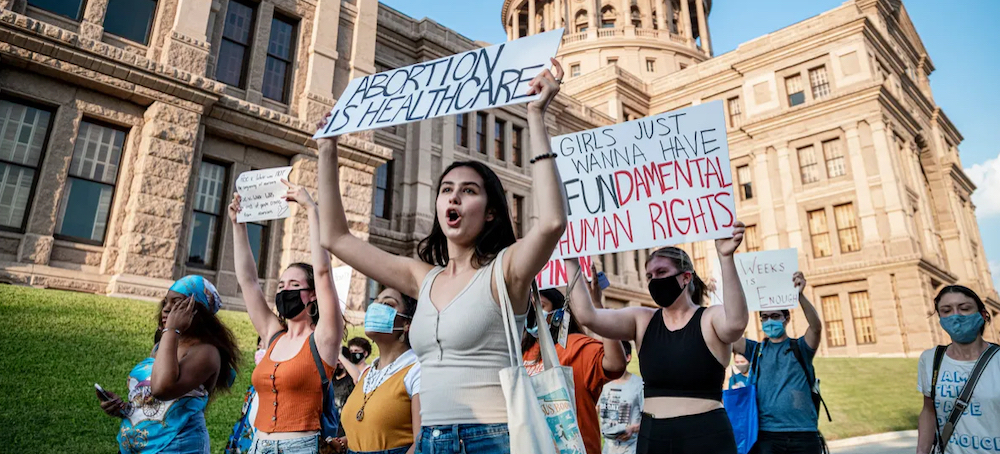 Pro-choice protesters march outside the Texas State Capitol in Austin. (photo: Sergio Flores/Getty Images)
But even more than that, the midterms offer lessons about where and how reproductive rights supporters should focus their efforts to have the most immediate and most widespread impact. A federal solution to the end of the constitutional right to abortion (like Roe codification) might not be on offer, but momentum is building behind campaigns to restore or expand reproductive rights in the states, especially through ballot measures.
The five ballot measures on abortion, all of which went for the pro-choice side, were the clearest sign not only of public support for abortion access but of the strength of organizing on the issue at the state level. Vermont, California and Michigan passed amendments to enshrine the right to abortion in their constitutions by wide majorities — 77, 67 and 57 percent, respectively. Montanans defeated a confusingly written anti-abortion measure that was aimed at convincing voters that aborted fetuses are “born alive.” In Kentucky, a state that has among the highest percentages of anti-abortion residents in the country, voters rejected an amendment declaring there is no right to abortion in the state constitution.