
Climate-Fueled Fires, Warming Threaten Western Forests
Climate Nexus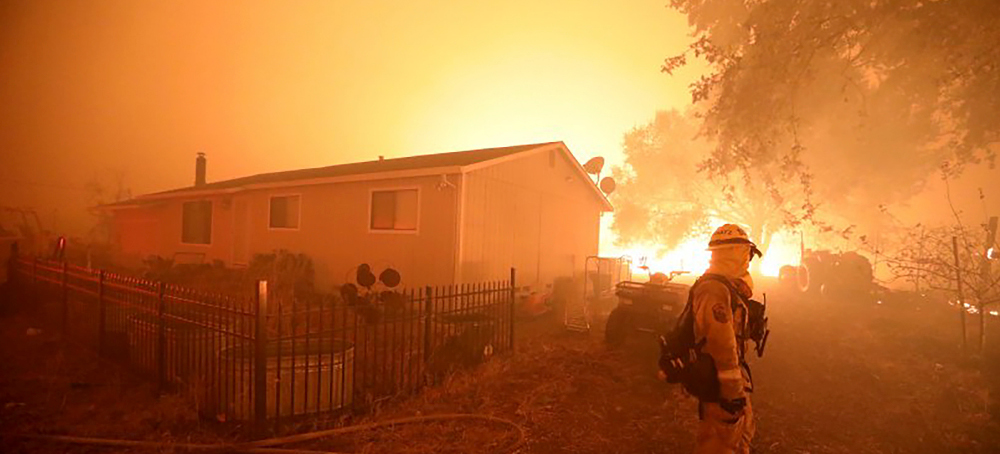 A Cal Fire firefighter watches over a structure as the Kincade Fire threatens along Chalk Hill Road in Healdsburg, California, Sunday, Oct. 27, 2019. (photo: Anda Chu/Bay Area News Group)
That heating has left nearly one-fifth of conifer forests in the Sierra Nevada mountains mismatched to the current climate, including 8% that are “severely” mismatched. This mismatch makes the so-called “zombie forests” less, or even completely, unable to recover after wildfires, themselves supercharged by climate change while also releasing massive amounts of carbon into the atmosphere.
Those findings come as a study published in PNAS finds climate-supercharged fires are so destructive that forests across 2.2 million acres across the West may be unable to regrow after fires — a landmass that could more than triple by midcentury to 7 million acres.
Researchers say improved forest management, including low-intensity burns can help, so long as those actions are taken concurrently with action on climate change. “But the longer you wait, the bigger the warming effect gets,” study co-author Phil Higuera told Inside Climate News. “Importantly, the projections only go through 2050, and that seems a lot closer than it used to.”

